Telehealth has moved from a pandemic-era convenience to a permanent pillar of modern healthcare delivery. For business and security leaders, understanding telehealth is no longer optional — it directly affects compliance obligations, IT infrastructure decisions, and the organization’s overall risk posture. This guide breaks down what telehealth actually is, why it matters strategically, and what security leaders need to know to support it safely.
What is Telehealth?
Telehealth refers to the use of digital communication technologies — video conferencing, secure messaging, remote monitoring devices, and mobile health apps — to deliver clinical services and health information without requiring an in-person visit. It allows patients to consult with physicians, therapists, and specialists from home, work, or anywhere with an internet connection.
Telehealth is often used interchangeably with “telemedicine,” but there’s a subtle distinction. Telemedicine typically refers specifically to remote clinical services (diagnosis, treatment, prescriptions), while telehealth is the broader umbrella that also includes non-clinical services like health education, remote patient monitoring, administrative meetings, and provider training.
For a business, telehealth might show up in several forms:
- Direct-to-consumer platforms used by healthcare providers to treat patients remotely
- Employee health benefits, where companies offer virtual care as part of their benefits package
- Remote patient monitoring, where wearable devices transmit health data to providers in real time
- Corporate wellness programs, integrating virtual consultations into internal HR or occupational health systems
How Telehealth Works: The Technical Picture
At its core, telehealth relies on a chain of interconnected systems: a video or messaging platform, an electronic health record (EHR) system, cloud storage for patient data, and often a patient portal or mobile app. A typical telehealth session flows like this:
- A patient books an appointment through a portal or app.
- The platform authenticates both patient and provider.
- A video or audio session is established, usually over an encrypted connection.
- Clinical notes, prescriptions, or test results are recorded and synced to the EHR.
- Data is stored and transmitted according to regulatory requirements (such as HIPAA in the U.S.).
Each of these steps introduces a technology dependency — and each dependency is a potential point of failure or attack. This is precisely why telehealth cannot be treated purely as a clinical or HR initiative; it is fundamentally an IT and cybersecurity initiative as well.
Why Telehealth Matters for Business Leaders
Business leaders — not just hospital administrators — have strong reasons to understand and invest in telehealth infrastructure:
1. Reduced operational costs. Virtual visits reduce overhead tied to physical office space, administrative staffing, and patient no-shows. Organizations offering telehealth as an employee benefit often see reduced absenteeism and faster access to care.
2. Talent retention and recruitment. Offering virtual healthcare access has become an expected benefit for many employees. Companies that don’t offer it may fall behind in competitive hiring markets.
3. Expanded market reach. Healthcare organizations and digital health startups can serve patients across broader geographies without the capital expense of physical clinics.
4. Business continuity. Telehealth infrastructure provides resilience during disruptions — whether a pandemic, natural disaster, or localized outage — ensuring care delivery continues uninterrupted.
5. Data-driven decision-making. Remote monitoring and telehealth platforms generate rich datasets that can inform product development, insurance underwriting, and population health strategies — provided that data is properly secured and governed.
None of these benefits are guaranteed, however, without a serious commitment to the security side of the equation.
The Security Risks Behind Telehealth
Telehealth platforms handle some of the most sensitive data that exists: protected health information (PHI), payment details, and personally identifiable information (PII). This makes them a high-value target for attackers. Security leaders should be aware of several categories of risk:
Endpoint vulnerabilities. Patients and providers often connect from personal devices — laptops, tablets, phones — that may lack enterprise-grade endpoint protection. A compromised endpoint can become the entry point for a much larger breach.
Insecure networks. Telehealth sessions conducted over unsecured home or public Wi-Fi networks increase the risk of interception, especially if the platform’s encryption is weak or improperly configured.
Third-party and API risk. Most telehealth platforms integrate with EHRs, payment processors, scheduling tools, and pharmacy systems via APIs. Each integration point expands the attack surface and introduces third-party risk that the organization may not fully control.
Phishing and social engineering. Healthcare-themed phishing campaigns — fake appointment confirmations, fraudulent billing notices, or spoofed provider portals — have risen sharply alongside telehealth adoption.
Regulatory and compliance exposure. In the U.S., telehealth data is subject to HIPAA; other jurisdictions have their own frameworks such as GDPR in Europe. A security incident isn’t just a technical problem — it can trigger significant regulatory penalties, lawsuits, and reputational damage.
Ransomware targeting healthcare infrastructure. Healthcare remains one of the most targeted industries for ransomware, partly because disrupted care delivery creates urgent pressure to pay. Telehealth platforms, if not properly segmented and monitored, can be a foothold for broader network compromise.
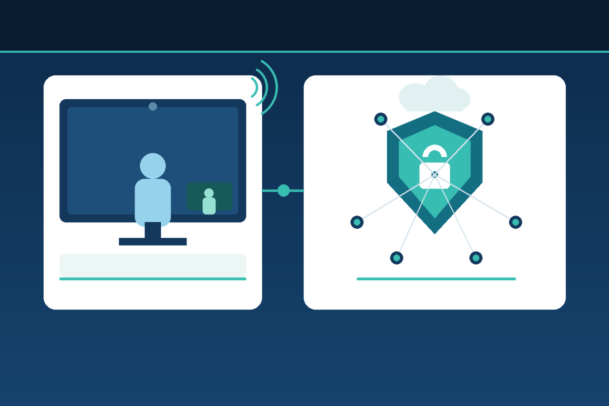
Best Practices for Securing Telehealth Environments
Security and business leaders evaluating or scaling telehealth programs should build their strategy around the following pillars:
1. Endpoint protection and visibility. Every device connecting into a telehealth ecosystem — whether corporate-issued or personal — should be covered by strong endpoint detection and response (EDR) capabilities. Visibility into device health and behavior is essential to catching threats before they escalate.
2. Zero Trust architecture. Rather than assuming anything inside the network perimeter is safe, a Zero Trust approach verifies every user, device, and connection continuously. This is particularly important for telehealth, where sessions originate from countless unmanaged locations.
3. Strong encryption in transit and at rest. All video sessions, messaging, and stored patient records should use current, industry-standard encryption protocols, with regular audits to confirm configurations haven’t drifted.
4. Identity and access management (IAM). Multi-factor authentication (MFA) should be mandatory for both patients and providers, and access to sensitive records should follow the principle of least privilege.
5. Vendor and third-party risk management. Every integration — scheduling tools, payment gateways, EHR connectors — should go through a formal security review before deployment, with ongoing monitoring afterward.
6. Employee and patient security awareness. Phishing simulations, clear communication about legitimate communication channels, and simple guidance for patients can meaningfully reduce social engineering risk.
7. Incident response planning specific to telehealth. A generic incident response plan is not enough. Organizations need playbooks that account for the unique dependencies of telehealth — video infrastructure outages, EHR compromise, or patient data exposure — and that meet breach notification obligations under applicable law.
8. Regular risk assessments and penetration testing. Given how quickly telehealth platforms evolve — new features, new integrations, new devices — periodic testing helps ensure that security keeps pace with functionality.
The Future of Telehealth for Enterprises
Telehealth adoption is expected to keep growing as AI-assisted diagnostics, remote monitoring wearables, and hybrid care models mature. For business leaders, this means telehealth will increasingly intersect with broader digital transformation initiatives — including cloud migration, AI governance, and enterprise cybersecurity strategy.
Security will not be a one-time checkbox but an ongoing discipline. Organizations that treat telehealth security as foundational — rather than an afterthought bolted on after deployment — will be better positioned to earn patient trust, meet regulatory obligations, and avoid the reputational and financial fallout of a breach.
Frequently Asked Questions
1. Is telehealth the same as telemedicine?
Not exactly. Telemedicine specifically covers remote clinical care, such as diagnosis and prescriptions. Telehealth is broader, encompassing clinical care as well as education, monitoring, and administrative healthcare interactions delivered remotely.
2. What compliance standards apply to telehealth?
In the United States, HIPAA governs the privacy and security of protected health information used in telehealth. Depending on the region and industry, organizations may also need to account for GDPR, state-specific privacy laws, or industry-specific frameworks like SOC 2.
3. Who is responsible for telehealth security — IT or healthcare providers?
Both. Clinical teams are responsible for following secure workflows and protecting credentials, but IT and security teams own the underlying infrastructure: endpoint protection, network security, encryption, and incident response. Effective telehealth security requires close collaboration between the two.
4. Can small and mid-sized businesses safely offer telehealth benefits?
Yes, but they should be cautious about relying solely on a vendor’s built-in security claims. Independent verification, endpoint monitoring, and a clear incident response plan are essential regardless of company size.
Final Thoughts
Telehealth represents a genuine opportunity: lower costs, broader reach, and better continuity of care. But that opportunity comes bundled with real security responsibility. Business and security leaders who understand both sides of that equation — the operational upside and the risk exposure — are the ones best equipped to scale telehealth safely and sustainably.
If your organization is expanding its telehealth footprint, now is the time to evaluate whether your endpoint security, network visibility, and threat prevention capabilities are ready to support it.
Ready to Strengthen Your Telehealth Security Posture?
Protecting patient data and telehealth infrastructure requires more than basic antivirus software — it requires proactive, layered defense built for today’s threat landscape. See how Xcitium can help your organization secure every endpoint, session, and connection.
Please give us a star rating based on your experience.


 (12 votes, average: 2.42 out of 5, rated)