What Is Supply and Chain Management? A Complete Business Guide
Updated on January 8, 2026, by Xcitium
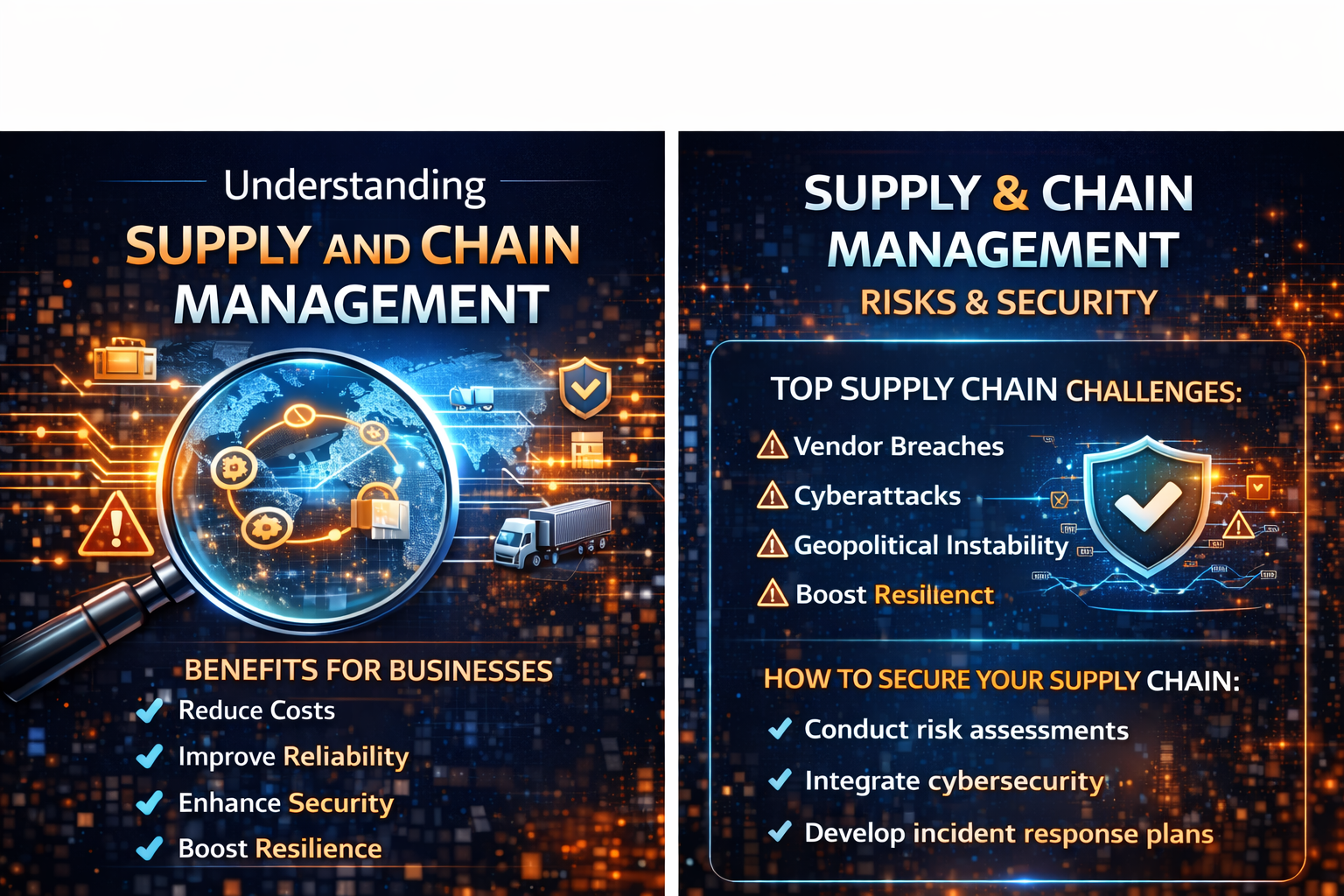
What happens when a single supplier fails, a shipment is delayed, or a cyberattack disrupts operations? For many organizations, the answer is lost revenue, damaged reputation, and operational chaos. Understanding what is supply and chain management has never been more important for business leaders navigating today’s complex, digital-first economy.
Supply and chain management is no longer just about moving goods. It now involves data, technology, security, and risk management across global networks. For IT managers, cybersecurity professionals, and executives, mastering this discipline is critical to ensuring resilience, efficiency, and long-term growth.
What Is Supply and Chain Management?
What is supply and chain management? Supply and chain management (SCM) refers to the coordination, oversight, and optimization of all activities involved in sourcing raw materials, producing goods or services, and delivering them to end customers.
This includes managing suppliers, manufacturers, logistics providers, distributors, and technology systems. The goal is to create a seamless flow of goods, information, and finances while minimizing risk and maximizing value.
Core elements of supply and chain management include:
-
Procurement and supplier management
-
Production and operations
-
Inventory and warehousing
-
Transportation and logistics
-
Information and data flow
Understanding what is supply and chain management helps organizations align operational efficiency with strategic business goals.
Why Supply and Chain Management Matters in Modern Business
In today’s interconnected world, supply chains are more complex—and more vulnerable—than ever before. Disruptions can come from natural disasters, geopolitical events, vendor failures, or cyberattacks.
Organizations that understand what is supply and chain management gain a competitive advantage by improving visibility, reducing costs, and responding faster to change.
Key reasons SCM is critical:
-
Globalized supplier networks increase risk exposure
-
Customers demand faster delivery and transparency
-
Digital systems introduce cybersecurity challenges
-
Regulatory and compliance pressures continue to rise
For executives and IT leaders, supply chain management is now a strategic priority, not just an operational function.
The Supply Chain Management Process Explained
To fully understand what is supply and chain management, it’s important to break down the supply chain management process into its key stages.
1. Planning
Planning involves forecasting demand, aligning resources, and designing supply chain strategies. Accurate planning reduces waste and prevents shortages.
2. Sourcing
Sourcing focuses on selecting reliable suppliers and negotiating contracts. Strong supplier relationships reduce operational and security risks.
3. Manufacturing
This stage includes production, assembly, and quality control. Efficient manufacturing ensures consistent output and cost control.
4. Delivery and Logistics
Logistics covers warehousing, transportation, and order fulfillment. Visibility at this stage is critical for customer satisfaction.
5. Returns and Reverse Logistics
Managing returns, recalls, and recycling completes the supply chain loop and protects brand reputation.
Each stage depends on data, technology, and coordination—making supply chain management both operational and digital in nature.
Supply Chain Management vs Traditional Logistics
Many people confuse logistics with supply chain management, but the two are not the same.
-
Logistics focuses on transportation and storage
-
Supply chain management oversees the entire ecosystem
Understanding what is supply and chain management clarifies why logistics is only one part of a much broader strategy.
Supply chain management integrates:
-
Supplier risk assessment
-
IT systems and data security
-
Inventory optimization
-
End-to-end visibility
This holistic approach is essential in modern, technology-driven environments.
The Role of Technology in Supply and Chain Management
Technology has transformed how organizations approach supply chains. The rise of the digital supply chain has improved efficiency but introduced new risks.
Key technologies used in modern supply chains:
-
Cloud-based SCM platforms
-
IoT sensors for tracking shipments
-
AI-driven demand forecasting
-
Blockchain for transparency
-
Automation and robotics
For IT managers and cybersecurity teams, protecting these systems is just as important as optimizing performance.
Supply Chain Risk Management: A Growing Priority
One of the most critical aspects of understanding what is supply and chain management today is recognizing the importance of supply chain risk management.
Risks can originate from:
-
Supplier insolvency
-
Geopolitical instability
-
Natural disasters
-
Cyberattacks
-
Insider threats
Effective risk management strategies include:
-
Supplier diversification
-
Continuous monitoring
-
Incident response planning
-
Cybersecurity integration
Without proactive risk management, supply chains become fragile and unpredictable.
Supply Chain Security and Cybersecurity Concerns
As supply chains become digital, they also become targets. Cybercriminals increasingly attack suppliers, logistics platforms, and third-party vendors to access sensitive data or disrupt operations.
Understanding what is supply and chain management now requires understanding supply chain security.
Common cybersecurity risks in supply chains:
-
Third-party vendor breaches
-
Ransomware attacks on logistics systems
-
Data manipulation in inventory platforms
-
Unauthorized access to ERP systems
Security teams must collaborate with supply chain leaders to ensure resilience.
Benefits of Effective Supply and Chain Management
Organizations that invest in strong SCM practices experience measurable business benefits.
Key benefits include:
-
Reduced operational costs
-
Improved customer satisfaction
-
Faster response to disruptions
-
Greater visibility and control
-
Enhanced compliance and security
For CEOs and founders, supply chain management directly impacts profitability and brand trust.
Supply and Chain Management by Industry
Different industries face unique supply chain challenges.
Manufacturing
Focuses on raw material sourcing, production efficiency, and inventory control.
Healthcare
Prioritizes compliance, traceability, and uninterrupted access to critical supplies.
Technology
Manages complex global supplier networks and intellectual property risks.
Retail and E-commerce
Relies on speed, accuracy, and demand forecasting to meet customer expectations.
Understanding what is supply and chain management in your industry helps tailor strategies effectively.
Best Practices for Modern Supply and Chain Management
To succeed in today’s environment, organizations should adopt best practices that combine efficiency with security.
Actionable best practices:
-
Build supplier transparency and accountability
-
Integrate cybersecurity into SCM systems
-
Use real-time analytics for decision-making
-
Develop contingency and recovery plans
-
Continuously assess risk exposure
Strong governance and technology alignment are key to long-term success.
The Future of Supply and Chain Management
The future of supply chain management is data-driven, automated, and security-focused.
Emerging trends include:
-
AI-powered predictive analytics
-
Autonomous logistics and robotics
-
Zero-trust security models
-
End-to-end supply chain visibility
Organizations that modernize now will be better prepared for future disruptions.
Final Thoughts: Why Supply and Chain Management Is a Strategic Imperative
Understanding what is supply and chain management is no longer optional for modern businesses. It impacts revenue, security, resilience, and customer trust.
For IT leaders, cybersecurity professionals, and executives, supply chain management sits at the intersection of operations and digital risk. Organizations that treat it as a strategic function will thrive in an increasingly uncertain world.
Take the Next Step Toward Secure, Resilient Operations
As supply chains become more digital, securing them becomes essential. If your organization is evaluating how to protect operational systems and reduce cyber risk, now is the time to act.
👉 Request a demo today:
https://www.xcitium.com/request-demo/
Frequently Asked Questions (FAQs)
1. What is supply and chain management in simple terms?
Supply and chain management is the process of managing how goods, services, and information move from suppliers to customers efficiently and securely.
2. Why is supply chain management important?
It reduces costs, improves reliability, minimizes risk, and ensures timely delivery of products and services.
3. How does cybersecurity impact supply chain management?
Cybersecurity protects digital systems and third-party vendors from breaches that can disrupt operations or expose sensitive data.
4. What is supply chain risk management?
It involves identifying, assessing, and mitigating risks that could disrupt the supply chain, including cyber and operational threats.
5. How can businesses improve supply chain resilience?
By diversifying suppliers, improving visibility, integrating security controls, and developing incident response plans.