Every second, IT systems generate massive amounts of data. From login attempts and file transfers to system errors and network activity, these events create digital records known as logs. While logs may appear technical or routine, they contain critical insights that help organizations detect threats, troubleshoot problems, and maintain compliance.
However, without proper management, logs quickly become overwhelming and difficult to analyze. Many organizations store logs without ever reviewing them, which creates major security blind spots. This is where log management best practices become essential.
For cybersecurity professionals, IT managers, and business leaders, effective log management helps improve threat detection, accelerate incident response, and maintain regulatory compliance. Implementing strong log management best practices allows organizations to monitor systems in real time and identify suspicious activities before they escalate into major security incidents.
In this guide, we’ll explore the most important log management best practices, explain why log monitoring matters, and outline how organizations can build an effective log management strategy.
What Is Log Management?
Log management refers to the process of collecting, storing, analyzing, and monitoring log data generated by systems, applications, and network devices.
Logs provide detailed records of system activity, which makes them extremely valuable for cybersecurity operations.
Common Types of Logs
Organizations generate many types of logs, including:
-
System logs
-
Application logs
-
Security logs
-
Network logs
-
Access logs
-
Firewall logs
By implementing strong log management best practices, organizations can transform raw log data into actionable security insights.
Why Log Management Is Critical for Cybersecurity
Modern IT environments are complex. Cloud services, remote work, mobile devices, and interconnected systems create enormous volumes of data.
Without proper monitoring, malicious activity may go unnoticed.
Threat Detection
Logs help identify suspicious activities such as unauthorized logins or unusual network traffic.
Faster Incident Response
When a security incident occurs, logs provide valuable evidence for investigation.
Regulatory Compliance
Many regulatory frameworks require organizations to maintain logs and audit trails.
Examples include:
-
HIPAA
-
PCI DSS
-
GDPR
-
ISO 27001
Operational Visibility
Log monitoring also helps IT teams identify system failures and performance issues.
Key Components of Log Management
A successful log strategy includes several important components.
Log Collection
Log collection involves gathering logs from multiple sources across the IT environment.
Sources of Logs
Logs may originate from:
-
Servers
-
Network devices
-
Cloud platforms
-
Security tools
-
Applications
Centralized log collection ensures that all critical events are captured.
Log Storage
Once logs are collected, they must be stored securely.
Secure Storage Practices
Organizations should ensure logs are:
-
Encrypted
-
Tamper-proof
-
Accessible for auditing
Secure storage prevents attackers from altering log data.
Log Analysis
Analyzing logs helps identify security threats and operational issues.
Security teams often use automated tools to analyze large volumes of log data.
Log Monitoring
Continuous monitoring allows organizations to detect suspicious behavior in real time.
Automated alerts notify security teams when unusual events occur.
Log Management Best Practices
Implementing the right log management best practices helps organizations maximize the value of log data.
Centralize Log Collection
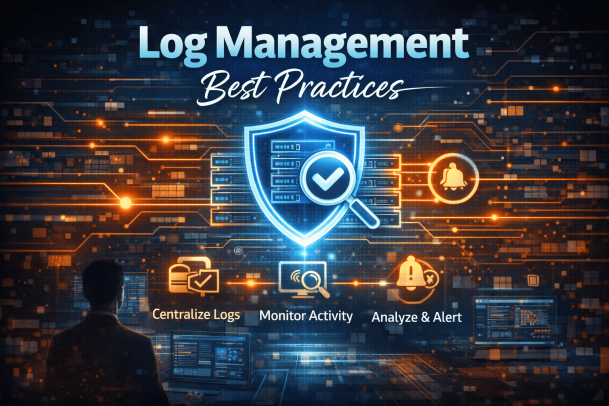
Collect logs from all systems into a centralized platform.
Centralization makes it easier to analyze data and detect patterns across multiple systems.
Define Log Retention Policies
Organizations should establish clear policies for how long logs are stored.
Retention requirements may depend on regulatory compliance standards.
Typical retention periods include:
-
90 days for operational logs
-
1 year or more for compliance logs
Implement Real-Time Monitoring
Real-time monitoring allows organizations to detect threats as they happen.
Security tools can trigger alerts when unusual activities occur.
Examples include:
-
Multiple failed login attempts
-
Unexpected data transfers
-
Unauthorized system access
Protect Log Integrity
Logs must remain accurate and untampered.
Methods for Protecting Log Integrity
-
Use encryption
-
Implement access controls
-
Maintain secure backups
These measures ensure logs remain reliable during investigations.
Use Automated Log Analysis Tools
Manual log analysis is nearly impossible in large environments.
Organizations should use tools such as:
-
SIEM platforms
-
Security analytics tools
-
Machine learning-based monitoring systems
Automation helps detect patterns and anomalies faster.
Normalize and Structure Logs
Logs generated by different systems may use different formats.
Log normalization converts data into a standardized format for easier analysis.
Structured logs improve searchability and reporting.
Log Management and Security Monitoring
Log management plays a critical role in security monitoring.
Organizations often integrate log management with broader cybersecurity platforms.
SIEM Integration
Security Information and Event Management (SIEM) platforms collect and analyze log data from multiple sources.
SIEM tools help security teams detect threats and respond quickly.
Threat Intelligence Integration
Threat intelligence feeds help identify known malicious IP addresses or domains within log data.
Endpoint Security Integration
Endpoint detection tools generate logs related to device activity and security events.
Integrating these logs with centralized monitoring improves threat visibility.
Common Log Management Challenges
Even organizations that recognize the importance of log management best practices may face several challenges.
Large Volumes of Log Data
Modern systems generate enormous amounts of logs, making analysis difficult.
Lack of Centralization
Logs stored across multiple systems are difficult to analyze effectively.
Limited Visibility
Without proper monitoring tools, organizations may overlook critical security events.
Compliance Complexity
Different regulations require different log retention and monitoring standards.
Emerging Trends in Log Management
Log management continues evolving as organizations adopt modern security technologies.
Cloud-Based Log Management
Cloud platforms provide scalable log storage and monitoring capabilities.
AI-Powered Log Analysis
Artificial intelligence helps detect unusual behavior patterns in log data.
Security Automation
Automated response systems can block suspicious activity based on log analysis.
How Organizations Can Improve Log Management
Organizations can strengthen their log management programs by following these steps.
-
Centralize log collection across all systems
-
Implement automated monitoring tools
-
Establish log retention policies
-
Protect log integrity with encryption
-
Integrate logs with cybersecurity platforms
Following these log management best practices improves security visibility and operational efficiency.
FAQ: Log Management Best Practices
What is log management?
Log management is the process of collecting, storing, analyzing, and monitoring system and network logs to detect issues and security threats.
Why is log management important for cybersecurity?
Logs provide visibility into system activity and help detect suspicious behavior, security incidents, and operational problems.
What tools are used for log management?
Common tools include SIEM platforms, log monitoring systems, and security analytics tools.
How long should organizations retain logs?
Retention periods vary depending on regulations and organizational policies, but many organizations retain logs for several months or years.
What are the main benefits of centralized log management?
Centralized log management improves visibility, simplifies analysis, and helps detect threats faster.
Final Thoughts
Logs provide valuable insights into system activity, security events, and operational performance. However, organizations can only benefit from log data if they implement effective management strategies.
By following proven log management best practices, organizations can strengthen cybersecurity defenses, improve incident response, and maintain compliance with regulatory standards.
Effective log monitoring transforms raw data into actionable intelligence that helps security teams identify threats before they cause damage.
If your organization wants to enhance threat detection and gain better visibility into security events, advanced cybersecurity solutions can help.
👉 Request a demo today to see how Xcitium can help strengthen your security operations:
https://www.xcitium.com/request-demo/