Blockchain Security Risks
Updated on March 2, 2026, by Xcitium
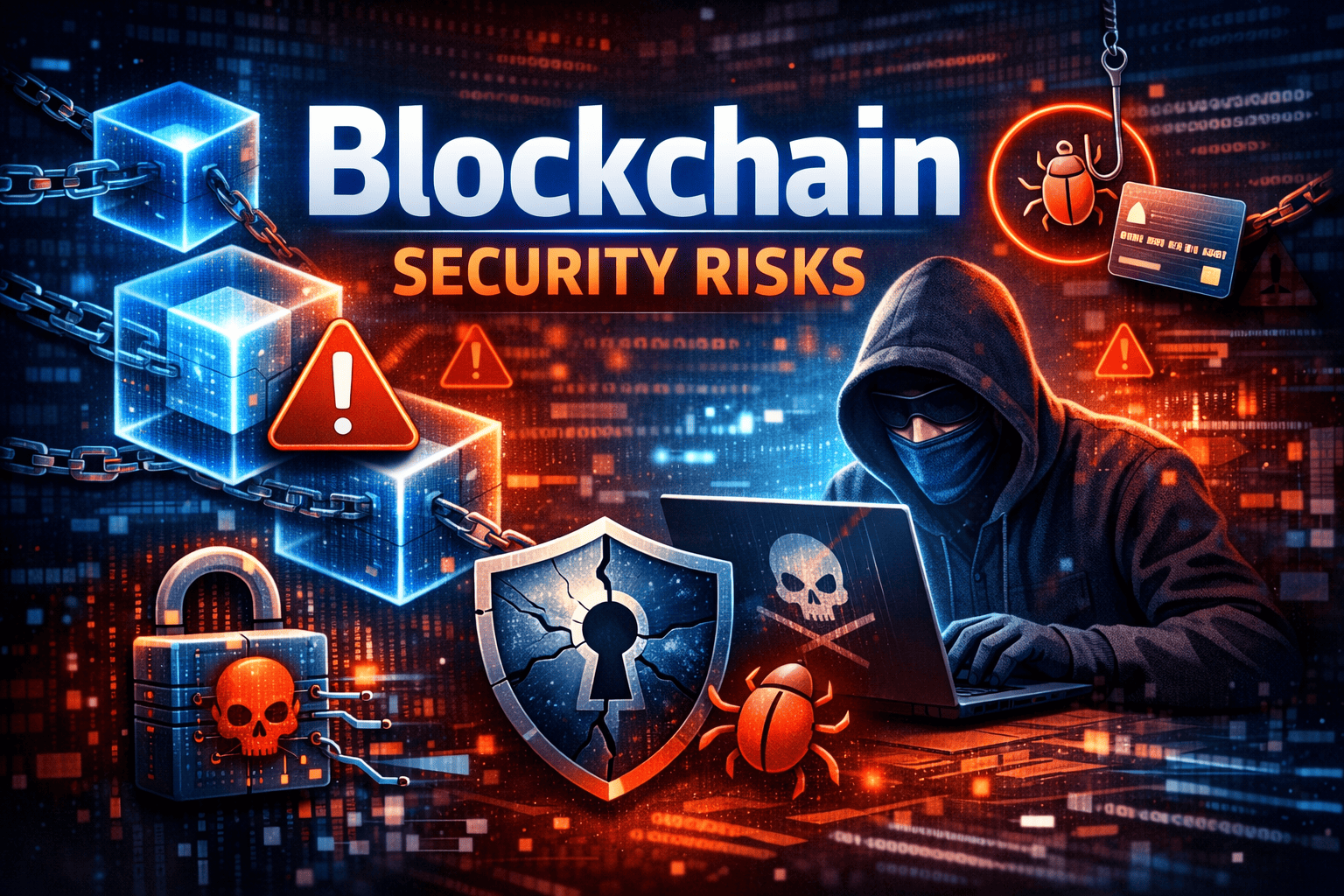
Blockchain technology is often praised for being secure, transparent, and tamper-resistant. But is it truly immune to cyber threats? While blockchain offers strong cryptographic foundations, blockchain security risks are very real—and growing.
From smart contract vulnerabilities to crypto exchange hacks, attackers continue to find weaknesses in blockchain ecosystems. For IT managers, cybersecurity professionals, CEOs, and founders exploring decentralized technology, understanding blockchain security risks is essential before adopting or investing in blockchain-based systems.
In this comprehensive guide, we will explore major blockchain security risks, common attack vectors, real-world examples, mitigation strategies, and best practices to strengthen blockchain security.
What Makes Blockchain Secure by Design?
Before diving into blockchain security risks, it’s important to understand why blockchain is considered secure.
Blockchain networks rely on:
-
Cryptographic hashing
-
Decentralized consensus mechanisms
-
Immutable ledgers
-
Distributed nodes
Each transaction is validated and recorded across multiple nodes. Once confirmed, altering that data becomes extremely difficult.
However, blockchain security risks do not usually stem from the cryptography itself. Instead, they arise from implementation flaws, smart contract vulnerabilities, and surrounding infrastructure.
Major Blockchain Security Risks
Despite its decentralized nature, blockchain technology is not immune to attack.
1. 51% Attacks
What Is a 51% Attack?
A 51% attack occurs when a single entity controls more than half of a blockchain’s mining or validation power.
With majority control, attackers can:
-
Reverse transactions
-
Double-spend cryptocurrency
-
Block new transactions
This is one of the most discussed blockchain security risks, especially for smaller networks.
How to Mitigate It
-
Choose networks with strong decentralization
-
Monitor network hash rate
-
Use proof-of-stake systems with security incentives
2. Smart Contract Vulnerabilities
Smart contracts automate blockchain transactions. However, poorly written code creates serious blockchain security risks.
Common Smart Contract Issues
-
Reentrancy attacks
-
Integer overflow errors
-
Logic flaws
-
Access control misconfigurations
Once deployed, smart contracts are difficult to modify. A single bug can lead to massive financial losses.
Prevention Strategies
-
Conduct third-party security audits
-
Use formal code verification
-
Implement secure development lifecycle practices
3. Private Key Compromise
Blockchain ownership depends on private keys. If a private key is stolen, assets are lost permanently.
Private key compromise is one of the most common blockchain security risks in cryptocurrency environments.
Attack Methods
-
Phishing attacks
-
Malware infections
-
Social engineering
-
Poor wallet storage practices
Protection Methods
-
Use hardware wallets
-
Enable multi-signature wallets
-
Implement secure key management systems
-
Avoid storing keys on unsecured devices
4. Phishing and Social Engineering
Even secure blockchain protocols cannot protect against human error.
Attackers trick users into:
-
Sharing wallet credentials
-
Clicking malicious links
-
Approving fraudulent transactions
User awareness is critical to minimizing blockchain security risks.
5. Crypto Exchange Hacks
While blockchain networks may be secure, exchanges often become targets.
Common vulnerabilities include:
-
Weak authentication systems
-
Poor API security
-
Insufficient monitoring
Exchange breaches have resulted in billions of dollars in losses.
6. Consensus Mechanism Exploits
Different blockchains use different consensus mechanisms.
Proof of Work (PoW)
Energy-intensive but secure against certain attacks.
Proof of Stake (PoS)
More efficient but introduces staking-related attack risks.
Each model presents unique blockchain security risks.
7. API and Infrastructure Weaknesses
Blockchain applications rely on APIs, cloud servers, and web interfaces.
If infrastructure is compromised:
-
Data may be exposed
-
Wallet services disrupted
-
Nodes manipulated
Securing supporting infrastructure is just as important as securing the blockchain itself.
8. Regulatory and Compliance Risks
Blockchain security risks extend beyond technical threats.
Organizations must consider:
-
Data privacy regulations
-
Anti-money laundering (AML) compliance
-
Cross-border transaction restrictions
Ignoring regulatory risk can lead to fines and reputational damage.
Real-World Examples of Blockchain Security Risks
Several high-profile incidents highlight blockchain vulnerabilities.
The DAO Hack
A smart contract flaw allowed attackers to siphon millions of dollars in cryptocurrency.
Exchange Breaches
Major exchanges have suffered large-scale security incidents due to centralized vulnerabilities.
DeFi Protocol Exploits
Decentralized finance (DeFi) platforms frequently experience smart contract exploits.
These cases demonstrate that blockchain security risks are practical, not theoretical.
Best Practices to Reduce Blockchain Security Risks
Organizations adopting blockchain technology should follow structured security measures.
Conduct Comprehensive Security Audits
Audit smart contracts and infrastructure before deployment.
Implement Multi-Layer Security
Combine blockchain security with:
-
Endpoint protection
-
Network monitoring
-
SIEM systems
-
Identity access controls
Use Secure Development Practices
Developers should:
-
Follow secure coding standards
-
Perform code reviews
-
Apply automated testing tools
Educate Users and Employees
Security awareness reduces phishing-related risks.
Monitor Transactions Continuously
Use analytics tools to detect suspicious activity in real time.
Blockchain Security in Enterprise Environments
Enterprises using blockchain for supply chain, healthcare, or finance must integrate it into existing cybersecurity frameworks.
This includes:
-
Identity management
-
Privileged access management
-
Cloud security controls
-
Zero Trust architecture
Blockchain should not operate in isolation.
Future Trends in Blockchain Security
As blockchain adoption increases, new protections are emerging.
Trends include:
-
AI-driven fraud detection
-
Improved consensus algorithms
-
Quantum-resistant cryptography
-
Advanced multi-signature protocols
Proactive security planning is critical.
Frequently Asked Questions
1. Is blockchain completely secure?
No. While blockchain offers strong cryptographic protection, vulnerabilities in smart contracts and infrastructure create risks.
2. What is the biggest blockchain security risk?
Smart contract vulnerabilities and private key compromise are among the most significant risks.
3. Can blockchain be hacked?
The blockchain protocol itself is difficult to hack, but surrounding systems can be exploited.
4. How can companies reduce blockchain security risks?
By conducting audits, securing infrastructure, and implementing strong access controls.
5. Are smaller blockchain networks more vulnerable?
Yes. Smaller networks are more susceptible to 51% attacks.
Final Thoughts
Blockchain offers transformative potential, but it is not immune to cyber threats. Understanding blockchain security risks is essential for organizations deploying decentralized technologies.
By addressing smart contract vulnerabilities, protecting private keys, securing infrastructure, and integrating blockchain into broader cybersecurity frameworks, businesses can reduce exposure significantly.
Security must evolve alongside innovation.
👉 Request a demo today and strengthen your cybersecurity strategy:
https://www.xcitium.com/request-demo/
Innovate securely. Protect digital assets. Lead with confidence.