Business Email Compromise (BEC) Guide: How to Detect, Prevent, and Stop Attacks
Updated on March 23, 2026, by Xcitium
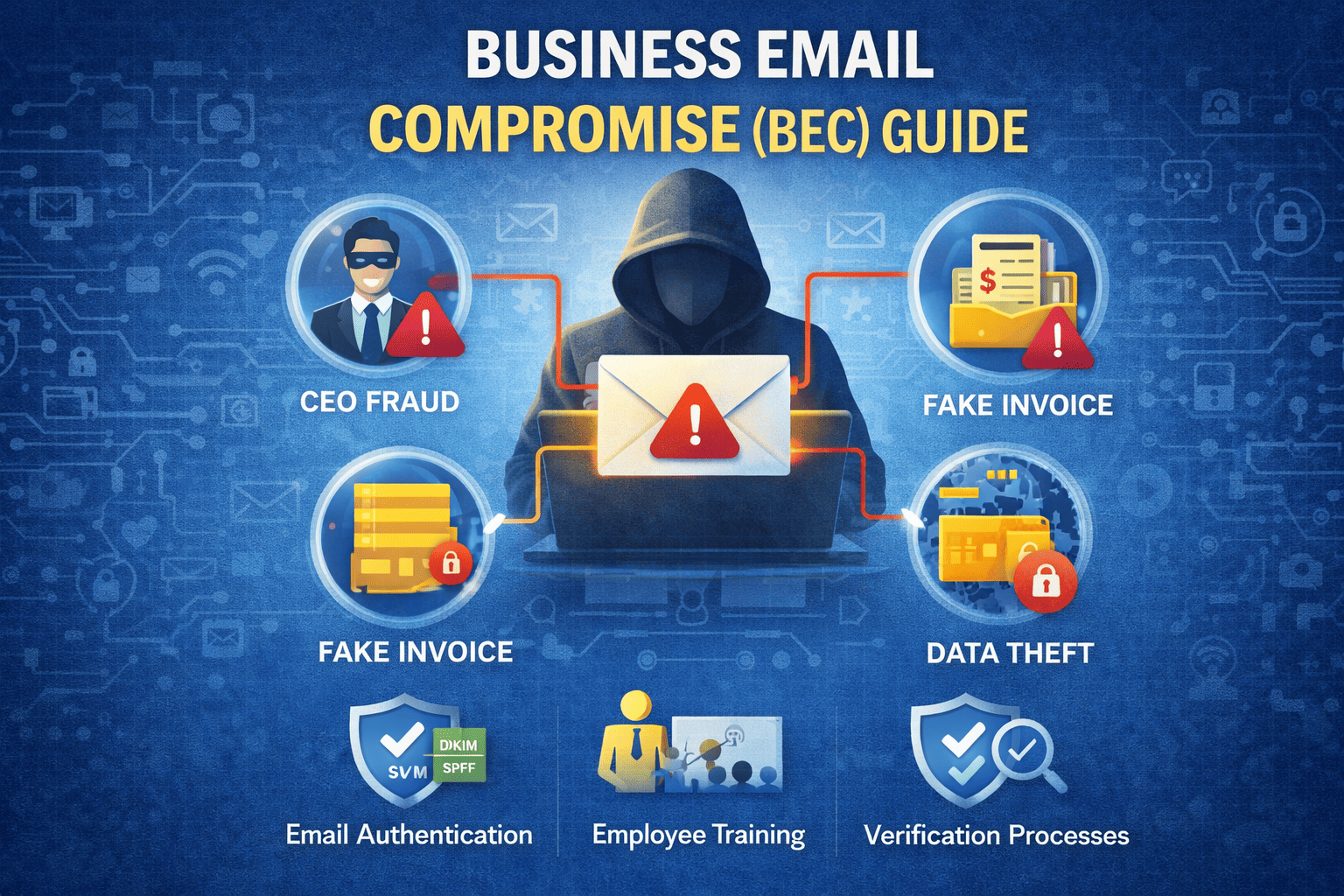
What if a single email could cost your company millions? That’s the reality of Business Email Compromise (BEC) attacks—one of the most financially damaging cyber threats today. In fact, organizations worldwide lose billions each year due to email fraud and impersonation scams.
This Business Email Compromise (BEC) Guide explains how attackers exploit trust, manipulate employees, and bypass traditional security systems. Unlike typical phishing attacks, BEC scams are highly targeted and often appear completely legitimate.
For IT managers, cybersecurity professionals, CEOs, and business leaders, understanding this Business Email Compromise (BEC) Guide is critical to protecting financial assets and sensitive data. In this article, we’ll cover how BEC works, real-world examples, key warning signs, and proven strategies to prevent attacks.
What is Business Email Compromise (BEC)?
Business Email Compromise (BEC) is a type of cyberattack where attackers impersonate trusted individuals—such as executives, vendors, or partners—to trick employees into transferring money or sharing sensitive information.
Unlike mass phishing campaigns, BEC attacks are:
- Highly targeted
- Personalized
- Deceptive and convincing
- Focused on financial gain
This Business Email Compromise (BEC) Guide highlights that attackers often research organizations before launching attacks.
Why BEC Attacks Are So Dangerous
BEC attacks are difficult to detect because they do not always involve malware or suspicious links.
Key Reasons BEC is Effective
- Exploits human trust instead of technical vulnerabilities
- Uses legitimate-looking email accounts
- Avoids traditional antivirus detection
- Targets high-value transactions
Because of these factors, this Business Email Compromise (BEC) Guide emphasizes that human awareness is just as important as technical security.
How Business Email Compromise Attacks Work
Understanding the attack process helps organizations defend against it.
Step-by-Step BEC Attack Process
- Reconnaissance
Attackers gather information about the organization, employees, and communication patterns. - Email Spoofing or Account Compromise
Attackers either spoof email addresses or gain access to real accounts. - Impersonation
They pose as executives, vendors, or trusted contacts. - Request Execution
They request urgent actions such as fund transfers or data sharing. - Financial or Data Loss
The organization unknowingly fulfills the request.
Common Types of BEC Attacks
This Business Email Compromise (BEC) Guide identifies several common attack types.
CEO Fraud
Attackers impersonate executives and request urgent fund transfers.
Vendor Email Compromise
Fraudsters pose as vendors and change payment details.
Invoice Scams
Fake invoices are sent to trick employees into making payments.
Payroll Diversion
Attackers request changes to employee payroll information.
BEC vs Phishing: Key Differences
Many confuse BEC with phishing, but they are different.
Phishing
- Mass emails
- Generic messages
- Often includes malicious links
Business Email Compromise
- Highly targeted
- No links or attachments
- Focuses on social engineering
This distinction is crucial in this Business Email Compromise (BEC) Guide.
Warning Signs of a BEC Attack
Recognizing red flags can prevent costly mistakes.
Common Indicators
- Urgent or confidential requests
- Requests to bypass normal procedures
- Changes in payment details
- Slight variations in email addresses
- Unusual communication tone
Employees should always verify suspicious requests.
Real-World Examples of BEC Attacks
BEC attacks have impacted organizations across industries.
Example 1: CEO Impersonation
An employee receives an urgent email from a “CEO” requesting a wire transfer. The email appears legitimate, leading to financial loss.
Example 2: Vendor Fraud
A company receives an email from a “supplier” requesting updated payment details. Payments are redirected to attacker accounts.
These examples highlight the importance of this Business Email Compromise (BEC) Guide.
How to Prevent Business Email Compromise
Preventing BEC requires a combination of technology and awareness.
1. Implement Strong Email Security
Use advanced email filtering and authentication tools.
Key Technologies
- SPF, DKIM, and DMARC
- Email threat detection systems
- Anti-spoofing solutions
2. Use Multi-Factor Authentication (MFA)
MFA prevents unauthorized access to email accounts.
3. Train Employees Regularly
Human error is a major factor in BEC attacks.
Training Topics
- Recognizing phishing vs BEC
- Verifying financial requests
- Reporting suspicious emails
4. Verify Financial Transactions
Always confirm payment requests through secondary channels.
5. Monitor Email Activity
Track unusual login attempts and email behavior.
6. Establish Clear Policies
Define procedures for:
- Financial approvals
- Vendor communication
- Data sharing
Best Practices for BEC Attack Prevention
Organizations should follow these best practices.
Create a Verification Culture
Encourage employees to question unusual requests.
Limit Access Privileges
Use role-based access control to reduce risk.
Secure Email Systems
Implement encryption and monitoring tools.
Conduct Regular Audits
Identify vulnerabilities and improve defenses.
Challenges in Preventing BEC Attacks
Even with strong defenses, challenges remain.
Sophisticated Social Engineering
Attackers use psychological manipulation.
Lack of Employee Awareness
Untrained employees are more vulnerable.
Evolving Attack Techniques
Cybercriminals continuously adapt their strategies.
The Role of AI in BEC Detection
Artificial intelligence is improving email security.
AI Capabilities
- Detect unusual communication patterns
- Analyze email behavior
- Identify impersonation attempts
AI enhances the effectiveness of email fraud protection systems.
BEC Protection for Different Industries
Different sectors face unique risks.
Finance
High-value transactions make financial institutions prime targets.
Healthcare
Sensitive data and urgent communications increase risk.
Technology
Cloud-based communication systems require strong protection.
Retail
Vendor relationships create opportunities for fraud.
A tailored approach strengthens business email security.
Future of Business Email Compromise Attacks
BEC attacks are expected to grow more advanced.
Emerging Trends
- AI-generated phishing emails
- Deepfake voice impersonation
- Automated attack campaigns
- Increased targeting of small businesses
Organizations must stay proactive.
Frequently Asked Questions (FAQ)
What is Business Email Compromise (BEC)?
BEC is a cyberattack where attackers impersonate trusted individuals to trick organizations into transferring money or sharing sensitive data.
How is BEC different from phishing?
BEC is targeted and does not rely on malicious links, while phishing is broader and often includes harmful attachments.
What are the signs of a BEC attack?
Signs include urgent requests, unusual email behavior, and changes in payment instructions.
How can businesses prevent BEC attacks?
They can use email security tools, employee training, MFA, and transaction verification processes.
Why are BEC attacks successful?
They exploit human trust and bypass traditional security measures.
Protect Your Organization from BEC Attacks Today
Business Email Compromise is one of the most dangerous cyber threats facing organizations today. Without proper defenses, even a single email can lead to significant financial loss.
By following this Business Email Compromise (BEC) Guide, organizations can strengthen their defenses, improve employee awareness, and prevent costly attacks.
👉 Request a demo today:
https://www.xcitium.com/request-demo/
Discover how advanced cybersecurity solutions can help protect your organization from email fraud, phishing attacks, and modern cyber threats.