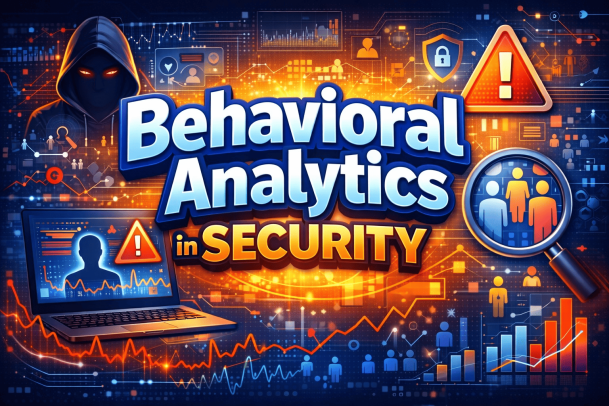
What if your security system could spot a cyberattack before any malware alert triggered?
Traditional cybersecurity tools rely on signatures and predefined rules. But attackers have evolved. They now use stolen credentials, legitimate tools, and low-and-slow tactics that bypass traditional defenses. That’s where behavioral analytics in security changes the game.
By analyzing user behavior, device patterns, and network activity in real time, behavioral analytics helps organizations detect anomalies early. For cybersecurity teams, IT managers, and business leaders, this approach delivers deeper visibility and stronger protection against modern threats.
In this guide, we’ll explore how behavioral analytics in security works, why it matters, and how organizations across industries can implement it effectively.
What Is Behavioral Analytics in Security?
Behavioral analytics in security refers to the use of data analysis, machine learning, and artificial intelligence to monitor patterns of activity across users, devices, and systems. Instead of focusing solely on known threats, it identifies unusual behavior that may signal a risk.
How It Differs from Traditional Security
Traditional systems look for:
-
Known malware signatures
-
Blacklisted IP addresses
-
Predefined attack patterns
Behavioral analytics focuses on:
-
Abnormal login times
-
Unusual data transfers
-
Unexpected privilege escalation
-
Suspicious lateral movement
It shifts the focus from “What is the threat?” to “Is this behavior normal?”
Why Behavioral Analytics Is Critical in Modern Cybersecurity
The rise of cloud computing, remote work, and SaaS platforms has made identity the new perimeter. Attackers frequently exploit legitimate credentials rather than deploying obvious malware.
The Problem with Credential-Based Attacks
When hackers steal login credentials:
-
They appear as valid users
-
Firewalls may not detect them
-
Access logs seem legitimate
Behavioral analytics in security helps uncover subtle signs of compromise by analyzing deviations from normal behavior.
Insider Threat Detection
Not all threats come from outside. Employees, contractors, or partners may misuse access intentionally or accidentally.
Behavioral analytics can detect:
-
Excessive file downloads
-
Data access outside job roles
-
Access from unfamiliar locations
-
Sudden privilege changes
This reduces insider threat risk.
Core Components of Behavioral Analytics in Security
To understand its value, let’s break down the essential elements.
1. User and Entity Behavior Analytics (UEBA)
UEBA is a key component of behavioral analytics in security. It establishes baselines for users and devices, then flags anomalies.
Examples of UEBA Detection
-
A finance employee accessing engineering data
-
A login attempt from a new geographic region
-
An account performing bulk data exports
UEBA strengthens identity protection strategies.
2. Machine Learning Models
Machine learning algorithms process massive data sets to identify patterns humans might miss.
Benefits include:
-
Real-time anomaly detection
-
Continuous learning
-
Adaptive threat recognition
-
Reduced false positives
Behavioral analytics in security becomes smarter over time.
3. Risk Scoring and Prioritization
Not every anomaly indicates a breach. Behavioral analytics systems assign risk scores based on context.
For example:
-
Low-risk: A login from a new device
-
Medium-risk: Login plus unusual file access
-
High-risk: Login, data exfiltration, and privilege escalation
Security teams can prioritize high-risk alerts.
4. Integration with SIEM and XDR
Behavioral analytics in security works best when integrated with:
-
Security Information and Event Management (SIEM)
-
Extended Detection and Response (XDR)
-
Endpoint Detection and Response (EDR)
This unified visibility improves response times.
Real-World Use Cases of Behavioral Analytics in Security
Organizations across industries rely on behavioral analytics to strengthen defenses.
Financial Services
Banks use behavioral analytics to detect:
-
Fraudulent transactions
-
Account takeovers
-
Suspicious trading behavior
By analyzing transaction patterns, institutions prevent losses in real time.
Healthcare
Healthcare providers protect patient data by identifying abnormal access to medical records.
Behavioral analytics in security ensures compliance with HIPAA and data privacy regulations.
Enterprise IT Environments
Large enterprises use behavioral analytics to monitor:
-
Cloud workloads
-
Remote employees
-
SaaS applications
-
Third-party vendor access
This improves Zero Trust enforcement.
Benefits of Behavioral Analytics in Security
Why should organizations invest in behavioral analytics?
Early Threat Detection
Detect subtle changes before attackers escalate.
Reduced False Positives
Machine learning improves accuracy, saving analysts time.
Stronger Identity Protection
Identity-based attacks become easier to detect and contain.
Enhanced Compliance
Behavioral analytics provides audit logs and reporting for regulatory requirements.
Challenges of Implementing Behavioral Analytics
While powerful, behavioral analytics requires thoughtful deployment.
Data Overload
Collecting too much data without proper filtering creates noise.
Solution: Focus on high-value data sources.
Privacy Concerns
Monitoring user behavior must comply with privacy laws.
Solution: Apply anonymization and strict access controls.
Skill Gaps
Security teams may lack expertise in AI and analytics.
Solution: Partner with experienced cybersecurity providers.
Best Practices for Deploying Behavioral Analytics in Security
To maximize effectiveness, follow these steps:
-
Define clear objectives and threat scenarios.
-
Establish behavioral baselines before enforcing alerts.
-
Integrate analytics with existing security platforms.
-
Continuously refine models based on new threats.
-
Train analysts to interpret risk scores effectively.
A structured approach ensures meaningful results.
Behavioral Analytics and Zero Trust Security
Zero Trust requires continuous verification. Behavioral analytics supports this model by:
-
Monitoring ongoing user activity
-
Detecting anomalies after login
-
Adjusting access privileges dynamically
-
Triggering automated containment
Behavioral analytics in security transforms Zero Trust from theory into practice.
The Future of Behavioral Analytics in Security
The next generation of behavioral analytics will include:
-
AI-driven predictive modeling
-
Automated identity threat detection and response (ITDR)
-
Advanced behavioral biometrics
-
Real-time adaptive authentication
As cyber threats evolve, behavior-based detection will become standard practice.
Organizations that adopt behavioral analytics early gain a competitive security advantage.
Frequently Asked Questions (FAQs)
1. What is behavioral analytics in security?
Behavioral analytics in security uses machine learning and AI to detect unusual user or device behavior that may indicate a cyber threat.
2. How does behavioral analytics detect insider threats?
It identifies deviations from established behavior patterns, such as unusual data access or privilege escalation.
3. Is behavioral analytics better than traditional antivirus?
They serve different purposes. Behavioral analytics detects unknown and credential-based threats that traditional antivirus may miss.
4. Can small businesses use behavioral analytics?
Yes. Many cloud-based security platforms offer scalable behavioral analytics solutions suitable for smaller organizations.
5. Does behavioral analytics replace human analysts?
No. It enhances human decision-making by reducing noise and highlighting high-risk anomalies.
Final Thoughts: Turn Behavior into Your Strongest Defense
Cybercriminals increasingly rely on stealth and stolen credentials. Traditional defenses alone are not enough. Behavioral analytics in security provides the intelligence needed to detect hidden threats and respond quickly.
By monitoring patterns, analyzing anomalies, and integrating with modern security platforms, organizations can reduce risk and strengthen resilience.
If you’re ready to elevate your cybersecurity strategy with advanced behavior-based detection, take the next step today.
👉 Request a demo and see how intelligent security solutions can protect your organization:
https://www.xcitium.com/request-demo/
Stay ahead of threats. Protect identities. Secure your future.
Please give us a star rating based on your experience.
 (1 votes, average: 5.00 out of 5)