What Is SD-WAN? A Complete Guide to Software-Defined WAN
Updated on February 4, 2026, by Xcitium
What is SD-WAN, and why are so many enterprises moving away from traditional wide area networks? As organizations adopt cloud computing, remote work, and SaaS applications, legacy WAN architectures struggle to keep up. SD-WAN (Software-Defined Wide Area Network) was designed to solve these challenges by delivering flexibility, performance, and security at scale.
For cybersecurity professionals, IT managers, and business leaders, understanding what is SD-WAN is essential. SD-WAN directly affects network reliability, application performance, and security posture. This guide explains what SD-WAN is, how it works, its benefits, security implications, and how organizations can deploy it successfully.
What Is SD-WAN?
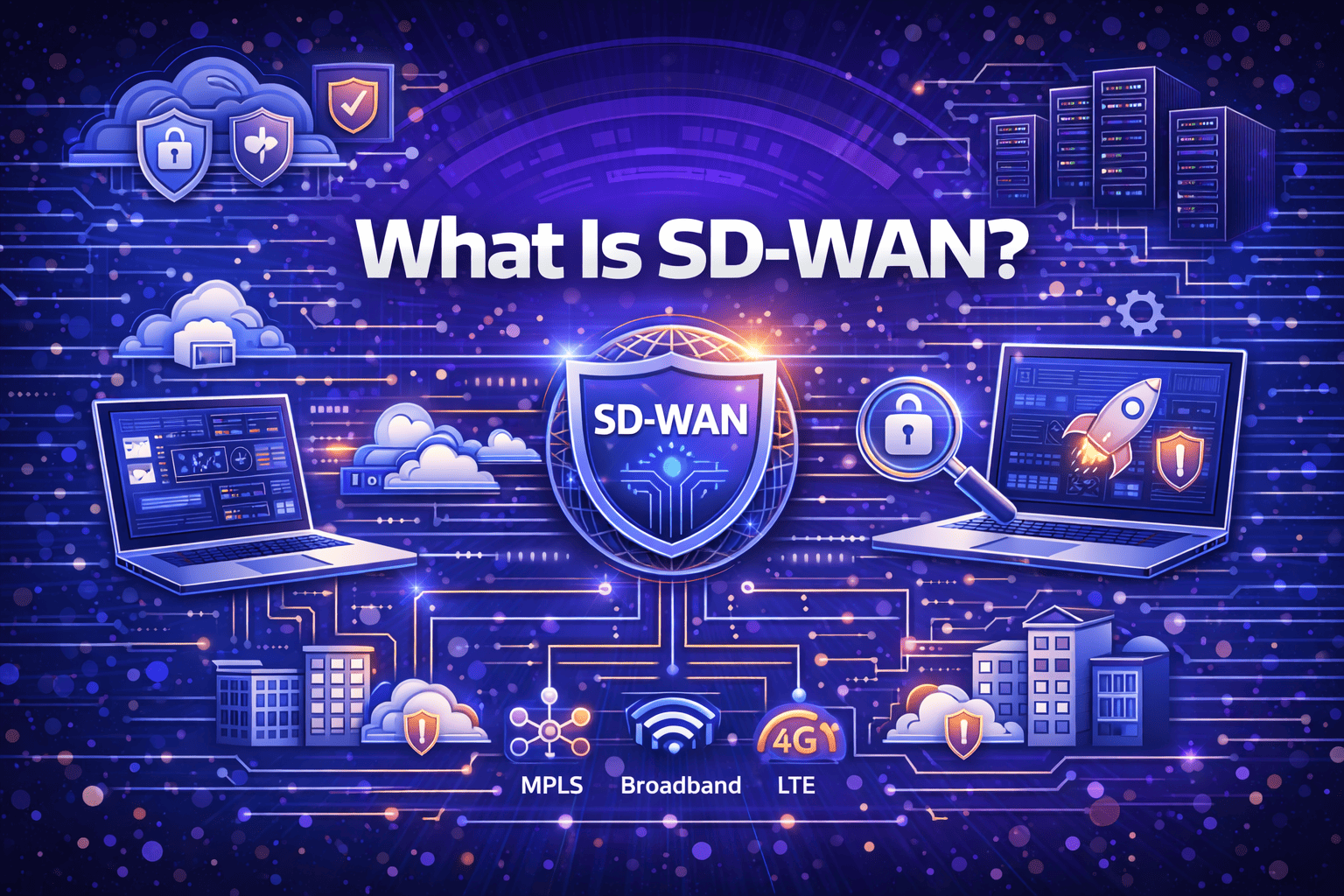
What is SD-WAN? SD-WAN stands for Software-Defined Wide Area Network, a modern networking approach that uses software to manage and optimize traffic across wide area networks. Unlike traditional WANs that rely heavily on hardware and fixed routing, SD-WAN intelligently directs traffic based on application needs and real-time network conditions.
In simple terms, SD-WAN decouples network control from hardware. This allows organizations to use multiple connection types—such as MPLS, broadband, and LTE—while centrally managing performance and security.
Understanding what is SD-WAN helps organizations modernize connectivity without sacrificing control.
Why SD-WAN Is Important for Modern Businesses
Traditional WAN architectures were designed for on-premises data centers, not cloud-first environments. As business needs evolve, networks must adapt.
Key reasons SD-WAN is critical today include:
-
Rapid growth of cloud and SaaS applications
-
Increase in remote and hybrid workforces
-
Rising network costs
-
Need for consistent application performance
-
Greater demand for built-in security
SD-WAN aligns networking with modern digital transformation goals.
How SD-WAN Works
To truly understand what is SD-WAN, it’s important to see how it functions behind the scenes.
Centralized Control Plane
SD-WAN uses a centralized controller to define network policies. Administrators manage routing, security, and performance from a single interface.
Intelligent Traffic Routing
Traffic is dynamically routed based on:
-
Application priority
-
Network latency and packet loss
-
Bandwidth availability
This ensures critical applications always receive optimal performance.
Multiple Transport Options
SD-WAN supports multiple connection types, including:
-
MPLS
-
Broadband internet
-
LTE and 5G
The system automatically selects the best path for each application.
SD-WAN vs Traditional WAN (MPLS)
One of the most common questions when learning what is SD-WAN is how it compares to traditional WANs.
Traditional WAN (MPLS)
-
Fixed routing paths
-
High costs
-
Limited flexibility
-
Hardware-dependent
SD-WAN
-
Dynamic routing
-
Lower operational costs
-
Centralized management
-
Cloud-friendly architecture
For most organizations, SD-WAN offers better agility and cost efficiency.
Key Benefits of SD-WAN
SD-WAN delivers value across IT, security, and business operations.
Improved Application Performance
By routing traffic intelligently, SD-WAN reduces latency and packet loss for critical applications.
Cost Savings
Organizations can reduce reliance on expensive MPLS links by using broadband connections.
Centralized Management
Administrators manage the entire WAN from a single dashboard, simplifying operations.
Scalability
New locations can be deployed quickly without complex hardware installations.
These benefits explain why SD-WAN adoption continues to grow.
SD-WAN and Network Security
Security is a major consideration when evaluating what is SD-WAN.
Built-In Security Features
Many SD-WAN solutions include:
-
Encryption for data in transit
-
Integrated firewalls
-
Secure segmentation
-
Traffic inspection
This reduces reliance on separate security appliances.
SD-WAN and Zero Trust
SD-WAN supports Zero Trust principles by enforcing identity-based access and least-privilege connectivity.
For cybersecurity teams, SD-WAN provides better visibility and control across distributed networks.
Common SD-WAN Use Cases
SD-WAN is used across many industries and scenarios.
Branch Office Connectivity
SD-WAN simplifies and secures connectivity between headquarters and branch locations.
Cloud and SaaS Access
Traffic can be routed directly to cloud services instead of backhauling through data centers.
Remote Workforce Support
SD-WAN improves performance and security for remote users.
Disaster Recovery and Resilience
Automatic failover ensures uptime during outages.
Understanding what is SD-WAN highlights its versatility.
SD-WAN Deployment Models
Organizations can deploy SD-WAN in different ways.
On-Premises SD-WAN
Appliances are installed at each location and centrally managed.
Cloud-Based SD-WAN
Control and optimization are delivered via the cloud.
Hybrid SD-WAN
Combines on-premises and cloud components for flexibility.
The right model depends on infrastructure and business needs.
Challenges and Limitations of SD-WAN
While powerful, SD-WAN is not without challenges.
Potential Issues
-
Initial configuration complexity
-
Integration with legacy systems
-
Security misconfigurations
-
Vendor lock-in
Proper planning and expertise help overcome these challenges.
Best Practices for Implementing SD-WAN
To maximize value, organizations should follow proven best practices.
Actionable Implementation Tips
-
Assess application and traffic requirements
-
Define clear security policies
-
Pilot SD-WAN before full rollout
-
Integrate with existing security tools
-
Monitor performance continuously
These steps ensure a smooth transition.
SD-WAN for IT Managers and Executives
For leadership teams, SD-WAN is a strategic investment.
Business Benefits
-
Faster application performance
-
Lower network costs
-
Improved uptime and reliability
-
Enhanced security posture
Understanding what is SD-WAN helps leaders align networking with business growth.
Measuring the Success of SD-WAN
Organizations should track key metrics to evaluate effectiveness.
Key Metrics
-
Application latency
-
Network uptime
-
Bandwidth utilization
-
Security incidents
-
Cost savings
These insights help optimize ongoing operations.
The Future of SD-WAN
SD-WAN continues to evolve alongside networking trends.
Emerging Trends
-
Integration with SASE (Secure Access Service Edge)
-
AI-driven traffic optimization
-
Deeper security automation
-
Cloud-native networking
SD-WAN is becoming a foundation for next-generation enterprise networks.
Actionable Steps to Get Started with SD-WAN
Organizations can begin today by:
-
Auditing current WAN performance and costs
-
Identifying cloud and SaaS traffic patterns
-
Evaluating SD-WAN vendors
-
Aligning SD-WAN with security strategy
-
Training IT teams on centralized management
Early planning leads to better outcomes.
Frequently Asked Questions (FAQ)
1. What is SD-WAN in simple terms?
SD-WAN is a software-based way to manage and optimize wide area networks using multiple internet connections.
2. Is SD-WAN secure?
Yes, when properly configured. Most SD-WAN solutions include encryption and security controls.
3. Does SD-WAN replace MPLS?
In many cases, yes. Some organizations use SD-WAN alongside MPLS in hybrid deployments.
4. Who should use SD-WAN?
Any organization with multiple locations, cloud applications, or remote workers benefits from SD-WAN.
5. Is SD-WAN expensive to implement?
Initial costs exist, but long-term savings are often significant due to reduced bandwidth expenses.
Final Thoughts: Why SD-WAN Matters Today
Understanding what is SD-WAN is essential in a cloud-driven, distributed world. SD-WAN provides the performance, flexibility, and security modern organizations need to stay competitive.
By replacing rigid WAN architectures with intelligent, software-defined networking, businesses gain control, visibility, and resilience.
If you want better visibility, stronger security, and optimized performance across your network:
👉 Modernize your network with confidence
Request a demo: https://www.xcitium.com/request-demo/