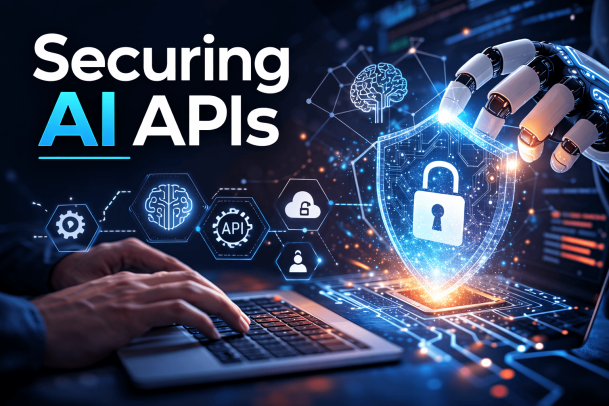
Artificial intelligence is transforming modern applications—from chatbots and recommendation engines to automation platforms and fraud detection systems. But with this rapid growth comes a critical challenge: AI API security.
Securing AI APIs: APIs power most AI integrations. They allow applications to connect with machine learning models, generative AI tools, and data platforms. However, unsecured AI APIs can expose organizations to data leaks, model manipulation, unauthorized access, and costly cyberattacks.
According to cybersecurity studies, APIs now account for more than half of modern web traffic, making them a major attack surface. If AI APIs are not properly secured, attackers can exploit vulnerabilities to access sensitive data or manipulate AI outputs.
So how can organizations safely deploy AI-driven services while protecting their infrastructure?
This guide explores how to secure AI APIs, common risks, and practical strategies to strengthen AI security.
What Are AI APIs?
AI APIs allow applications to interact with artificial intelligence services through a standardized interface. These APIs enable developers to integrate AI capabilities without building models from scratch.
Common AI API Use Cases
AI APIs power many modern technologies, including:
-
Natural language processing (NLP)
-
Image recognition
-
Chatbots and virtual assistants
-
Predictive analytics
-
Fraud detection
-
Recommendation engines
Examples include APIs used by platforms such as:
-
OpenAI
-
Google AI
-
Microsoft Azure AI
-
Amazon AI services
Organizations rely on these APIs to deliver intelligent services quickly and efficiently.
Why Securing AI APIs Is Critical
AI APIs often handle sensitive data and provide direct access to powerful models. If compromised, attackers can manipulate systems, steal information, or disrupt services.
Key Security Risks of AI APIs
Some of the most common AI API threats include:
-
Unauthorized access to AI models
-
Data exposure through unsecured endpoints
-
Model manipulation attacks
-
API abuse and overuse
-
Injection attacks targeting AI prompts
These risks make AI API security a top priority for modern enterprises.
Common Threats Targeting AI APIs
Understanding potential threats is the first step in building a secure AI infrastructure.
1. API Authentication Bypass
Weak authentication mechanisms allow attackers to access AI services without proper authorization.
Example Scenario
An attacker discovers a publicly exposed AI endpoint and sends requests without authentication, gaining access to the model.
This can lead to:
-
Data extraction
-
Model abuse
-
Service disruption
2. Data Leakage
AI APIs often process sensitive user data such as:
-
Personal information
-
Financial records
-
Business intelligence
-
Customer interactions
Improper security controls can expose this data through API responses or logs.
3. Prompt Injection Attacks
Prompt injection attacks manipulate AI models by inserting malicious instructions into input prompts.
How It Works
Attackers craft inputs designed to override the AI model’s intended behavior.
This may result in:
-
Revealing confidential data
-
Ignoring safety restrictions
-
Producing manipulated outputs
4. API Abuse and Rate Attacks
Attackers may exploit AI APIs by sending excessive requests.
Consequences include:
-
Increased operational costs
-
Service downtime
-
Resource exhaustion
This is especially dangerous for paid AI services where usage costs money.
5. Model Theft
AI models represent valuable intellectual property. Attackers may attempt to reverse engineer models by repeatedly querying APIs.
This process is known as model extraction.
If successful, competitors or malicious actors could replicate proprietary AI capabilities.
Best Practices for Securing AI APIs
Organizations must implement a layered security strategy to protect AI APIs.
1. Implement Strong Authentication
Authentication ensures that only authorized users can access AI services.
Recommended Methods
Use modern authentication technologies such as:
-
OAuth 2.0
-
API keys
-
Token-based authentication
-
Multi-factor authentication (MFA)
Avoid exposing AI APIs without authentication.
2. Enforce Role-Based Access Control (RBAC)
Not every user should have the same level of access.
Role-based access control helps restrict permissions.
Example Access Levels
-
Developers: API testing access
-
Administrators: configuration control
-
Applications: limited API usage
This prevents unauthorized actions within AI systems.
3. Use Rate Limiting and Throttling
Rate limiting prevents attackers from abusing AI APIs.
Benefits of Rate Limiting
It helps organizations:
-
Prevent denial-of-service attacks
-
Control AI usage costs
-
Detect abnormal activity
API gateways can enforce request limits per user or application.
4. Protect Against Prompt Injection
Prompt injection attacks are a growing concern for AI-driven systems.
Mitigation Techniques
Organizations should:
-
Validate user inputs
-
Filter malicious patterns
-
Implement AI safety controls
-
Restrict sensitive data exposure
Developers should also monitor model outputs to detect abnormal responses.
5. Encrypt Data in Transit and at Rest
Encryption protects sensitive information moving through AI APIs.
Security Measures
Use modern encryption standards such as:
-
HTTPS/TLS for API communication
-
Encryption for stored data
-
Secure key management
Encryption prevents attackers from intercepting sensitive data.
6. Monitor API Activity
Continuous monitoring helps detect suspicious behavior.
Security teams should track:
-
Unusual request patterns
-
Large data transfers
-
Repeated authentication failures
-
Unexpected AI responses
Security monitoring tools can alert teams to potential attacks in real time.
7. Implement API Gateways
API gateways act as security checkpoints between users and backend services.
API Gateway Security Features
They provide:
-
Authentication enforcement
-
Traffic filtering
-
Rate limiting
-
Threat detection
-
Request validation
This significantly reduces the attack surface.
Securing AI APIs in Enterprise Environments
Large organizations face additional challenges when deploying AI systems at scale.
Enterprise AI Security Considerations
Companies must address:
-
Integration with legacy systems
-
Cloud-based AI infrastructure
-
Data governance compliance
-
Third-party AI services
Organizations should adopt Zero Trust security models, ensuring every API request is verified.
AI API Security in the Cloud
Many AI services run in cloud environments.
Cloud Security Best Practices
Organizations should:
-
Use secure API gateways
-
Monitor cloud logs
-
Restrict API permissions
-
Implement identity-based access policies
Cloud providers offer built-in tools to improve API protection.
Future Trends in AI API Security
As AI adoption continues to grow, attackers are evolving their tactics.
Key trends shaping AI API security include:
-
AI-powered threat detection
-
Secure model deployment frameworks
-
AI governance and compliance regulations
-
Zero Trust architectures for AI systems
Organizations must remain proactive to stay ahead of emerging threats.
Frequently Asked Questions (FAQ)
What is AI API security?
AI API security involves protecting application programming interfaces that interact with artificial intelligence models from cyber threats such as unauthorized access, data leaks, and model manipulation.
Why are AI APIs vulnerable to attacks?
AI APIs are exposed to the internet and often process sensitive data. Without proper authentication, monitoring, and rate limiting, attackers can exploit vulnerabilities.
How can companies protect AI APIs?
Organizations should implement strong authentication, encryption, rate limiting, API gateways, monitoring systems, and access control policies.
What is prompt injection in AI?
Prompt injection is a technique where attackers manipulate AI inputs to alter the model’s behavior, potentially exposing confidential data or bypassing safeguards.
Are API gateways necessary for AI security?
Yes. API gateways help enforce authentication, manage traffic, monitor usage, and protect AI services from malicious requests.
Strengthen Your AI Security Strategy Today
AI innovation is accelerating across industries—but without proper security, it can also introduce new vulnerabilities.
Securing AI APIs is essential for protecting data, models, and business operations. By implementing strong authentication, monitoring systems, and threat detection strategies, organizations can safely harness the power of AI while reducing cybersecurity risks.
Want to see how advanced cybersecurity solutions can protect your AI infrastructure?
👉 Request a demo today:
https://www.xcitium.com/request-demo/
Discover how modern cybersecurity platforms can help secure APIs, detect threats, and safeguard your enterprise systems.
Please give us a star rating based on your experience.
 (1 votes, average: 5.00 out of 5, rated)