Healthcare organizations handle some of the most sensitive data in the world—patient health records, insurance information, and personal identifiers. Unfortunately, this data is also a prime target for cybercriminals. According to recent reports, healthcare remains one of the most frequently attacked industries due to the high value of medical data.
This is why understanding the HIPAA Security Rule breakdown is critical for hospitals, clinics, insurers, and healthcare technology providers. The HIPAA Security Rule establishes national standards for protecting electronic protected health information (ePHI) and ensuring that organizations implement appropriate safeguards.
For IT managers, compliance officers, and healthcare executives, a clear HIPAA Security Rule breakdown helps identify what measures must be in place to protect patient data and meet regulatory requirements.
In this guide, we’ll provide a comprehensive HIPAA Security Rule breakdown, explain its safeguards, and outline practical steps healthcare organizations can take to strengthen security and maintain compliance.
What Is the HIPAA Security Rule?
The HIPAA Security Rule is part of the Health Insurance Portability and Accountability Act (HIPAA) and focuses specifically on protecting electronic protected health information (ePHI).
The rule requires healthcare organizations to implement administrative, physical, and technical safeguards to ensure the confidentiality, integrity, and availability of patient data.
Purpose of the HIPAA Security Rule
The primary goals of the HIPAA Security Rule include:
-
Protecting sensitive healthcare information
-
Preventing unauthorized access to patient data
-
Ensuring data integrity and availability
-
Establishing national healthcare security standards
A thorough HIPAA Security Rule breakdown helps organizations understand how to apply these requirements in real-world environments.
Who Must Comply with the HIPAA Security Rule?
Not every organization falls under HIPAA regulations. However, several types of entities must follow the rule.
Covered Entities
Covered entities include organizations directly involved in healthcare operations.
Examples include:
-
Hospitals and clinics
-
Physicians and healthcare providers
-
Health insurance companies
-
Healthcare clearinghouses
Business Associates
Business associates are organizations that handle protected health information on behalf of covered entities.
Examples include:
-
Cloud service providers
-
Medical billing companies
-
Healthcare software vendors
-
Data storage providers
Both covered entities and business associates must comply with the HIPAA Security Rule requirements.
Key Components of the HIPAA Security Rule
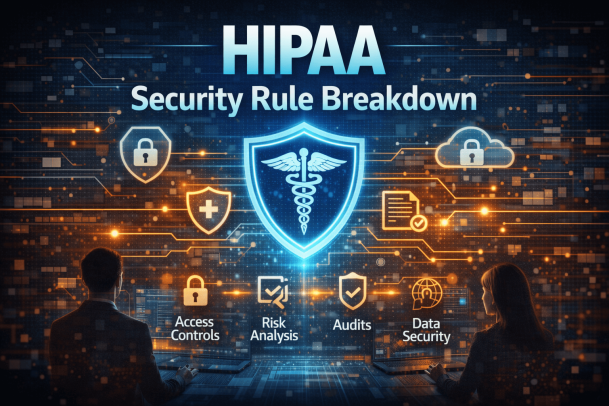
A proper HIPAA Security Rule breakdown reveals three primary categories of safeguards:
-
Administrative safeguards
-
Physical safeguards
-
Technical safeguards
Each category includes specific requirements designed to protect healthcare data.
Administrative Safeguards
Administrative safeguards establish policies and procedures for managing security risks.
These safeguards ensure that organizations develop structured approaches to protecting patient information.
Security Management Process
Organizations must identify potential risks to electronic protected health information and implement measures to mitigate those risks.
Risk Analysis
Healthcare organizations must conduct regular risk assessments to identify vulnerabilities.
Risk Management
Once risks are identified, organizations must implement measures to reduce them.
Workforce Security
Employees and contractors must receive appropriate access privileges based on their roles.
Access Authorization
Organizations should define who can access ePHI and under what conditions.
Workforce Training
Employees must receive training on HIPAA compliance and security practices.
Training topics often include:
-
Password security
-
Data protection policies
-
Phishing awareness
Security Incident Procedures
Organizations must establish procedures for responding to security incidents involving ePHI.
This includes:
-
Detecting incidents
-
Reporting security breaches
-
Investigating suspicious activity
-
Documenting response actions
Physical Safeguards
Physical safeguards protect the physical infrastructure that stores or processes healthcare data.
Facility Access Controls
Healthcare facilities must control access to locations where sensitive data is stored.
Examples include:
-
Security badges
-
Locked server rooms
-
Visitor monitoring systems
Workstation Security
Organizations must secure workstations that access patient data.
Workstation security measures may include:
-
Screen lock policies
-
Device encryption
-
Access restrictions
Device and Media Controls
Devices containing electronic protected health information must be properly managed.
These controls include:
-
Secure disposal of devices
-
Data wiping procedures
-
Inventory tracking
Technical Safeguards
Technical safeguards focus on protecting electronic health information through technology controls.
Access Control
Access control ensures that only authorized users can view or modify protected health information.
Unique User Identification
Each user accessing healthcare systems must have a unique identifier.
Emergency Access Procedures
Healthcare providers must maintain procedures that allow access to critical data during emergencies.
Audit Controls
Audit controls track system activity related to electronic protected health information.
These logs help detect unauthorized access or suspicious behavior.
Integrity Controls
Integrity controls protect healthcare data from unauthorized alteration or destruction.
This may involve:
-
File integrity monitoring
-
Version control systems
-
Backup verification
Transmission Security
Transmission security protects healthcare data while it travels across networks.
Common methods include:
-
Encryption protocols
-
Secure communication channels
-
Virtual private networks (VPNs)
Common HIPAA Security Rule Compliance Challenges
Even organizations that understand the HIPAA Security Rule breakdown often face challenges when implementing compliance measures.
Legacy Systems
Older healthcare systems may lack modern security features needed for compliance.
Lack of Security Awareness
Employees who are unaware of cybersecurity risks may accidentally expose patient data.
Increasing Cyber Threats
Healthcare organizations face growing threats from ransomware, phishing attacks, and insider threats.
Resource Limitations
Smaller healthcare providers may lack the resources required to implement comprehensive security programs.
Best Practices for HIPAA Security Rule Compliance
Healthcare organizations can strengthen their compliance efforts by following these best practices.
Conduct Regular Risk Assessments
Routine security assessments help identify vulnerabilities before attackers exploit them.
Implement Strong Access Controls
Organizations should enforce strong authentication policies and limit access privileges.
Use Encryption
Encryption protects healthcare data both at rest and in transit.
Monitor Systems Continuously
Security monitoring tools help detect suspicious activity involving patient data.
Develop Incident Response Plans
Organizations must prepare for potential security incidents by creating response plans.
The Role of Cybersecurity Technologies in HIPAA Compliance
Modern security technologies help healthcare organizations meet HIPAA requirements more effectively.
Security Information and Event Management (SIEM)
SIEM platforms collect and analyze security logs to detect potential threats.
Endpoint Detection and Response (EDR)
EDR tools monitor devices used to access healthcare systems.
Data Loss Prevention (DLP)
DLP systems prevent unauthorized sharing or transfer of sensitive healthcare data.
The Future of HIPAA Security
Healthcare cybersecurity continues to evolve as technology advances.
Emerging trends include:
-
AI-driven threat detection
-
Cloud-based healthcare security platforms
-
Zero Trust security models
These technologies help healthcare organizations protect patient data more effectively.
FAQ: HIPAA Security Rule Breakdown
What is the HIPAA Security Rule?
The HIPAA Security Rule establishes national standards for protecting electronic protected health information (ePHI).
What are the three safeguards in the HIPAA Security Rule?
The rule includes administrative safeguards, physical safeguards, and technical safeguards.
Who must comply with the HIPAA Security Rule?
Covered entities such as healthcare providers and insurers, as well as business associates handling healthcare data, must comply.
What is ePHI?
Electronic protected health information (ePHI) refers to patient health information stored or transmitted electronically.
What happens if organizations fail to comply with HIPAA?
Non-compliance can result in regulatory penalties, legal consequences, and reputational damage.
Final Thoughts
Understanding the HIPAA Security Rule breakdown is essential for healthcare organizations that handle sensitive patient information. The rule provides a comprehensive framework for protecting electronic health data and ensuring compliance with national healthcare security standards.
By implementing administrative, physical, and technical safeguards, healthcare providers can reduce the risk of data breaches and maintain patient trust.
Strong cybersecurity practices are essential for maintaining HIPAA compliance in today’s evolving threat landscape.
👉 Request a demo today to see how Xcitium can help protect your healthcare systems and sensitive data:
https://www.xcitium.com/request-demo/
Please give us a star rating based on your experience.
 (1 votes, average: 5.00 out of 5, rated)