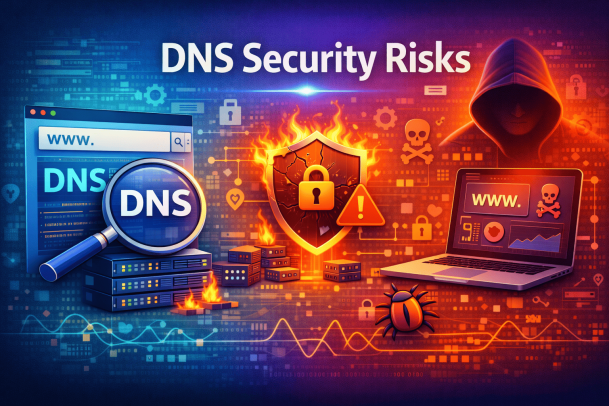
Most organizations focus heavily on firewalls, endpoint protection, and intrusion detection systems. Yet one of the most critical components of internet infrastructure—the Domain Name System (DNS)—is often overlooked. Unfortunately, ignoring DNS security risks can expose organizations to severe cyber threats.
DNS acts like the phonebook of the internet, translating domain names into IP addresses so users can access websites and services. However, attackers frequently exploit weaknesses in DNS systems to redirect traffic, steal sensitive data, and launch large-scale cyberattacks.
Understanding DNS security risks is essential for IT managers, cybersecurity teams, and business leaders who want to protect their networks and data. A single DNS vulnerability can compromise an entire organization’s digital infrastructure.
In this comprehensive guide, we will explore the most common DNS security risks, how DNS attacks work, and the best strategies to protect your organization from DNS-based threats.
What Is DNS and Why It Matters for Security
Before discussing DNS security risks, it’s important to understand how DNS works.
DNS translates human-readable domain names such as:
into machine-readable IP addresses such as:
Without DNS, users would need to remember numeric IP addresses for every website.
However, because DNS handles almost all internet traffic requests, it has become a major target for cybercriminals.
Why DNS Is a Prime Target for Attackers
Attackers target DNS infrastructure because it:
-
Controls internet traffic routing
-
Handles large volumes of requests
-
Often lacks strong security controls
-
Can redirect users to malicious websites
These weaknesses create significant DNS security risks for organizations of all sizes.
Common DNS Security Risks Organizations Face
Understanding the most common DNS security risks helps organizations strengthen their defenses.
DNS Spoofing (Cache Poisoning)
DNS spoofing, also known as DNS cache poisoning, is one of the most dangerous DNS attacks.
In this attack, attackers insert malicious DNS records into the DNS cache.
When users attempt to access legitimate websites, they are redirected to malicious servers controlled by attackers.
Consequences of DNS Spoofing
DNS spoofing can lead to:
-
Phishing attacks
-
Credential theft
-
Malware downloads
-
Financial fraud
Because users believe they are visiting legitimate websites, this attack is extremely effective.
DNS Hijacking
DNS hijacking occurs when attackers manipulate DNS queries to redirect traffic to malicious domains.
This attack may occur through:
-
Compromised DNS servers
-
Malware-infected routers
-
Unauthorized DNS configuration changes
DNS hijacking creates serious DNS security risks because attackers can intercept sensitive communications.
DNS Amplification Attacks
DNS amplification is a form of Distributed Denial-of-Service (DDoS) attack.
In this attack, attackers send small DNS queries that generate large responses.
The attacker spoofs the victim’s IP address so the amplified response traffic floods the target system.
Impact of DNS Amplification
DNS amplification attacks can:
-
Overload network infrastructure
-
Disrupt online services
-
Cause large-scale outages
Many large internet outages have resulted from DNS amplification attacks.
DNS Tunneling
DNS tunneling is a technique used by attackers to secretly transfer data through DNS queries.
Because DNS traffic is often trusted and rarely inspected, attackers use it to bypass security controls.
Why DNS Tunneling Is Dangerous
DNS tunneling can allow attackers to:
-
Exfiltrate sensitive data
-
Maintain command-and-control communication
-
Bypass firewalls
This makes DNS tunneling one of the most stealthy DNS security risks.
How DNS Attacks Affect Businesses
DNS attacks can have severe consequences for organizations.
Data Breaches
DNS vulnerabilities can allow attackers to steal sensitive company data.
Financial Loss
Businesses may suffer financial losses due to service disruptions or fraud.
Reputation Damage
Customers lose trust when organizations fail to protect their digital infrastructure.
Operational Downtime
DNS outages can make websites, applications, and services inaccessible.
Because DNS controls access to online systems, DNS disruptions can halt business operations.
Key Indicators of DNS Security Threats
Detecting DNS attacks early can prevent serious damage.
Organizations should monitor for suspicious DNS activity such as:
-
Unusual spikes in DNS traffic
-
Unexpected DNS queries to unknown domains
-
DNS requests to suspicious IP addresses
-
Large volumes of DNS responses
Security monitoring tools can help detect these indicators.
Best Practices to Reduce DNS Security Risks
Organizations must implement strong DNS security practices to minimize vulnerabilities.
Use DNSSEC (DNS Security Extensions)
DNSSEC adds cryptographic signatures to DNS records to verify authenticity.
This prevents attackers from injecting fake DNS responses.
Benefits of DNSSEC
DNSSEC helps:
-
Prevent DNS spoofing
-
Ensure DNS response integrity
-
Protect users from malicious redirection
Implement DNS Traffic Monitoring
Monitoring DNS traffic helps detect suspicious activity in real time.
Security tools can identify:
-
Malicious domain queries
-
Data exfiltration attempts
-
Command-and-control communication
DNS monitoring significantly reduces DNS security risks.
Restrict DNS Access
Organizations should limit who can modify DNS configurations.
Only authorized administrators should have DNS management permissions.
Use Threat Intelligence Feeds
Threat intelligence platforms provide information about known malicious domains.
Integrating these feeds with DNS monitoring tools improves threat detection.
Deploy DNS Filtering
DNS filtering solutions block access to malicious websites and domains.
These systems prevent users from connecting to harmful sites.
The Role of DNS Security in Modern Cybersecurity
DNS security is a critical component of modern cybersecurity strategies.
Organizations now use DNS monitoring as part of broader security frameworks such as:
-
Zero Trust security
-
Extended Detection and Response (XDR)
-
Security Information and Event Management (SIEM)
These technologies help detect DNS-related threats quickly.
Future Trends in DNS Security
Cybersecurity technologies are evolving to address growing DNS security risks.
AI-Powered Threat Detection
Artificial intelligence helps analyze DNS traffic patterns and detect anomalies.
Encrypted DNS Protocols
Technologies like DNS over HTTPS (DoH) and DNS over TLS (DoT) protect DNS queries from interception.
Integrated DNS Security Platforms
Modern security platforms combine DNS monitoring with endpoint and network security.
How Businesses Can Strengthen DNS Security
Organizations should follow these steps to strengthen DNS protection:
-
Enable DNSSEC on all domains
-
Monitor DNS traffic continuously
-
Use DNS filtering solutions
-
Restrict DNS management access
-
Integrate DNS security with threat intelligence platforms
These measures significantly reduce the risk of DNS-based cyberattacks.
FAQ: DNS Security Risks
What are DNS security risks?
DNS security risks refer to vulnerabilities in the Domain Name System that attackers exploit to redirect traffic, steal data, or disrupt services.
What is DNS spoofing?
DNS spoofing is an attack where malicious DNS records redirect users to fake websites controlled by attackers.
How can organizations prevent DNS attacks?
Organizations can reduce DNS attacks by using DNSSEC, monitoring DNS traffic, implementing DNS filtering, and restricting DNS access.
Why do attackers target DNS?
Attackers target DNS because it controls internet traffic routing and can redirect users to malicious servers.
What tools help monitor DNS threats?
Security platforms such as SIEM, NDR, and DNS filtering tools help detect and prevent DNS threats.
Final Thoughts
DNS plays a critical role in internet infrastructure, but it also introduces serious security risks when not properly protected. Understanding DNS security risks allows organizations to strengthen their defenses against cyber threats that exploit DNS vulnerabilities.
By implementing strong security practices such as DNSSEC, DNS monitoring, and threat intelligence integration, organizations can significantly reduce their exposure to DNS-based attacks.
As cyber threats continue to evolve, protecting DNS infrastructure must remain a top priority for IT leaders and cybersecurity teams.
👉 Request a demo today to see how Xcitium can help protect your organization from advanced cyber threats:
https://www.xcitium.com/request-demo/
Please give us a star rating based on your experience.
 (1 votes, average: 5.00 out of 5, rated)