Have you ever wondered why applications slow down at the worst possible time—during peak business hours, critical transactions, or executive demos? In today’s digital-first world, application reliability is business reliability. That’s why APM software has become essential for organizations that rely on performance, availability, and security to stay competitive.
Modern applications are complex, distributed, and constantly changing. Without deep visibility, small performance issues can quickly turn into major outages or security blind spots. This guide explains what APM software is, why it matters, how it works, and how IT leaders can use it to drive smarter decisions and stronger cybersecurity outcomes.
What Is APM Software?
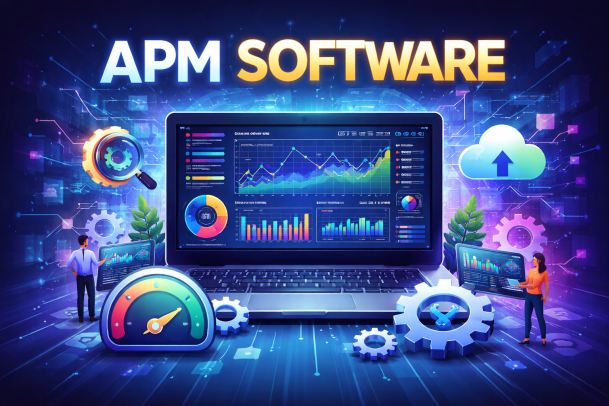
APM software (Application Performance Monitoring software) is a technology that tracks, analyzes, and optimizes the performance and health of applications in real time. It provides end-to-end visibility into how applications behave, from user interactions to backend services and infrastructure.
Unlike traditional monitoring tools, modern APM software goes beyond uptime checks. It delivers deep insights into response times, transaction flows, dependencies, errors, and system behavior—helping teams identify issues before users notice them.
Core Goals of APM Software
-
Improve application performance
-
Detect issues proactively
-
Reduce downtime and mean time to resolution (MTTR)
-
Support secure, reliable digital experiences
For organizations focused on cybersecurity and operational resilience, APM software is a critical component of the monitoring stack.
Why APM Software Matters in Today’s Threat Landscape
Application performance and security are tightly connected. When performance degrades unexpectedly, it can signal deeper problems—including misconfigurations, failed updates, or malicious activity.
Key Reasons APM Software Is Business-Critical
-
Applications power revenue, operations, and customer trust
-
Performance issues lead to lost users and damaged brand reputation
-
Modern attacks often hide inside application traffic
-
Distributed systems make manual troubleshooting nearly impossible
By using APM software, IT managers and security teams gain real-time visibility into application behavior, helping them spot anomalies that could indicate cyber threats or operational risks.
How APM Software Works
APM software collects data from multiple layers of an application environment and correlates it into actionable insights. This holistic approach allows teams to see not just what is failing, but why.
Key Components of APM Software
-
Instrumentation: Agents or sensors collect performance data
-
Transaction Tracing: Tracks user requests across services
-
Metrics & Logs: Measures response time, throughput, and errors
-
Analytics Engine: Uses rules or AI to identify patterns
-
Dashboards & Alerts: Visualizes insights for faster decisions
Advanced APM software platforms now integrate machine learning to automatically detect unusual behavior.
APM Software vs Traditional Monitoring Tools
Many organizations still rely on basic infrastructure monitoring, which only shows surface-level metrics like CPU or memory usage. APM software goes much deeper.
Traditional Monitoring
-
Focuses on servers and hardware
-
Limited context for application issues
-
Reactive troubleshooting
APM Software
-
Focuses on user experience and application behavior
-
Identifies root causes quickly
-
Proactive issue detection
For modern enterprises, APM software is no longer optional—it’s foundational.
Key Features to Look for in APM Software
Not all APM software solutions deliver the same level of value. Choosing the right one depends on visibility, automation, and integration.
Must-Have APM Software Features
-
Real-time application performance monitoring
-
Distributed transaction tracing
-
Error and exception tracking
-
Dependency and service mapping
-
AI-driven anomaly detection
-
Security and compliance visibility
The best APM software platforms help teams move from firefighting to strategic optimization.
The Role of APM Software in Cybersecurity
APM software plays an increasingly important role in modern cybersecurity strategies. Performance anomalies often reveal early signs of attack.
How APM Software Supports Security
-
Detects abnormal application behavior
-
Identifies suspicious traffic patterns
-
Highlights unauthorized service calls
-
Improves incident response speed
When combined with endpoint detection and response (EDR), APM software strengthens overall cyber resilience.
Benefits of APM Software for IT Managers and Executives
For IT managers, APM software provides operational clarity. For CEOs and founders, it supports business continuity and growth.
Business Benefits
-
Improved customer experience
-
Reduced downtime and outages
-
Faster issue resolution
-
Better capacity planning
-
Data-driven decision making
With APM software, leadership gains confidence that applications will perform reliably—even during peak demand or unexpected events.
Industry Use Cases for APM Software
Different industries rely on APM software in different ways, but the core value remains the same: visibility and control.
Common Industry Applications
-
Finance: Monitoring transaction latency and fraud signals
-
Healthcare: Ensuring availability of patient systems
-
Retail: Preventing checkout failures during peak sales
-
Manufacturing: Supporting operational technology applications
-
Technology: Managing microservices and cloud workloads
APM software adapts to each industry’s performance and security requirements.
Cloud, Hybrid, and On-Prem: APM Software Everywhere
Modern environments are rarely simple. Applications now span on-premise systems, public cloud platforms, and hybrid architectures.
Why APM Software Is Essential for Hybrid Environments
-
Tracks dependencies across environments
-
Identifies cloud latency issues
-
Improves visibility into third-party services
-
Supports scalability without blind spots
Without APM software, hybrid complexity quickly becomes unmanageable.
Best Practices for Implementing APM Software
Successful APM software deployment requires planning and alignment across teams.
Implementation Tips
-
Define clear performance objectives
-
Start with critical applications
-
Integrate APM with security tools
-
Train teams on dashboards and alerts
-
Continuously refine thresholds
When implemented correctly, APM software becomes a long-term strategic asset.
Common Challenges APM Software Helps Solve
APM software is designed to address the most persistent application challenges.
Problems Solved by APM Software
-
Slow application response times
-
Unexplained outages
-
Complex root cause analysis
-
Performance issues after updates
-
Lack of visibility across services
By centralizing insights, APM software reduces operational noise and improves focus.
The Future of APM Software
APM software continues to evolve alongside application architectures and threat landscapes.
Emerging Trends
-
AI-driven observability
-
Security-aware performance monitoring
-
Deeper integration with Zero Trust models
-
Automated remediation
As applications grow more dynamic, APM software will become even more critical.
Frequently Asked Questions (FAQs)
1. What is APM software used for?
APM software is used to monitor, analyze, and optimize application performance while improving visibility and reliability.
2. Is APM software only for large enterprises?
No. While enterprises benefit greatly, mid-sized and growing businesses also use APM software to prevent outages and performance issues.
3. Can APM software improve cybersecurity?
Yes. APM software detects abnormal behavior that may indicate security threats or system compromise.
4. Does APM software impact application performance?
Modern APM software is lightweight and designed to minimize overhead while providing deep insights.
5. How does APM software support cloud environments?
APM software tracks performance across distributed services, containers, and cloud infrastructure.
Final Thoughts: Why APM Software Is a Strategic Investment
Applications are the backbone of modern business. When they slow down, fail, or behave unpredictably, the impact is immediate and costly. APM software gives organizations the visibility and intelligence needed to maintain performance, reliability, and security at scale.
For IT leaders and executives, investing in APM software is about more than monitoring—it’s about protecting digital trust, supporting growth, and staying ahead of risk.
🚀 Take the Next Step Toward Smarter Monitoring and Security
Strengthen your visibility, performance, and response capabilities with advanced monitoring and protection.
👉 Get started today:
https://openedr.platform.xcitium.com/register/
Your applications deserve more than guesswork—give them the clarity and control they need.