What Is SCADA? A Complete Guide to Supervisory Control and Data Acquisition
Updated on December 18, 2025, by Xcitium
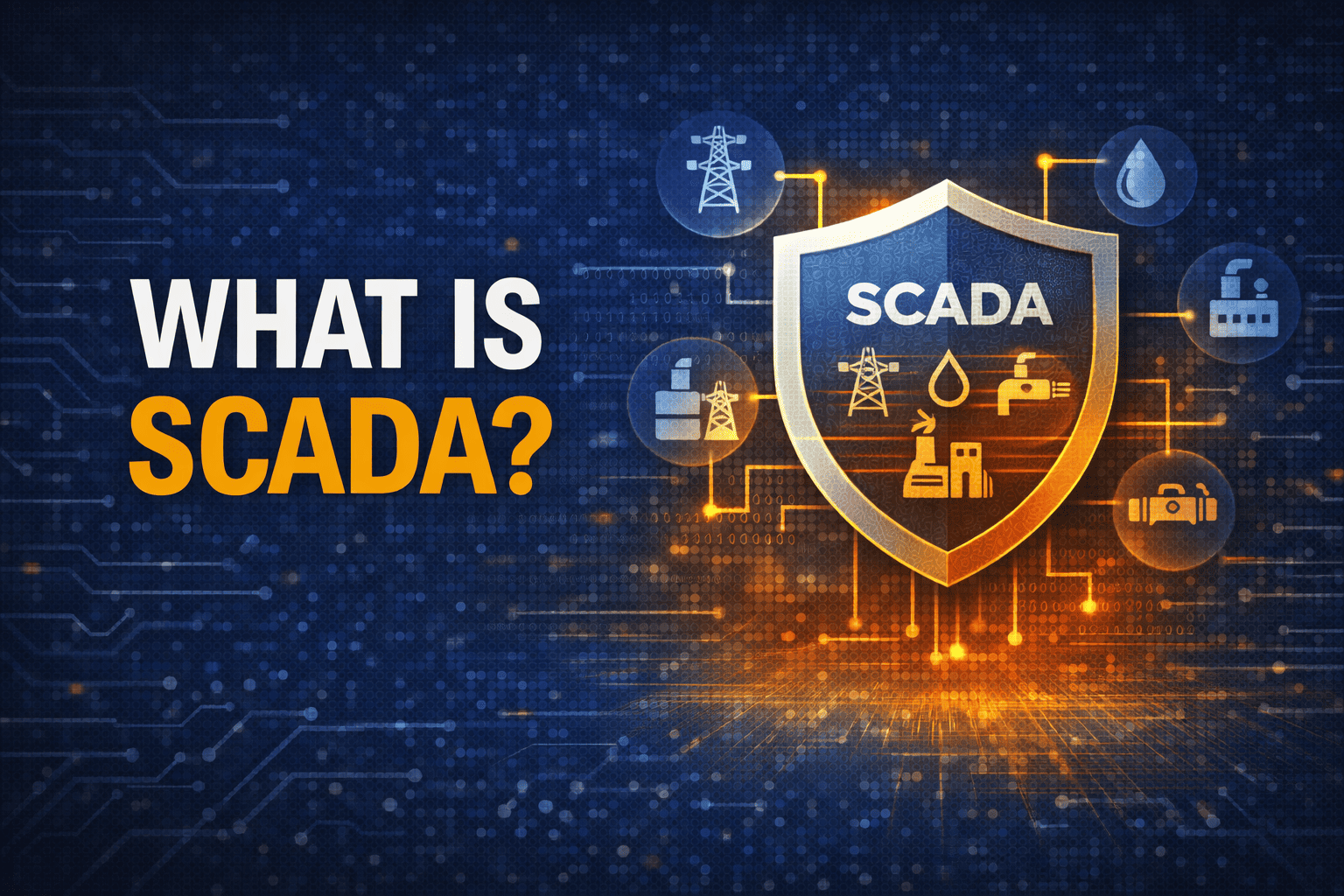
Power grids, water treatment plants, manufacturing lines, oil pipelines, and transportation systems all rely on invisible technology working behind the scenes. When these systems fail, the impact can be massive—affecting safety, revenue, and even national security. That’s why so many professionals ask a crucial question: what is SCADA, and why is it so important?
SCADA, short for Supervisory Control and Data Acquisition, is the technology that allows organizations to monitor, control, and automate industrial processes in real time. In this guide, we’ll explore what is SCADA, how it works, where it’s used, and why SCADA security has become a top priority for modern organizations.
What Is SCADA?
So, what is SCADA exactly?
SCADA (Supervisory Control and Data Acquisition) is a system of software and hardware that enables organizations to monitor, control, collect data from, and automate industrial operations across local and remote locations.
SCADA systems gather real-time data from physical equipment, analyze it, and allow operators to make informed decisions or trigger automated actions.
In simple terms, SCADA acts as the central nervous system of industrial environments.
Why SCADA Systems Are Essential
Understanding what is SCADA also means understanding why it’s so widely used.
SCADA systems help organizations:
-
Improve operational efficiency
-
Reduce downtime
-
Increase safety
-
Enable remote monitoring
-
Make data-driven decisions
Without SCADA, many critical infrastructure services would be inefficient, unsafe, or impossible to manage at scale.
Key Components of a SCADA System
A SCADA system is made up of several core components working together.
1. Sensors and Actuators
These devices interact directly with physical processes, measuring variables like temperature, pressure, flow, and voltage.
2. Remote Terminal Units (RTUs)
RTUs collect data from sensors and send it to central systems.
3. Programmable Logic Controllers (PLCs)
PLCs execute control logic and automate responses based on predefined rules.
4. SCADA Software
The software layer processes data, visualizes it, and allows operators to control systems.
5. Human-Machine Interface (HMI)
HMIs provide dashboards and graphical views for operators to monitor and manage operations.
How SCADA Works
To fully understand what is SCADA, it helps to see how these components interact.
-
Sensors collect real-time data
-
RTUs or PLCs transmit data to the SCADA system
-
SCADA software analyzes and stores the data
-
Operators view data through HMIs
-
Commands are sent back to control equipment
This continuous loop enables precise, real-time control of complex processes.
SCADA vs ICS: What’s the Difference?
SCADA is often mentioned alongside Industrial Control Systems (ICS).
-
ICS is the broad category that includes all control systems
-
SCADA is a specific type of ICS focused on supervisory control and data acquisition
In other words, all SCADA systems are ICS, but not all ICS are SCADA.
Where Are SCADA Systems Used?
SCADA systems are everywhere—often in places people don’t notice.
1. Energy and Utilities
Power generation, transmission, and distribution rely heavily on SCADA.
2. Water and Wastewater
SCADA controls water treatment plants and distribution networks.
3. Manufacturing
Production lines, robotics, and quality control systems use SCADA.
4. Oil and Gas
Pipeline monitoring, drilling operations, and refineries depend on SCADA.
5. Transportation
Railways, traffic systems, and airports use SCADA for safe operations.
SCADA and Operational Technology (OT)
SCADA systems are part of Operational Technology (OT), which differs from traditional IT.
| IT Systems | OT / SCADA Systems |
|---|---|
| Focus on data | Focus on physical processes |
| Downtime is inconvenient | Downtime can be dangerous |
| Frequent updates | Stability is critical |
This difference makes SCADA security uniquely challenging.
Why SCADA Security Is a Major Concern
As SCADA systems become more connected, they also become more vulnerable.
Common SCADA Security Risks
-
Legacy systems with weak security
-
Internet-connected control networks
-
Limited visibility into threats
-
Lack of segmentation between IT and OT
Cyberattacks on SCADA systems can cause:
-
Physical damage
-
Environmental harm
-
Financial losses
-
Public safety risks
Notable SCADA Cyber Incidents
High-profile attacks show why SCADA security matters.
-
Power grid disruptions
-
Water treatment system breaches
-
Manufacturing shutdowns
These incidents highlight the urgent need to protect SCADA environments.
SCADA Security Best Practices
Organizations must take a proactive approach to securing SCADA systems.
1. Network Segmentation
Separate IT and OT networks to reduce attack spread.
2. Continuous Monitoring
Monitor SCADA traffic for abnormal behavior.
3. Zero Trust Principles
Never trust devices or users by default.
4. Least-Privilege Access
Limit access to only what is necessary.
5. Endpoint Containment
Ensure unknown or malicious activity cannot cause damage.
SCADA and Modern Cybersecurity Solutions
Traditional antivirus solutions are often ineffective in SCADA environments.
Modern approaches focus on:
-
Behavior-based detection
-
Zero Trust containment
-
Continuous monitoring
This ensures threats are neutralized without disrupting operations.
SCADA and XDR
Extended Detection and Response (XDR) platforms provide visibility across IT and OT environments.
By correlating data from endpoints, networks, and industrial systems, XDR helps:
-
Detect threats earlier
-
Understand attack paths
-
Automate containment
This is especially valuable in hybrid IT-OT environments.
Challenges of Managing SCADA Systems
Despite their benefits, SCADA systems come with challenges.
Key Challenges
-
Aging infrastructure
-
Limited patching windows
-
Compatibility issues
-
Skill shortages
Balancing availability and security is one of the biggest hurdles.
Future of SCADA Systems
SCADA continues to evolve alongside technology.
Emerging Trends
-
Cloud-connected SCADA
-
AI-driven analytics
-
Predictive maintenance
-
Improved cybersecurity integration
As systems modernize, security must evolve with them.
Why Business Leaders Should Care About SCADA
For CEOs and founders, SCADA systems are not just technical assets—they are business-critical systems.
A single SCADA outage can:
-
Halt operations
-
Damage reputation
-
Lead to regulatory penalties
Understanding what is SCADA helps leaders make informed risk and investment decisions.
Frequently Asked Questions (FAQ)
1. What is SCADA used for?
SCADA is used to monitor and control industrial processes in real time.
2. Is SCADA the same as PLC?
No. PLCs are components within SCADA systems, not the entire system.
3. Are SCADA systems connected to the internet?
Many modern SCADA systems are partially connected, increasing security risks.
4. Why is SCADA security difficult?
SCADA systems prioritize availability and often use legacy technology.
5. Can SCADA systems be protected from cyberattacks?
Yes, with modern security strategies like Zero Trust and containment.
Final Thoughts
Understanding what is SCADA is essential in today’s connected industrial world. SCADA systems power critical infrastructure and industrial operations—but they also present unique cybersecurity challenges.
By combining strong SCADA design, continuous monitoring, and modern Zero Trust containment strategies, organizations can protect both their operations and the people who depend on them.
👉 Want to see how Zero Trust containment can protect critical systems and endpoints?
Request a demo from Xcitium today:
https://www.xcitium.com/request-demo/