What Is Binary Coding? A Complete Guide to How Computers Speak
Updated on January 14, 2026, by Xcitium
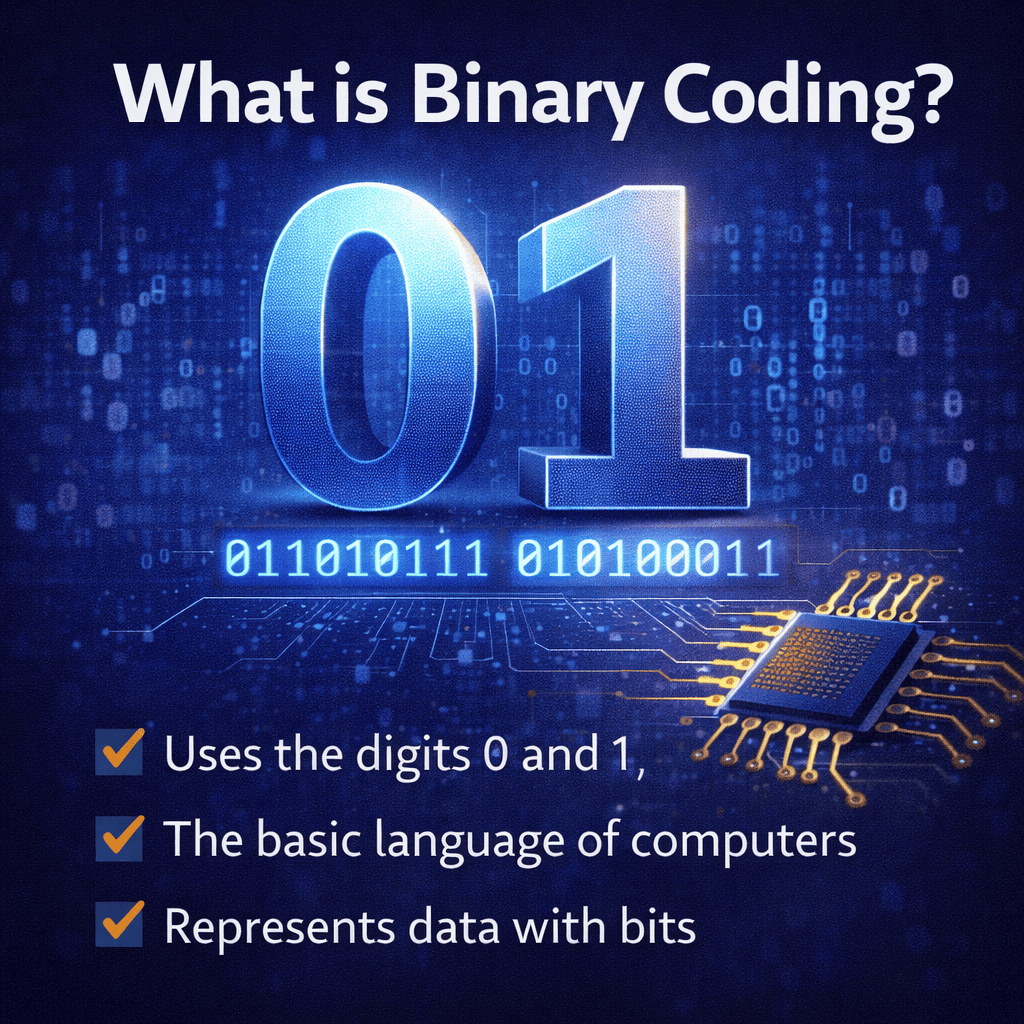
Have you ever wondered how computers understand everything from emails to videos using only numbers? If you’re asking what is binary coding, you’re exploring the fundamental language that powers every modern digital system. Despite its simplicity, binary coding is the backbone of computing, networking, and cybersecurity.
At first glance, binary may look confusing—just endless 0s and 1s. However, those two digits represent the most reliable way for machines to store, process, and transmit information. Understanding what is binary coding is essential for IT managers, cybersecurity teams, business leaders, and anyone working with technology.
This guide explains binary coding in clear, practical terms, explores how it works, where it’s used, and why it’s still critical in today’s digital world.
What Is Binary Coding?
What is binary coding? Binary coding is a system of representing data using only two values: 0 and 1. These two values are known as binary digits, or bits. Every piece of digital information—text, images, audio, software—is ultimately translated into combinations of these bits.
Computers use binary coding because electronic circuits can easily represent two states: on and off, true and false, or high voltage and low voltage. This simplicity makes binary coding extremely reliable and efficient.
Key Characteristics of Binary Coding
-
Uses only two digits (0 and 1)
-
Forms the basis of all digital data
-
Easily processed by electronic hardware
-
Highly reliable and error-resistant
Understanding what is binary coding begins with recognizing it as the most basic communication method between machines.
Why Computers Use Binary Coding
A common question after learning what is binary coding is why computers don’t use decimal numbers like humans do.
Why Binary Is Ideal for Computers
-
Electronic components naturally operate in two states
-
Binary reduces ambiguity and errors
-
Easier to detect and correct mistakes
-
Simplifies hardware design
Using binary coding allows computers to function faster, more accurately, and with greater stability.
How Binary Coding Works
To fully grasp what is binary coding, it helps to understand how information is represented.
Bits and Bytes Explained
-
Bit: A single 0 or 1
-
Byte: A group of 8 bits
Each byte can represent 256 different values, which allows computers to encode characters, numbers, and instructions.
Example: Binary Representation
-
Decimal number 5 = Binary 0101
-
Letter A = Binary 01000001 (ASCII)
Through binary coding, complex information is broken down into manageable electrical signals.
Binary Coding and Data Representation
Binary coding supports many types of data.
What Binary Coding Represents
-
Numbers
-
Letters and symbols
-
Images and videos
-
Software instructions
-
Network traffic
Without binary coding, digital communication as we know it would not exist.
Binary Coding in Everyday Technology
Even if you don’t see it, binary coding is everywhere.
Common Examples
-
Smartphones and laptops
-
Internet data transmission
-
Cloud computing
-
Smart home devices
-
Banking and payment systems
Every digital interaction relies on binary coding at its core.
Binary Coding vs Decimal and Hexadecimal Systems
Understanding what is binary coding becomes easier when comparing it to other systems.
| Number System | Digits Used | Who Uses It |
|---|---|---|
| Decimal | 0–9 | Humans |
| Binary | 0–1 | Computers |
| Hexadecimal | 0–9, A–F | Programmers |
Hexadecimal is often used as a shorthand for binary because it’s easier for humans to read.
Binary Coding in Programming
Programming languages rely on binary coding behind the scenes.
How Code Becomes Binary
-
Programmer writes code (Python, C, Java, etc.)
-
Code is compiled or interpreted
-
Instructions are converted to binary
-
CPU executes binary instructions
Understanding what is binary coding helps developers appreciate how software interacts with hardware.
Binary Coding and Cybersecurity
Binary coding plays a critical role in cybersecurity.
Why Binary Matters for Security
-
Malware executes as binary instructions
-
Encryption algorithms rely on binary math
-
Network packets are transmitted in binary
-
Security monitoring analyzes binary data
Cybersecurity professionals often inspect binary behavior to detect malicious activity.
Binary Coding and Encryption
Encryption transforms readable data into unreadable binary sequences.
Role of Binary in Encryption
-
Data is converted to binary
-
Mathematical operations scramble the bits
-
Authorized keys reverse the process
This is why understanding what is binary coding is foundational for encryption and data protection.
How Binary Coding Enables Networking
Every message sent over a network is binary-coded.
Binary in Networking
-
Data packets are binary
-
IP addresses are binary-based
-
Network protocols rely on binary signals
Reliable networking depends on accurate binary transmission.
Binary Coding in Storage Systems
Data storage uses binary states to preserve information.
Storage Examples
-
Hard drives (magnetic states)
-
SSDs (electrical charge)
-
USB drives and memory cards
Each bit is stored as a physical or electrical state, making binary coding highly durable.
Advantages of Binary Coding
Binary coding remains dominant for good reasons.
Key Advantages
-
Simplicity
-
Reliability
-
Error detection capabilities
-
Hardware efficiency
-
Scalability
These advantages explain why binary coding has lasted for decades.
Limitations of Binary Coding
While powerful, binary coding has limitations.
Common Challenges
-
Not human-readable
-
Requires translation layers
-
Large binary sequences can be complex
Higher-level systems exist to make binary coding accessible to humans.
Learning Binary Coding: Practical Tips
If you want to explore binary coding further:
Actionable Learning Tips
-
Practice binary-to-decimal conversion
-
Use online binary simulators
-
Learn basic logic gates
-
Study how ASCII and Unicode work
Even basic understanding improves technical literacy.
Binary Coding and the Future of Computing
Binary coding remains central—even as technology evolves.
Future Outlook
-
Quantum computing may expand beyond binary
-
AI systems still rely on binary foundations
-
Modern chips continue to use binary logic
Despite innovation, binary coding remains essential.
Binary Coding in Business and IT Strategy
For decision-makers, understanding what is binary coding supports better planning.
Business Relevance
-
Better communication with technical teams
-
Improved cybersecurity awareness
-
Informed infrastructure decisions
Binary knowledge bridges technical and executive understanding.
Frequently Asked Questions (FAQ)
1. What is binary coding in simple terms?
Binary coding is a way computers represent information using only 0s and 1s.
2. Why does binary use only two numbers?
Because electronic hardware can easily represent two states: on and off.
3. Is binary coding still relevant today?
Yes. All modern computing systems rely on binary coding.
4. Do programmers write code in binary?
No. Programmers use high-level languages that are translated into binary.
5. Is binary coding important for cybersecurity?
Absolutely. Malware, encryption, and network traffic all operate in binary.
Final Thoughts: Why Understanding What Is Binary Coding Matters
Binary coding may look simple, but it powers the entire digital world. Understanding what is binary coding gives professionals and leaders deeper insight into how technology, security, and communication truly work.
Whether you’re managing IT infrastructure, securing data, or making strategic decisions, binary coding knowledge strengthens your technical foundation.
👉 See how advanced security platforms protect data at the lowest level—request a demo today:
https://www.xcitium.com/request-demo/