Threat Hunting Methodologies Compared
Updated on February 19, 2026, by Xcitium
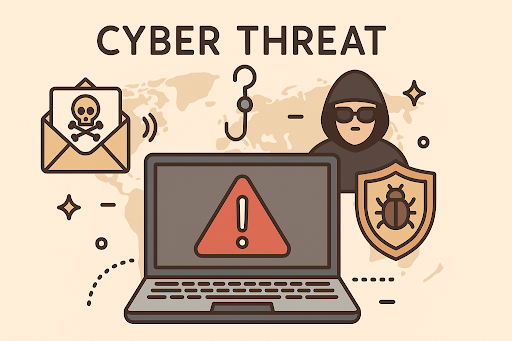
How long would an attacker remain inside your network before you noticed? According to industry research, advanced threats can dwell in environments for weeks—or even months—before detection. Traditional security tools rely on alerts, but modern attackers are stealthy, patient, and skilled at bypassing signature-based defenses.
That’s why organizations are shifting toward proactive security strategies. In this guide, we’ll explore threat hunting methodologies compared, breaking down how each approach works, where it excels, and how to choose the right strategy for your organization.
For IT managers, cybersecurity professionals, CISOs, and business leaders, understanding threat hunting is critical to reducing dwell time and minimizing breach impact.
What Is Threat Hunting?
Threat hunting is a proactive cybersecurity practice that involves actively searching for hidden threats inside an environment before they trigger automated alerts.
Unlike traditional detection methods that react to known signatures, threat hunting focuses on:
-
Identifying unknown threats
-
Detecting advanced persistent threats (APTs)
-
Analyzing suspicious behaviors
-
Investigating anomalies
When we look at threat hunting methodologies compared, we evaluate different ways security teams uncover hidden adversaries.
Why Threat Hunting Is Essential for Modern Security
Reactive security alone is no longer sufficient. Today’s cyber threats include:
-
Fileless malware
-
Zero-day exploits
-
Insider threats
-
Ransomware-as-a-service
-
Credential-based attacks
These threats often evade traditional antivirus and firewall defenses.
Proactive threat hunting:
-
Reduces attacker dwell time
-
Improves incident response readiness
-
Strengthens endpoint visibility
-
Supports compliance requirements
-
Enhances overall cyber resilience
Now, let’s examine the major threat hunting methodologies compared side by side.
Overview of Threat Hunting Methodologies Compared
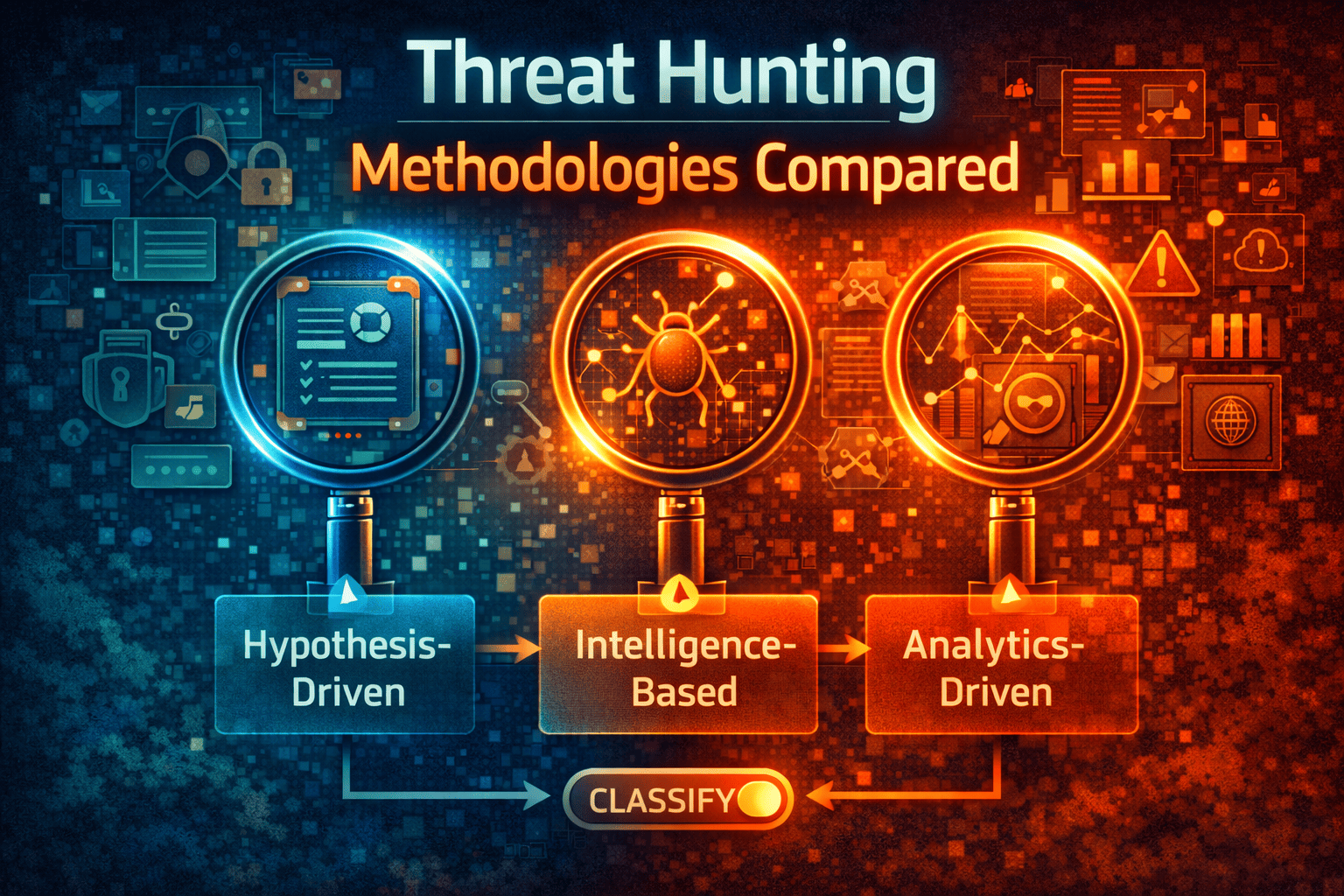
There are three primary threat hunting methodologies widely used across enterprises:
-
Hypothesis-Driven Hunting
-
Intelligence-Led Hunting
-
Behavioral or Anomaly-Based Hunting
Each approach offers unique advantages.
Hypothesis-Driven Threat Hunting
Hypothesis-driven hunting begins with an assumption based on known attack patterns.
How It Works
Security teams develop a hypothesis such as:
-
“Attackers may be using PowerShell for lateral movement.”
-
“Unusual login activity may indicate credential compromise.”
Hunters then search logs, endpoint data, and network telemetry to confirm or refute the hypothesis.
Advantages
-
Structured and repeatable
-
Based on frameworks like MITRE ATT&CK
-
Effective for identifying known tactics
Limitations
-
May miss unknown attack techniques
-
Relies heavily on analyst expertise
In threat hunting methodologies compared, hypothesis-driven hunting is often favored for mature security teams with strong analytical skills.
Intelligence-Led Threat Hunting
Intelligence-led hunting uses external or internal threat intelligence feeds to guide investigations.
Sources of Threat Intelligence
-
Indicators of compromise (IOCs)
-
IP reputation feeds
-
Malware signatures
-
Industry threat reports
-
Government advisories
How It Works
Security teams receive intelligence about a new ransomware strain. They then search internal systems for matching indicators.
Advantages
-
Targets real-world threats
-
Improves speed of detection
-
Aligns with current attack campaigns
Limitations
-
Dependent on intelligence quality
-
May lag behind emerging zero-day attacks
When reviewing threat hunting methodologies compared, intelligence-led hunting is particularly useful for organizations in high-risk industries like finance or healthcare.
Behavioral or Anomaly-Based Hunting
Behavioral hunting focuses on identifying abnormal activity rather than known indicators.
How It Works
This method relies on:
-
User behavior analytics (UBA)
-
Endpoint detection and response (EDR) data
-
Machine learning models
-
Network traffic baselines
Instead of looking for known malware, teams look for unusual behaviors, such as:
-
Sudden privilege escalation
-
Data exfiltration patterns
-
Off-hours login attempts
-
Unusual process execution
Advantages
-
Detects unknown threats
-
Effective against fileless attacks
-
Identifies insider threats
Limitations
-
Higher false positives
-
Requires advanced analytics tools
In the context of threat hunting methodologies compared, behavioral hunting is often the most proactive and future-proof approach.
Comparing Threat Hunting Methodologies Side by Side
Here’s a simplified comparison:
| Methodology | Focus | Strength | Weakness |
|---|---|---|---|
| Hypothesis-Driven | Known tactics | Structured analysis | May miss unknown threats |
| Intelligence-Led | Known IOCs | Real-time threat alignment | Depends on intelligence feeds |
| Behavioral | Anomalies | Detects unknown threats | Requires advanced tools |
Most mature security programs combine all three.
Tools That Support Threat Hunting
Successful threat hunting requires visibility and advanced tools.
Essential Technologies
-
Endpoint Detection and Response (EDR)
-
Extended Detection and Response (XDR)
-
Security Information and Event Management (SIEM)
-
Threat Intelligence Platforms
-
Network Detection and Response (NDR)
Without these tools, comparing threat hunting methodologies becomes theoretical rather than actionable.
Building an Effective Threat Hunting Program
To apply threat hunting methodologies compared in practice, follow these steps:
Define Clear Objectives
Start with specific goals:
-
Reduce dwell time
-
Detect insider threats
-
Identify lateral movement
Establish Data Visibility
Ensure logging and telemetry from:
-
Endpoints
-
Servers
-
Cloud workloads
-
Network devices
Data gaps limit hunting effectiveness.
Use the MITRE ATT&CK Framework
This framework maps adversary tactics and techniques.
It helps teams:
-
Develop hunting hypotheses
-
Identify coverage gaps
-
Standardize investigations
Train Skilled Analysts
Threat hunting requires:
-
Critical thinking
-
Pattern recognition
-
Technical expertise
Continuous training improves outcomes.
Measure Success
Track metrics such as:
-
Time to detect threats
-
Number of discovered incidents
-
Reduction in false positives
-
Improved incident response speed
Measurement ensures improvement.
Threat Hunting in Cloud and Hybrid Environments
Modern organizations operate across:
-
On-premises infrastructure
-
Public cloud platforms
-
Remote endpoints
-
SaaS applications
Threat hunting methodologies compared must adapt to distributed environments.
Cloud-native threats include:
-
Compromised API keys
-
Misconfigured storage
-
Container vulnerabilities
-
Privilege escalation in IAM roles
Hunting in hybrid environments requires centralized visibility.
Common Mistakes in Threat Hunting
Even experienced teams make errors.
1. Relying Only on Alerts
Threat hunting should go beyond automated alerts.
2. Ignoring Insider Threats
Not all threats come from outside.
3. Lack of Documentation
Failure to document hunts reduces repeatability.
4. Insufficient Data Retention
Limited log storage restricts historical analysis.
Avoiding these pitfalls strengthens outcomes.
Industries That Benefit Most from Threat Hunting
Financial Services
Protect against fraud and account takeover.
Healthcare
Secure patient data from ransomware.
Government
Defend against nation-state threats.
Technology
Protect intellectual property.
Manufacturing
Prevent operational disruptions.
Regardless of industry, threat hunting methodologies compared help organizations proactively reduce risk.
The Future of Threat Hunting
Threat hunting is evolving rapidly.
Emerging trends include:
-
AI-driven threat analysis
-
Automated investigation workflows
-
Integration with zero trust models
-
Real-time anomaly detection
As attackers become more advanced, proactive hunting will become standard practice.
FAQ: Threat Hunting Methodologies Compared
1. What are the main threat hunting methodologies?
The three primary approaches are hypothesis-driven, intelligence-led, and behavioral hunting.
2. Which threat hunting methodology is most effective?
The most effective strategy combines multiple methodologies for broader coverage.
3. Is threat hunting only for large enterprises?
No. Small and mid-sized organizations can also benefit from proactive hunting strategies.
4. How does threat hunting differ from threat detection?
Threat detection reacts to alerts, while threat hunting proactively searches for hidden threats.
5. What tools are essential for threat hunting?
EDR, SIEM, XDR, and threat intelligence platforms are commonly used.
Final Thoughts: Stay Ahead of Advanced Threats
In today’s threat landscape, waiting for alerts is not enough. By understanding threat hunting methodologies compared, organizations gain clarity on how to proactively uncover hidden adversaries.
The strongest cybersecurity programs combine structured hypotheses, real-time intelligence, and behavioral analytics to reduce risk and improve resilience.
If you’re ready to enhance your proactive security strategy and detect threats before they cause damage, take the next step.
👉 Request a personalized demo today:
https://www.xcitium.com/request-demo/
Stay proactive. Stay protected. Stay ahead.