Passwordless Authentication Explained: How It Works and Why It Matters
Updated on February 17, 2026, by Xcitium
Passwords have been the backbone of digital security for decades. Yet they remain one of the weakest links in cybersecurity. Weak passwords, reused credentials, phishing attacks, and credential stuffing continue to drive data breaches worldwide. So what if you could eliminate passwords entirely?
That’s where passwordless authentication comes in. As organizations shift toward Zero Trust security models and stronger identity protection, passwordless authentication is gaining momentum across industries.
In this guide, we’ll break down passwordless authentication explained in simple terms—how it works, why it’s more secure, common use cases, and how businesses can implement it successfully.
What Is Passwordless Authentication?
Passwordless authentication is a login method that allows users to access systems without entering a traditional password. Instead of relying on something users know (like a password), it verifies identity using something they have or are.
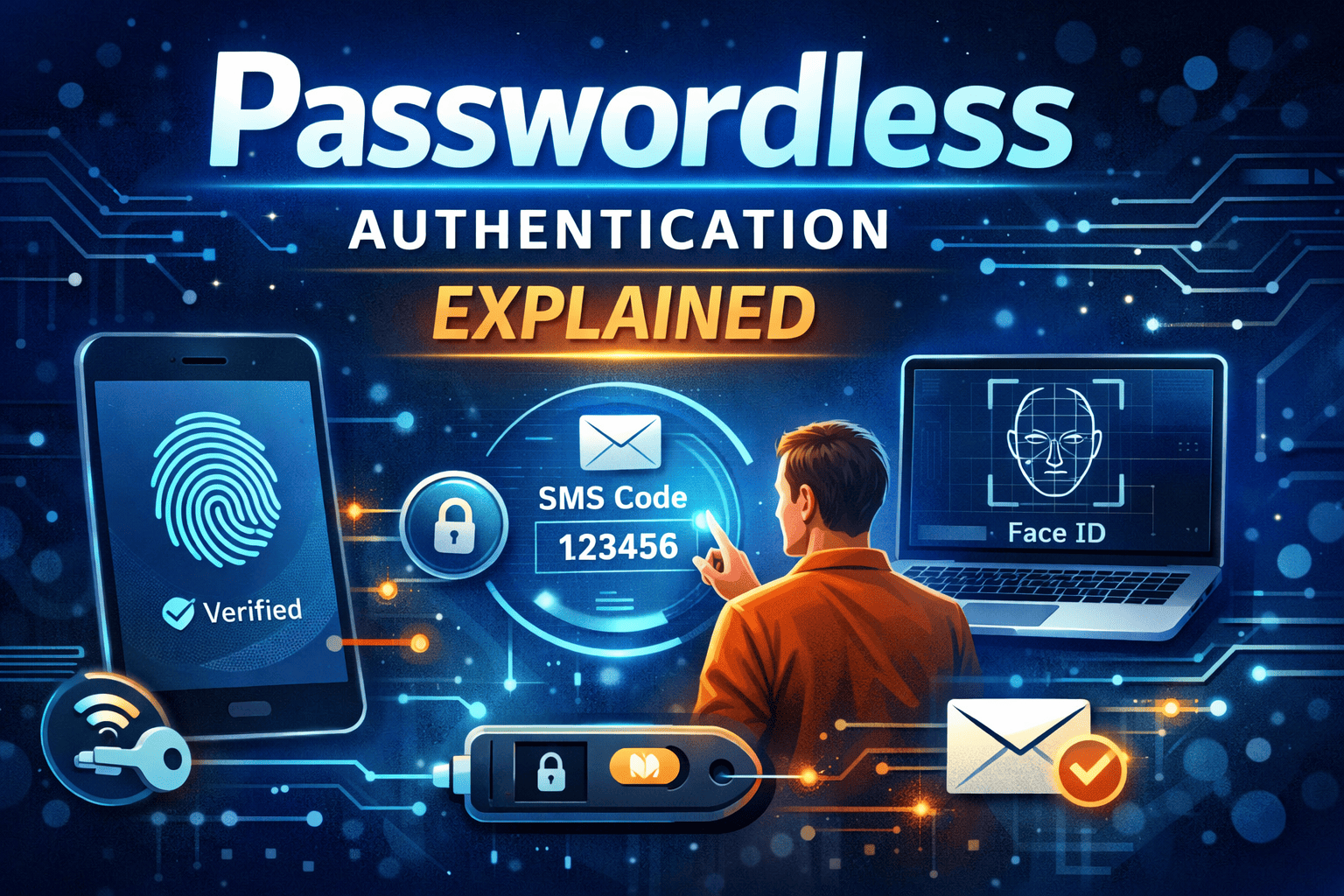
Common passwordless authentication methods include:
-
Biometrics (fingerprint, facial recognition)
-
Security keys (hardware tokens)
-
One-time passcodes (OTP)
-
Magic links sent via email
-
Push notifications to trusted devices
-
FIDO2-based authentication
The goal is simple: eliminate password vulnerabilities while improving user experience.
Why Traditional Passwords Are a Security Risk
Before diving deeper into passwordless authentication explained, it’s important to understand why passwords fail.
Common Password Weaknesses
-
Users reuse passwords across platforms
-
Weak passwords are easy to guess
-
Phishing attacks capture credentials
-
Credential stuffing exploits leaked databases
-
Password reset processes are vulnerable
Even strong password policies cannot fully eliminate human error. Attackers increasingly target identity systems rather than infrastructure.
How Passwordless Authentication Works
To fully understand passwordless authentication explained, let’s look at the underlying mechanisms.
Public Key Cryptography
Many passwordless systems use public key cryptography.
How It Works:
-
A user registers their device or biometric data.
-
The system generates a public and private key pair.
-
The private key remains securely stored on the user’s device.
-
During login, the system verifies identity using cryptographic validation.
This approach eliminates shared secrets that attackers can steal.
Biometric Authentication
Biometrics use unique physical traits such as:
-
Fingerprints
-
Facial recognition
-
Retina scans
These methods verify identity without transmitting sensitive biometric data to servers.
Hardware Security Keys
Hardware keys use secure chips to authenticate users.
Examples include:
-
USB security tokens
-
NFC-based keys
-
Smart cards
These keys provide strong phishing-resistant authentication.
One-Time Passcodes (OTP)
OTPs generate temporary login codes via:
-
SMS
-
Authenticator apps
-
Email
While not fully phishing-resistant, they improve security compared to static passwords.
Benefits of Passwordless Authentication
Adopting passwordless authentication provides significant advantages.
Stronger Security
Passwordless authentication reduces exposure to:
-
Phishing attacks
-
Credential theft
-
Brute force attacks
-
Password spraying
Without stored passwords, attackers have fewer entry points.
Improved User Experience
Users no longer need to:
-
Remember complex passwords
-
Reset forgotten credentials
-
Manage password managers
Authentication becomes faster and more convenient.
Reduced IT Costs
Password resets account for a large portion of IT helpdesk tickets. Eliminating passwords lowers support costs.
Enhanced Compliance
Passwordless authentication supports frameworks like:
-
Zero Trust architecture
-
NIST guidelines
-
ISO 27001
-
SOC 2
Stronger identity controls improve audit readiness.
Passwordless Authentication vs Multi-Factor Authentication (MFA)
Many organizations confuse passwordless authentication with MFA.
MFA (Multi-Factor Authentication)
Requires:
-
Something you know (password)
-
Something you have (device)
-
Something you are (biometric)
Passwordless Authentication
Eliminates the “something you know” factor entirely.
While MFA strengthens security, passwordless authentication removes password-related vulnerabilities altogether.
Passwordless Authentication in Zero Trust Security
Zero Trust security assumes no user or device should be automatically trusted.
Passwordless authentication aligns with Zero Trust by:
-
Enforcing strong identity verification
-
Reducing credential exposure
-
Supporting continuous authentication
-
Preventing phishing-based account takeover
Identity is the new perimeter, and passwordless systems strengthen that perimeter.
Common Use Cases for Passwordless Authentication
Organizations across industries are adopting passwordless strategies.
Enterprise Workforce Access
Employees log into corporate systems using biometrics or security keys.
Cloud and SaaS Applications
Passwordless login enhances security for platforms like:
-
Microsoft 365
-
Google Workspace
-
Salesforce
Financial Services
Banks use biometrics to secure mobile banking apps.
Healthcare
Hospitals reduce password fatigue for clinicians while protecting patient data.
E-Commerce Platforms
Passwordless login improves customer experience and reduces cart abandonment.
Challenges of Implementing Passwordless Authentication
Despite its benefits, passwordless authentication has challenges.
User Adoption
Employees may resist change.
Hardware Requirements
Security keys require procurement and distribution.
Integration Complexity
Legacy systems may require modernization.
Backup Authentication
Organizations must provide secure fallback options.
Planning and phased rollout strategies reduce friction.
Best Practices for Deploying Passwordless Authentication
To implement successfully:
1. Start with High-Risk Accounts
Protect privileged users and administrators first.
2. Conduct Risk Assessments
Identify systems most vulnerable to credential theft.
3. Integrate with Identity Management Systems
Use centralized IAM platforms for streamlined control.
4. Educate Employees
Clear communication improves adoption.
5. Monitor Authentication Events
Track unusual login patterns continuously.
The Future of Passwordless Authentication
The cybersecurity landscape is shifting toward:
-
Biometric-first authentication
-
Device-bound credentials
-
AI-driven identity verification
-
Continuous authentication models
As password breaches continue rising, organizations are accelerating passwordless adoption.
Industry analysts predict widespread password elimination in enterprise environments within the next few years.
Frequently Asked Questions (FAQ)
1. What is passwordless authentication?
Passwordless authentication is a login method that verifies identity without using traditional passwords.
2. Is passwordless authentication more secure than passwords?
Yes. It eliminates password-related vulnerabilities such as phishing and credential stuffing.
3. Does passwordless authentication replace MFA?
It can complement or replace traditional MFA by removing password dependency.
4. Are biometrics safe to use?
Yes. Modern biometric systems store data locally and use encryption for protection.
5. Can small businesses implement passwordless authentication?
Absolutely. Cloud-based identity providers make deployment accessible for organizations of all sizes.
Strengthen Your Identity Security Today
Password-related breaches continue to dominate cybersecurity headlines. Eliminating passwords is no longer a futuristic concept—it’s a practical security upgrade.
By adopting passwordless authentication, organizations reduce risk, improve user experience, and align with modern Zero Trust strategies.
If you’re ready to modernize your identity protection and secure your workforce with advanced authentication controls—
👉 Request a personalized demo today:
https://www.xcitium.com/request-demo/
Protect identities. Eliminate password risks. Stay ahead of evolving threats.