Human Risk Management Strategy: Turning Your People into Your Strongest Defense
Updated on March 25, 2026, by Xcitium
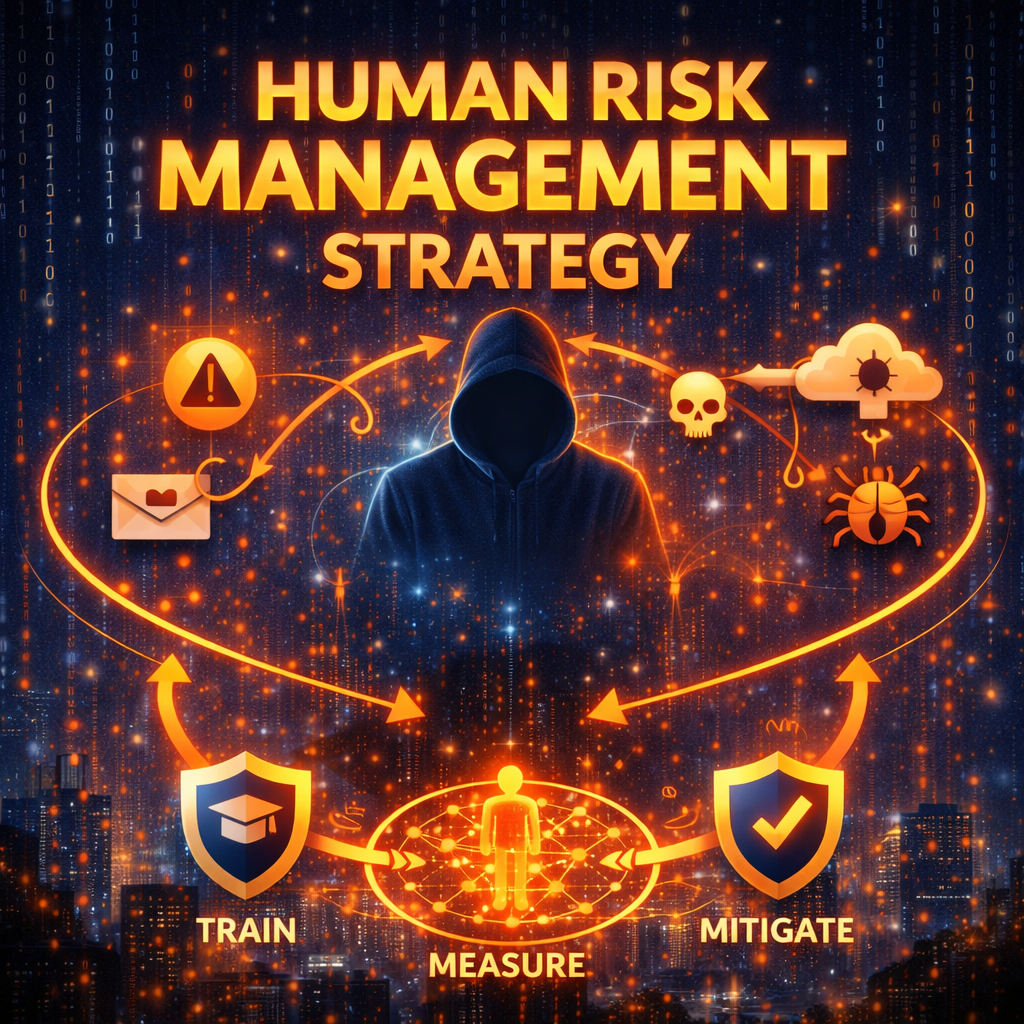
What if your biggest cybersecurity vulnerability isn’t your technology—but your people? Studies consistently show that human error is behind a large percentage of security breaches. That’s why implementing a strong Human Risk Management Strategy is essential for modern organizations.
Firewalls, antivirus tools, and endpoint protection can only go so far. Attackers increasingly target employees through phishing, social engineering, and credential theft. A well-designed Human Risk Management Strategy helps organizations identify, measure, and reduce human-related risks.
In this guide, we’ll explore how to build an effective strategy, key components, best practices, and how businesses can transform employees into a powerful line of defense.
What is a Human Risk Management Strategy?
A Human Risk Management Strategy is a structured approach to identifying, assessing, and reducing risks caused by human behavior in cybersecurity.
It focuses on:
- Employee actions and decisions
- Awareness of cyber threats
- Behavioral patterns
- Risk exposure across teams
Unlike traditional security approaches, this strategy emphasizes the human factor in cybersecurity.
Why Human Risk is the Biggest Cybersecurity Challenge
Cybercriminals target people because they are easier to exploit than systems.
Common Human-Driven Threats
- Phishing attacks
- Weak passwords
- Accidental data sharing
- Social engineering scams
- Insider threats
These risks highlight the need for a strong Human Risk Management Strategy.
Business Impact of Human Risk
Organizations that ignore human risk may face:
- Data breaches
- Financial losses
- Compliance violations
- Reputational damage
Managing human risk is critical for long-term security.
Key Components of a Human Risk Management Strategy
A successful strategy includes multiple layers.
1. Risk Identification
Identify where human risks exist within the organization.
Examples
- Employees clicking phishing links
- Poor password practices
- Unauthorized data access
2. Risk Assessment
Evaluate the likelihood and impact of human-related risks.
3. Security Awareness Training Program
Training is the foundation of any Human Risk Management Strategy.
Key Topics
- Phishing detection
- Password hygiene
- Safe browsing
- Data protection
4. Behavioral Analytics
Monitor user behavior to detect anomalies.
5. Continuous Monitoring
Track risks in real time to identify threats early.
6. Incident Response Integration
Ensure human risks are included in response plans.
Steps to Build a Human Risk Management Strategy
Organizations should follow a structured approach.
Step 1: Assess Current Human Risk Levels
Start by evaluating your organization’s risk profile.
Methods
- Phishing simulations
- Employee surveys
- Security audits
Step 2: Define Risk Metrics
Establish measurable indicators.
Examples
- Phishing click rates
- Training completion rates
- Incident reporting frequency
Step 3: Develop a Security Awareness Program
Create engaging and relevant training.
Step 4: Implement Technology Solutions
Use tools to support risk management.
Tools Include
- Email security platforms
- Endpoint protection tools
- User behavior analytics systems
Step 5: Monitor and Improve
Continuously evaluate and refine your strategy.
Best Practices for Human Risk Management
Organizations should adopt proven strategies.
Promote a Security-First Culture
Encourage employees to prioritize security in daily tasks.
Use Role-Based Training
Tailor training based on job roles and risk levels.
Encourage Reporting
Create a safe environment for reporting incidents.
Reinforce Learning Regularly
Use ongoing training and simulations.
Align with Business Goals
Ensure security supports organizational objectives.
Role of Leadership in Human Risk Management
Leadership plays a crucial role in shaping behavior.
Leadership Responsibilities
- Set security expectations
- Allocate resources
- Promote accountability
When leaders prioritize security, employees follow.
Technology’s Role in Human Risk Management
Technology enhances but does not replace human-focused strategies.
Key Technologies
- AI-driven threat detection
- Behavioral analytics platforms
- Security awareness tools
- Identity and access management systems
These tools support a comprehensive Human Risk Management Strategy.
Insider Threat Prevention
Insider threats are a major concern.
Types of Insider Threats
- Malicious insiders
- Negligent employees
- Compromised accounts
Prevention Strategies
- Monitor user activity
- Limit access privileges
- Conduct regular audits
Measuring the Success of a Human Risk Management Strategy
Organizations must track progress.
Key Metrics
- Phishing simulation results
- Incident rates
- User behavior trends
- Training effectiveness
Indicators of Success
- Reduced human errors
- Increased awareness
- Faster incident reporting
Challenges in Implementing Human Risk Management
Organizations may face obstacles.
Resistance to Change
Employees may resist new policies.
Lack of Awareness
Some employees underestimate risks.
Resource Constraints
Limited budgets and personnel can hinder progress.
Complexity of Human Behavior
Human actions are unpredictable.
Addressing these challenges strengthens your strategy.
Human Risk Management Across Industries
Different industries face unique risks.
Healthcare
Focus on protecting patient data.
Finance
Emphasize fraud prevention and compliance.
Retail
Protect customer data and transactions.
Technology
Secure intellectual property and cloud systems.
A tailored approach improves effectiveness.
Future Trends in Human Risk Management
The field is evolving rapidly.
Emerging Trends
- AI-driven risk scoring
- Personalized training programs
- Behavioral biometrics
- Integration with zero trust models
These trends will enhance cybersecurity human risk management.
Frequently Asked Questions (FAQ)
What is a Human Risk Management Strategy?
It is a framework for identifying and reducing risks caused by human behavior in cybersecurity.
Why is human risk important in cybersecurity?
Because human error is a leading cause of security breaches.
How can organizations reduce human risk?
By implementing training programs, monitoring behavior, and enforcing security policies.
What role does training play in human risk management?
Training helps employees recognize and respond to threats effectively.
How do you measure human risk?
By tracking metrics such as phishing click rates, incident reports, and training completion.
Strengthen Your Human Defense Layer Today
Cybersecurity is not just about technology—it’s about people. A strong Human Risk Management Strategy transforms employees from vulnerabilities into a powerful line of defense.
By investing in awareness, training, and behavioral insights, organizations can significantly reduce risk and improve resilience.
👉 Request a demo today:
https://www.xcitium.com/request-demo/
Discover how advanced cybersecurity solutions can help you manage human risk, improve security awareness, and protect your organization from evolving threats.


![what does dsl stand for]](https://www.xcitium.com/blog/wp-content/uploads/2026/01/what-does-dsl-stand-for.png)