Endpoint Hardening Checklist
Updated on March 19, 2026, by Xcitium
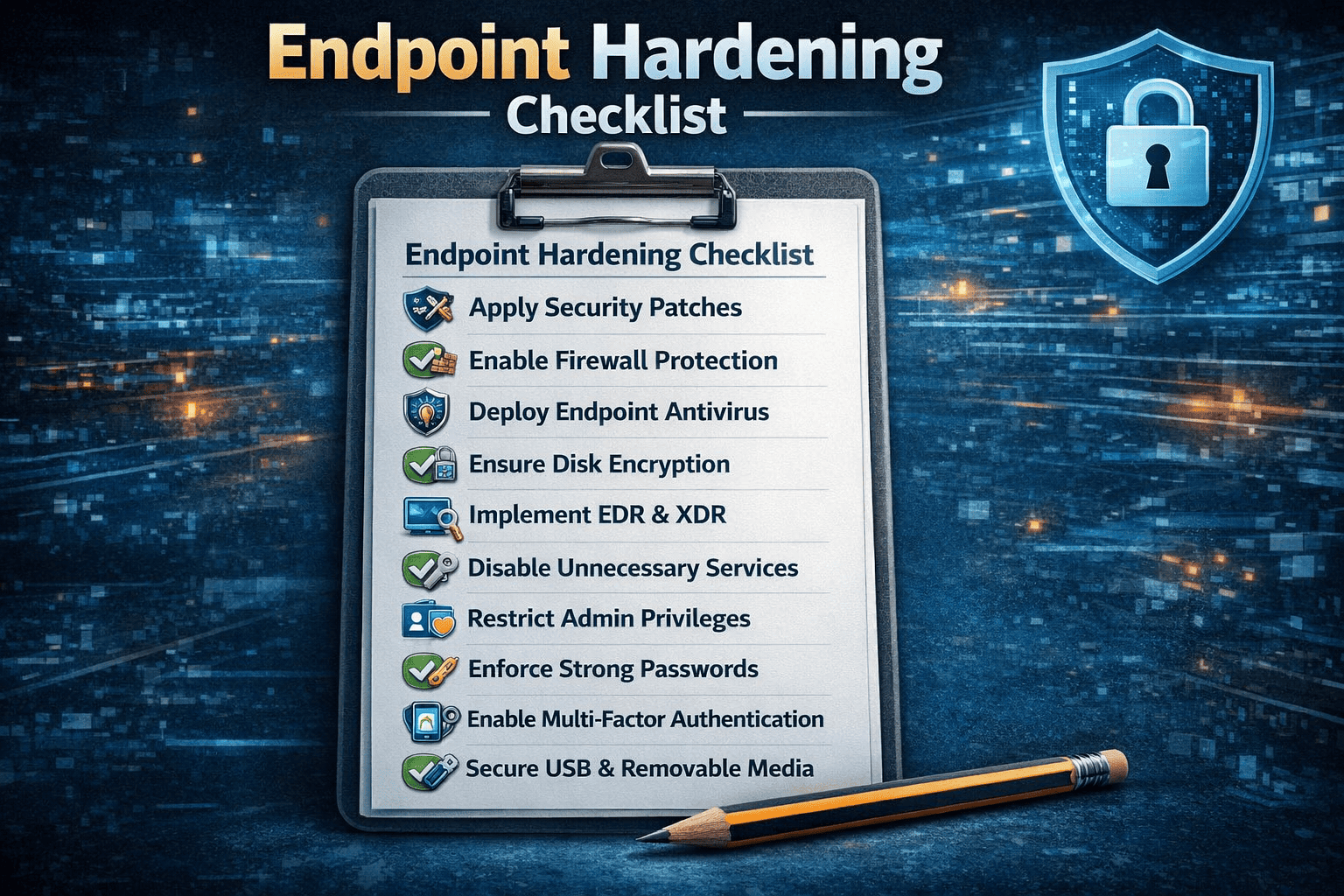
Every laptop, desktop, or mobile device connected to your network is a potential entry point for cyberattacks. With remote work, cloud adoption, and increasing endpoint diversity, securing these devices has become more critical than ever. That’s why having a solid endpoint hardening checklist is essential for modern cybersecurity.
Cybercriminals often target endpoints because they are easier to exploit than centralized systems. A single unprotected device can expose sensitive data, allow unauthorized access, or enable ransomware attacks. For IT managers, cybersecurity professionals, and business leaders, endpoint hardening is no longer optional—it’s a necessity.
In this guide, we’ll walk through a complete endpoint hardening checklist, explain why it matters, and provide actionable steps to secure your devices and strengthen your organization’s security posture.
What Is Endpoint Hardening?
Endpoint hardening is the process of securing devices such as laptops, desktops, servers, and mobile devices by reducing vulnerabilities and strengthening defenses.
The goal of an endpoint hardening checklist is to:
-
Minimize attack surfaces
-
Prevent unauthorized access
-
Protect sensitive data
-
Detect and respond to threats
By applying security configurations and controls, organizations can significantly reduce the risk of cyberattacks.
Why Endpoint Hardening Is Important
Endpoints are often the weakest link in cybersecurity.
Common Endpoint Security Risks
Organizations face several risks if endpoints are not properly secured:
-
Malware infections
-
Phishing attacks
-
Unauthorized access
-
Data leakage
-
Ransomware attacks
A structured endpoint hardening checklist helps organizations address these risks proactively.
Core Components of an Endpoint Hardening Checklist
An effective endpoint hardening checklist includes multiple layers of security.
1. Operating System Hardening
The operating system is the foundation of endpoint security.
Best Practices
-
Keep OS updated with the latest patches
-
Disable unnecessary services and features
-
Use secure configurations
-
Remove unsupported or outdated systems
Regular updates help close vulnerabilities that attackers may exploit.
2. Patch Management
Unpatched systems are a major security risk.
Patch Management Checklist
-
Apply security patches promptly
-
Automate patch deployment
-
Monitor patch compliance
-
Test patches before deployment
A strong patch management strategy is a key part of any endpoint hardening checklist.
3. Strong Authentication Controls
Weak authentication increases the risk of unauthorized access.
Authentication Best Practices
-
Enforce strong password policies
-
Enable multi-factor authentication (MFA)
-
Use biometric authentication where possible
-
Implement account lockout policies
These controls help protect user accounts from compromise.
4. Endpoint Protection Software
Security software plays a critical role in endpoint defense.
Recommended Tools
-
Antivirus and anti-malware solutions
-
Endpoint Detection and Response (EDR)
-
Firewall protection
-
Intrusion detection systems
These tools help detect and block malicious activity.
5. Application Control and Whitelisting
Limiting which applications can run reduces risk.
Application Security Measures
-
Allow only approved applications
-
Block unauthorized software
-
Monitor application behavior
-
Regularly review installed programs
Application control is a key element of an endpoint hardening checklist.
6. Data Encryption
Data encryption protects sensitive information.
Encryption Best Practices
-
Encrypt data at rest
-
Use full disk encryption
-
Secure data in transit
-
Protect encryption keys
Encryption ensures data remains secure even if devices are compromised.
7. Network Security Configuration
Endpoints must be secured within the network environment.
Network Hardening Steps
-
Enable host-based firewalls
-
Disable unused network ports
-
Use secure VPN connections
-
Monitor network traffic
Proper configuration reduces exposure to external threats.
8. User Access Control
Limiting access reduces the impact of security incidents.
Access Control Best Practices
-
Apply least privilege access
-
Use role-based access control (RBAC)
-
Regularly review user permissions
-
Remove inactive accounts
Access control is essential for maintaining security.
9. Logging and Monitoring
Monitoring endpoint activity helps detect threats early.
Logging Practices
-
Enable system logging
-
Monitor user activity
-
Analyze security logs
-
Use SIEM tools for centralized monitoring
Continuous monitoring strengthens your endpoint hardening checklist.
10. Device Management and Compliance
Managing devices ensures consistent security across the organization.
Device Management Strategies
-
Use Mobile Device Management (MDM) tools
-
Enforce security policies
-
Monitor device compliance
-
Control remote access
This is especially important for remote work environments.
Advanced Endpoint Hardening Techniques
Organizations should go beyond basic security measures.
Zero Trust Security Model
Zero trust assumes no device or user is trusted by default.
Every access request is verified.
Behavioral Analysis
Advanced tools analyze user behavior to detect anomalies.
Threat Intelligence Integration
Threat intelligence helps identify emerging risks.
Automated Security Responses
Automation allows faster response to detected threats.
Endpoint Hardening for Remote Work
Remote work introduces additional risks.
Remote Endpoint Security Tips
-
Secure home networks
-
Use VPN connections
-
Avoid public Wi-Fi
-
Keep devices updated
-
Enable remote monitoring
A remote-focused endpoint hardening checklist is essential for distributed teams.
Common Endpoint Hardening Mistakes
Organizations often make mistakes that weaken security.
Ignoring Updates
Delaying updates leaves systems vulnerable.
Overprivileged Access
Too many permissions increase risk.
Lack of Monitoring
Without monitoring, threats may go undetected.
Weak Password Policies
Weak credentials make systems easy targets.
Avoiding these mistakes strengthens endpoint security.
Benefits of Endpoint Hardening
Implementing a strong endpoint hardening checklist provides several benefits.
Improved Security Posture
Reduces vulnerabilities and attack surfaces.
Reduced Risk of Cyberattacks
Prevents malware and unauthorized access.
Better Compliance
Supports regulatory requirements and security standards.
Enhanced Visibility
Improves monitoring and threat detection.
The Future of Endpoint Security
Endpoint security is evolving with new technologies.
Future trends include:
-
AI-driven threat detection
-
Cloud-based endpoint protection
-
Zero trust architectures
-
Automated incident response
Organizations must stay updated to maintain strong defenses.
Frequently Asked Questions (FAQ)
What is an endpoint hardening checklist?
An endpoint hardening checklist is a set of security measures used to protect devices by reducing vulnerabilities and strengthening defenses.
Why is endpoint hardening important?
It helps prevent cyberattacks by securing devices that attackers often target.
What tools are used for endpoint hardening?
Common tools include antivirus software, EDR solutions, firewalls, and device management platforms.
How often should endpoints be updated?
Endpoints should be updated regularly, ideally as soon as security patches are released.
What is the most important endpoint security practice?
Implementing strong authentication and keeping systems updated are among the most critical practices.
Strengthen Your Endpoint Security Today
Endpoints are one of the most vulnerable parts of any IT environment. Without proper protection, they can become easy targets for cybercriminals. A well-structured endpoint hardening checklist helps organizations reduce risks, improve security, and protect critical data.
Cybersecurity is constantly evolving, and staying informed is key to staying protected.
👉 Request a demo today:
https://www.xcitium.com/request-demo/
Discover how advanced endpoint security solutions can help protect your organization from modern cyber threats and strengthen your cybersecurity strategy.