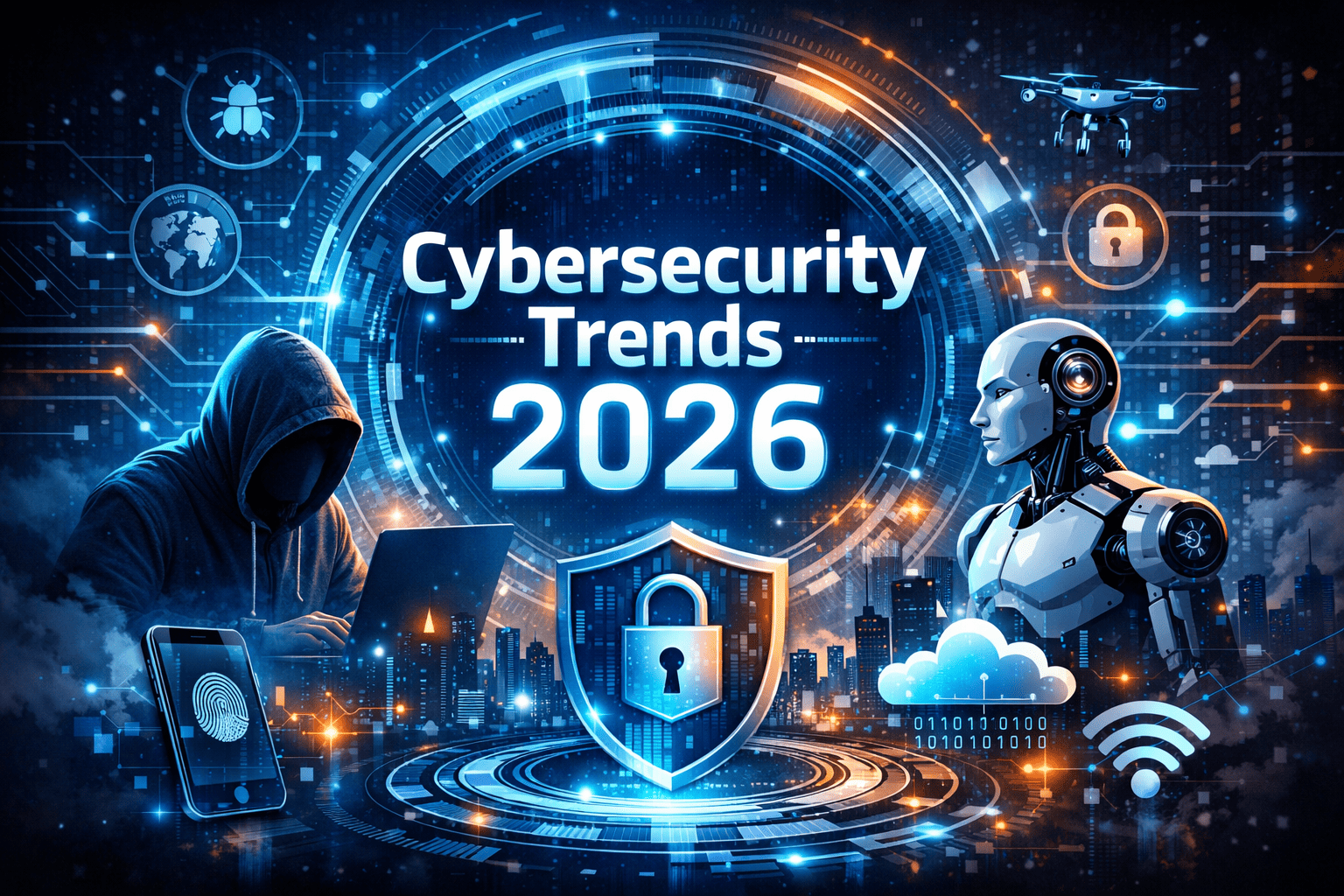
Cybersecurity Trends 2026
Updated on February 23, 2026, by Xcitium
Are you prepared for the next wave of cyber threats? As digital transformation accelerates, cybercriminals are evolving just as quickly. Analysts predict that global cybercrime costs will continue to rise sharply, driven by AI-powered attacks, cloud vulnerabilities, and identity-based breaches.
Understanding Cybersecurity Trends 2026 is no longer optional—it is a strategic necessity. For IT managers, cybersecurity professionals, CEOs, and founders, staying ahead of emerging risks means protecting revenue, reputation, and long-term growth.
In this comprehensive guide, we’ll break down the most important cybersecurity trends 2026 will bring, what they mean for your organization, and how to prepare effectively.
Why Cybersecurity Trends 2026 Matter for Business Leaders
Cybersecurity is no longer just an IT issue. It is a boardroom priority. As organizations adopt AI, cloud computing, IoT, and hybrid work models, the attack surface expands dramatically.
The Expanding Threat Landscape
By 2026, enterprises will manage:
-
Multi-cloud environments
-
Remote and hybrid workforces
-
AI-driven applications
-
Connected IoT devices
-
Third-party integrations
Each innovation creates opportunity—but also risk.
Understanding cybersecurity trends 2026 helps leaders allocate budgets wisely and invest in resilient security frameworks.
1. AI-Powered Cyberattacks Will Increase
Artificial intelligence is transforming cybersecurity—but attackers are using it too.
How AI Is Being Weaponized
Threat actors now use AI for:
-
Automated phishing campaigns
-
Deepfake-based social engineering
-
Password cracking at scale
-
Malware code generation
-
Evasion of traditional security tools
AI-driven attacks are faster and more adaptive than ever.
Defensive AI Will Become Essential
To counter AI threats, organizations will deploy:
-
AI-powered threat detection
-
Behavioral analytics
-
Automated incident response
-
Machine learning-based anomaly detection
Cybersecurity trends 2026 clearly show that AI will define both offense and defense.
2. Identity Security Will Dominate Strategy
The perimeter is gone. Identity is now the primary attack vector.
Rise of Credential-Based Attacks
Most breaches begin with:
-
Stolen credentials
-
Phishing emails
-
Weak password policies
-
Misconfigured access controls
Cybersecurity trends 2026 indicate that identity protection will be the core focus of enterprise defense strategies.
Zero Trust Adoption Accelerates
Zero Trust architecture assumes no user or device is trusted by default.
Key Zero Trust Components
-
Continuous authentication
-
Least privilege access
-
Multi-factor authentication (MFA)
-
Identity threat detection and response (ITDR)
Organizations that implement Zero Trust effectively will reduce breach risk significantly.
3. Cloud Security Becomes More Complex
Cloud adoption continues to grow across industries. However, cloud misconfigurations remain a leading cause of breaches.
Multi-Cloud Risk Management
Enterprises now operate across:
-
AWS
-
Microsoft Azure
-
Google Cloud
-
SaaS platforms
Managing security policies consistently across these environments is challenging.
Cybersecurity trends 2026 highlight the need for centralized cloud security posture management (CSPM) tools.
SaaS Sprawl and Shadow IT
Employees frequently adopt new SaaS applications without IT approval. This increases exposure.
Solutions include:
-
Cloud access security brokers (CASB)
-
Identity governance
-
Continuous monitoring
Visibility will be critical.
4. Ransomware Tactics Will Evolve
Ransomware remains one of the most disruptive cyber threats.
Double and Triple Extortion
Attackers now:
-
Encrypt data
-
Steal sensitive information
-
Threaten public exposure
-
Target third-party vendors
Cybersecurity trends 2026 suggest ransomware groups will become more organized and targeted.
Strengthening Ransomware Defense
Organizations should:
-
Implement endpoint detection and response (EDR)
-
Maintain secure backups
-
Conduct regular patching
-
Train employees on phishing awareness
Preparedness reduces impact.
5. Supply Chain Attacks Will Increase
Supply chain vulnerabilities create indirect risk. A breach in one vendor can impact hundreds of companies.
Why Supply Chain Security Matters
Third-party integrations often require:
-
API access
-
Shared credentials
-
Data exchange
Cybersecurity trends 2026 indicate stronger vendor risk management programs will become mandatory.
Third-Party Risk Management Strategies
-
Conduct vendor security assessments
-
Monitor API activity
-
Enforce least privilege access
-
Review contracts for security requirements
Proactive oversight prevents cascading damage.
6. Regulatory Pressure Will Intensify
Governments worldwide are tightening cybersecurity regulations.
Compliance Trends to Watch
-
Expanded data privacy laws
-
Mandatory breach reporting timelines
-
Industry-specific cybersecurity standards
-
Executive accountability requirements
CEOs and boards will face greater responsibility for cybersecurity governance.
7. Extended Detection and Response (XDR) Gains Momentum
Siloed security tools slow response times. XDR platforms unify visibility across endpoints, networks, cloud workloads, and identities.
Benefits of XDR
-
Centralized threat monitoring
-
Faster incident investigation
-
Reduced alert fatigue
-
Improved automation
Cybersecurity trends 2026 emphasize integrated security ecosystems over fragmented tools.
8. Human Risk Management Becomes a Priority
Technology alone cannot prevent every breach. Human behavior remains a significant factor.
Strengthening the Human Firewall
Organizations should:
-
Conduct regular phishing simulations
-
Offer security awareness training
-
Implement clear incident reporting channels
-
Encourage security-first culture
Empowered employees become active defenders.
How Organizations Can Prepare for Cybersecurity Trends 2026
Understanding trends is only the first step. Action is essential.
Conduct a Comprehensive Risk Assessment
Identify vulnerabilities across:
-
Cloud infrastructure
-
Endpoints
-
Identity systems
-
Third-party vendors
Regular audits improve preparedness.
Invest in Modern Security Frameworks
Adopt:
-
Zero Trust architecture
-
AI-driven detection tools
-
Identity governance platforms
-
Continuous monitoring solutions
Modern challenges require modern defenses.
Strengthen Incident Response Plans
Prepare for worst-case scenarios by:
-
Defining response roles
-
Conducting tabletop exercises
-
Updating communication strategies
-
Testing backup systems
Prepared teams respond faster.
Industry-Specific Implications of Cybersecurity Trends 2026
Different sectors face unique challenges.
Financial Services
Banks must combat AI-driven fraud and secure digital banking platforms.
Healthcare
Healthcare providers must defend against ransomware targeting patient data and medical devices.
Manufacturing
Industrial systems require protection from operational technology (OT) attacks.
Retail and E-Commerce
Retailers must secure payment systems and prevent large-scale data breaches.
Frequently Asked Questions (FAQs)
1. What are the biggest cybersecurity trends 2026 will bring?
Key trends include AI-powered attacks, Zero Trust adoption, identity-focused security, cloud risk management, ransomware evolution, and supply chain vulnerabilities.
2. Why is identity security important in 2026?
Because attackers increasingly use stolen credentials instead of malware, making identity the primary attack surface.
3. How can businesses prepare for future cyber threats?
By implementing Zero Trust, strengthening identity controls, adopting AI-driven detection, and maintaining strong incident response plans.
4. Will AI replace cybersecurity professionals?
No. AI enhances human capabilities but cannot replace strategic decision-making and investigation expertise.
5. How does cloud adoption impact cybersecurity trends 2026?
Cloud growth increases complexity, requiring stronger configuration management, visibility, and identity-based security controls.
Final Thoughts: Stay Ahead of Cybersecurity Trends 2026
Cybersecurity trends 2026 point to a future where identity protection, AI-driven defense, cloud security, and integrated detection platforms define resilience. Threat actors will become more sophisticated. Regulatory scrutiny will increase. Attack surfaces will expand.
However, organizations that act now—by strengthening Zero Trust, investing in advanced threat detection, and building security-aware cultures—can turn risk into opportunity.
Don’t wait for 2026 to test your defenses.
👉 Request a demo today and discover how advanced cybersecurity solutions can future-proof your organization:
https://www.xcitium.com/request-demo/
Prepare today. Protect tomorrow. Lead with confidence.