Cyber Risk Heat Map Guide 2026
Updated on March 5, 2026, by Xcitium
Cyber threats are evolving faster than ever. From ransomware attacks and phishing campaigns to supply chain compromises, organizations face hundreds of potential risks across their digital infrastructure. The challenge isn’t just identifying threats—it’s understanding which risks matter most.
This is where a cyber risk heat map becomes a powerful tool.
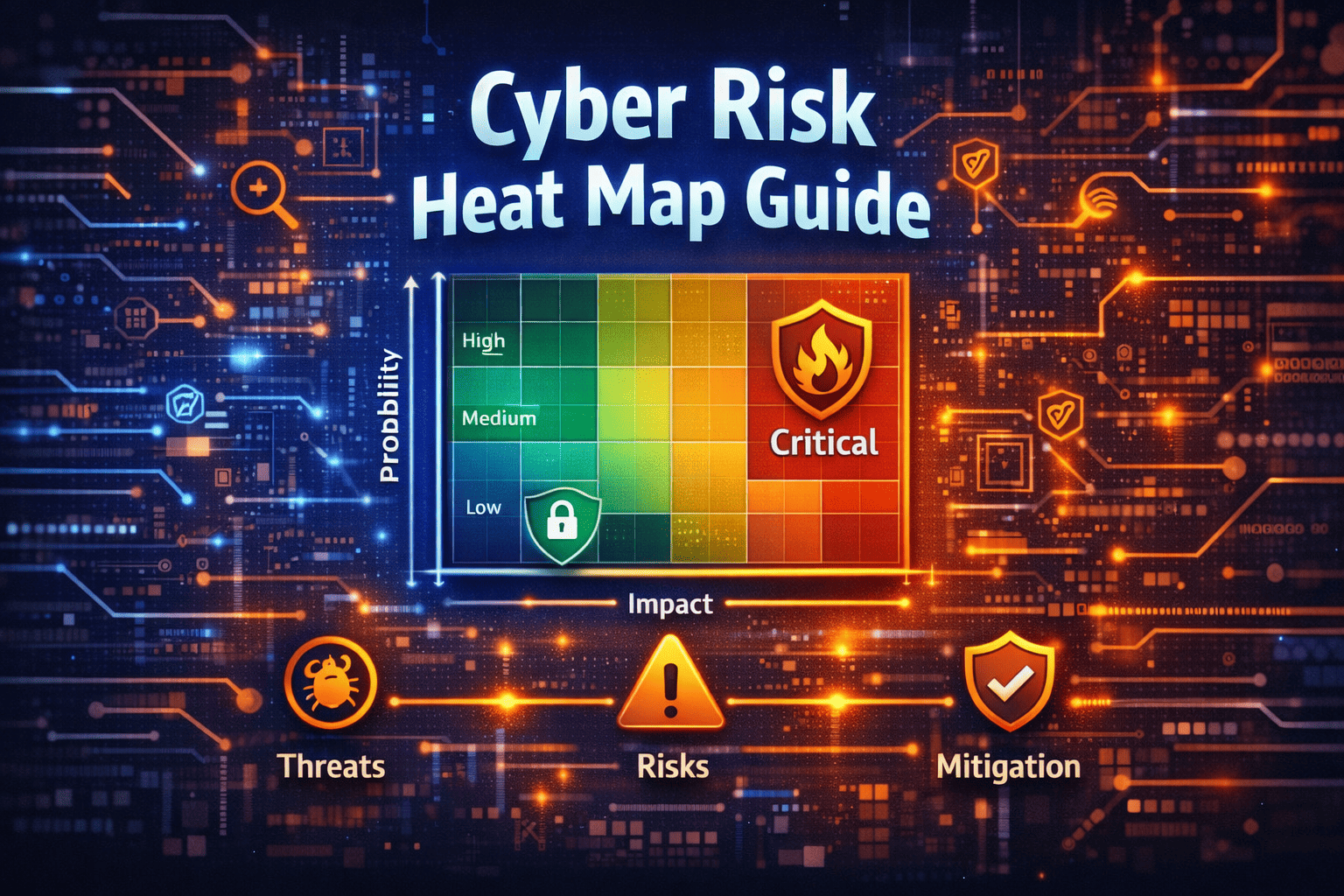
A cyber risk heat map visually represents cybersecurity risks based on their likelihood and potential impact. Instead of reviewing long spreadsheets or technical reports, security teams and executives can quickly see where the biggest risks lie.
In this comprehensive Cyber Risk Heat Map Guide, we’ll explain how cyber risk heat maps work, why organizations use them, and how to build one that improves cybersecurity decision-making and risk management.
What Is a Cyber Risk Heat Map?
A cyber risk heat map is a visual representation of cybersecurity risks within an organization. It uses a grid format to categorize risks based on two key factors:
-
Likelihood of occurrence
-
Potential impact on the organization
The result is a color-coded matrix that highlights high-risk areas requiring immediate attention.
Typical Heat Map Structure
Cyber risk heat maps usually include:
-
Low Risk (Green) – Minor impact and low likelihood
-
Medium Risk (Yellow) – Moderate impact or probability
-
High Risk (Red) – High likelihood and severe consequences
This visual format helps decision-makers quickly prioritize cybersecurity investments.
Why Cyber Risk Heat Maps Matter
Organizations face an overwhelming number of potential cybersecurity threats. Without prioritization, security teams may struggle to allocate resources effectively.
A cyber risk heat map helps solve this problem.
Key Benefits of Cyber Risk Heat Maps
-
Clear visualization of cybersecurity risks
-
Improved communication between IT and executives
-
Better prioritization of security initiatives
-
Faster decision-making
-
Enhanced risk management strategies
Executives often prefer visual risk summaries rather than complex technical reports. A heat map provides that clarity.
How Cyber Risk Heat Maps Work
Cyber risk heat maps categorize risks based on probability and impact.
Risk Probability
Probability refers to how likely a cyber event is to occur.
Factors That Affect Probability
-
Known system vulnerabilities
-
Exposure to internet-facing services
-
Historical cyber incidents
-
Threat intelligence reports
For example, organizations that rely heavily on cloud infrastructure may face higher risks related to cloud misconfigurations.
Risk Impact
Impact measures the potential damage if a cyber incident occurs.
Types of Impact
-
Financial losses
-
Data breaches
-
Operational downtime
-
Regulatory penalties
-
Reputational damage
The greater the impact, the higher the priority for risk mitigation.
The Cyber Risk Heat Map Matrix
The matrix is typically structured with likelihood on one axis and impact on the other.
| Impact ↓ / Likelihood → | Low | Medium | High |
|---|---|---|---|
| Low Impact | Low Risk | Low Risk | Medium Risk |
| Medium Impact | Low Risk | Medium Risk | High Risk |
| High Impact | Medium Risk | High Risk | Critical Risk |
This matrix allows organizations to categorize risks and prioritize mitigation efforts.
Common Cybersecurity Risks in Heat Maps
Many organizations include similar risks in their cyber risk heat maps.
Examples of Common Cyber Risks
-
Phishing attacks
-
Ransomware incidents
-
Insider threats
-
Cloud misconfigurations
-
Vulnerable third-party software
-
Data breaches
-
Distributed denial-of-service (DDoS) attacks
Each risk is evaluated based on likelihood and potential damage.
How to Create a Cyber Risk Heat Map
Building a cyber risk heat map requires a structured approach.
Step 1: Identify Cybersecurity Risks
Start by listing all potential cyber threats affecting your organization.
Risk Sources
-
Vulnerability scans
-
Threat intelligence reports
-
Security incident history
-
Compliance assessments
Comprehensive risk identification is the foundation of an accurate heat map.
Step 2: Assess Risk Likelihood
Next, evaluate how likely each threat is to occur.
Security teams often use historical data, vulnerability analysis, and threat intelligence to estimate probability.
Step 3: Evaluate Risk Impact
Determine how severely each risk could affect the organization.
Consider:
-
Financial damage
-
Data exposure
-
Operational disruption
-
Legal consequences
Assign numerical scores to quantify risk levels.
Step 4: Plot Risks on the Heat Map
After evaluating likelihood and impact, plot each risk on the matrix.
High-risk threats should appear in the upper-right corner of the heat map.
These risks require immediate mitigation.
Step 5: Develop Risk Mitigation Strategies
The final step involves developing action plans to address the highest risks.
Examples include:
-
Deploying endpoint protection platforms
-
Strengthening access controls
-
Conducting employee cybersecurity training
-
Implementing network monitoring systems
Tools for Creating Cyber Risk Heat Maps
Organizations often use specialized tools to build and maintain cyber risk heat maps.
Common Tools Include
-
Risk management platforms
-
Governance, Risk, and Compliance (GRC) software
-
Cybersecurity dashboards
-
Security information and event management (SIEM) tools
These tools help automate risk assessment and visualization.
Best Practices for Using Cyber Risk Heat Maps
A cyber risk heat map is most effective when integrated into broader cybersecurity strategies.
Update Heat Maps Regularly
Cyber threats evolve constantly.
Organizations should update risk heat maps regularly to reflect new vulnerabilities and emerging threats.
Align with Business Objectives
Risk assessments should consider business priorities.
For example, protecting customer data may be more critical than protecting internal documentation.
Communicate Results to Leadership
Cyber risk heat maps help translate technical risks into business terms.
This improves communication between cybersecurity teams and executives.
Integrate with Risk Management Frameworks
Cyber risk heat maps should align with frameworks such as:
-
NIST Cybersecurity Framework
-
ISO 27001
-
CIS Critical Security Controls
-
FAIR risk analysis methodology
Framework integration improves risk management consistency.
Challenges in Cyber Risk Visualization
While cyber risk heat maps are useful, organizations may encounter several challenges.
Subjective Risk Scoring
Risk ratings may vary depending on the assessor’s perspective.
Standardized scoring methods help improve accuracy.
Rapidly Changing Threat Landscape
New threats emerge frequently, making static heat maps outdated quickly.
Continuous monitoring helps address this issue.
Over-Simplification of Complex Risks
Heat maps provide high-level insights but may not capture all technical details.
They should complement—not replace—detailed risk assessments.
The Role of Cyber Risk Heat Maps in Cybersecurity Strategy
Cyber risk heat maps play a crucial role in modern cybersecurity programs.
They help organizations:
-
Identify critical vulnerabilities
-
Prioritize security investments
-
Improve board-level reporting
-
Strengthen overall risk management
When used effectively, they transform cybersecurity data into actionable insights.
Frequently Asked Questions (FAQ)
1. What is a cyber risk heat map?
A cyber risk heat map is a visual tool that categorizes cybersecurity risks based on their likelihood and potential impact.
2. Why are cyber risk heat maps important?
They help organizations prioritize cybersecurity threats and allocate resources more effectively.
3. How often should cyber risk heat maps be updated?
Organizations should review and update heat maps regularly, especially after major system changes or new threat discoveries.
4. What tools can create cyber risk heat maps?
Risk management platforms, GRC software, and cybersecurity dashboards can generate automated heat maps.
5. Are cyber risk heat maps suitable for small businesses?
Yes. Even small organizations benefit from visualizing cybersecurity risks and prioritizing mitigation efforts.
Final Thoughts: Using Cyber Risk Heat Maps for Smarter Security
Cybersecurity risk management requires more than identifying vulnerabilities—it requires understanding which threats pose the greatest danger to your organization.
A well-designed cyber risk heat map provides that insight.
By visualizing cybersecurity risks based on likelihood and impact, organizations can prioritize mitigation strategies, allocate resources more effectively, and communicate risks clearly to leadership.
As cyber threats continue evolving, tools like cyber risk heat maps will become essential for building resilient security programs.
👉 Request a demo today:
https://www.xcitium.com/request-demo/
Discover how advanced cybersecurity solutions can help your organization identify threats, manage risk, and strengthen overall cyber resilience.