Compliance Automation Tools Compared
Updated on March 5, 2026, by Xcitium
Staying compliant with cybersecurity and data protection regulations has never been more challenging. Organizations today must meet requirements from frameworks such as GDPR, HIPAA, ISO 27001, SOC 2, and PCI-DSS. But manual compliance processes often create bottlenecks, increase operational costs, and introduce human error.
According to recent industry reports, companies spend hundreds of hours each year preparing for compliance audits. This is where compliance automation tools become essential.
Compliance automation platforms streamline regulatory processes, reduce manual work, and help organizations maintain continuous compliance. Instead of scrambling before audits, companies can monitor their compliance posture in real time.
In this guide, we’ll explore compliance automation tools compared, examine their features, benefits, and limitations, and help you choose the right platform for your organization.
What Are Compliance Automation Tools?
Compliance automation tools are software platforms designed to automate regulatory compliance processes. They help organizations manage security controls, monitor risks, collect evidence for audits, and maintain compliance with industry standards.
These tools typically integrate with existing systems such as:
-
Cloud infrastructure
-
Security monitoring platforms
-
Identity management systems
-
Endpoint protection tools
-
DevOps pipelines
By collecting data automatically, compliance automation tools reduce manual documentation and reporting tasks.
Why Compliance Automation Is Becoming Essential
The complexity of regulatory requirements continues to grow. Organizations often must comply with multiple frameworks simultaneously.
Manual compliance management introduces several challenges.
Common Compliance Challenges
-
Time-consuming documentation processes
-
Difficulty tracking regulatory changes
-
Limited visibility into security controls
-
Human errors during audits
-
Resource-intensive compliance programs
Compliance automation tools help organizations address these challenges by providing continuous monitoring and centralized management.
Key Features of Compliance Automation Tools
Before comparing platforms, it’s important to understand the features that make compliance automation effective.
Continuous Compliance Monitoring
One of the biggest advantages of automation tools is real-time monitoring.
Instead of periodic assessments, these platforms continuously evaluate security controls and configurations.
Benefits of Continuous Monitoring
-
Early detection of compliance gaps
-
Faster remediation of security issues
-
Reduced audit preparation time
This proactive approach significantly reduces compliance risks.
Automated Evidence Collection
Compliance audits require evidence demonstrating that security controls are functioning correctly.
Automation tools collect this evidence automatically from integrated systems.
Examples include:
-
Access control logs
-
Security configurations
-
Incident response reports
-
System activity records
Automated evidence collection simplifies audit preparation.
Risk and Control Mapping
Compliance frameworks share overlapping security controls.
Automation tools map controls across multiple frameworks to reduce duplication.
For example, a single control may apply to:
-
ISO 27001
-
SOC 2
-
GDPR
-
NIST
This mapping saves time and improves compliance efficiency.
Workflow Automation
Compliance platforms often include workflow automation features.
These workflows help teams manage tasks such as:
-
Risk assessments
-
Policy updates
-
Security reviews
-
Incident response documentation
Automation ensures consistent compliance processes across teams.
Popular Compliance Automation Tools
Now let’s explore some widely used compliance automation tools and compare their capabilities.
Drata
Drata is a compliance automation platform focused on continuous monitoring and audit readiness.
Key Features
-
Automated evidence collection
-
Continuous security monitoring
-
SOC 2, ISO 27001, and HIPAA support
-
Integration with cloud services
Drata is particularly popular among SaaS companies seeking rapid compliance certification.
Vanta
Vanta is another widely used compliance automation platform designed for modern cloud environments.
Key Capabilities
-
Automated security control monitoring
-
Compliance tracking dashboards
-
Vendor risk management tools
-
Integration with cloud platforms
Vanta helps organizations maintain compliance with minimal manual effort.
Secureframe
Secureframe provides automated compliance solutions tailored for growing technology companies.
Core Features
-
Automated audit preparation
-
Security policy management
-
Risk assessment tools
-
Compliance monitoring
It supports frameworks such as SOC 2, ISO 27001, and PCI-DSS.
OneTrust
OneTrust focuses heavily on privacy, governance, and risk management.
Key Strengths
-
Data privacy compliance tools
-
Third-party risk management
-
Regulatory intelligence monitoring
-
Privacy impact assessments
It is widely used by large enterprises managing global privacy regulations.
Sprinto
Sprinto is designed to help startups and mid-sized companies manage compliance efficiently.
Features Include
-
Automated control monitoring
-
Risk management dashboards
-
Security policy management
-
SOC 2 and ISO compliance support
Sprinto focuses on simplifying compliance for fast-growing businesses.
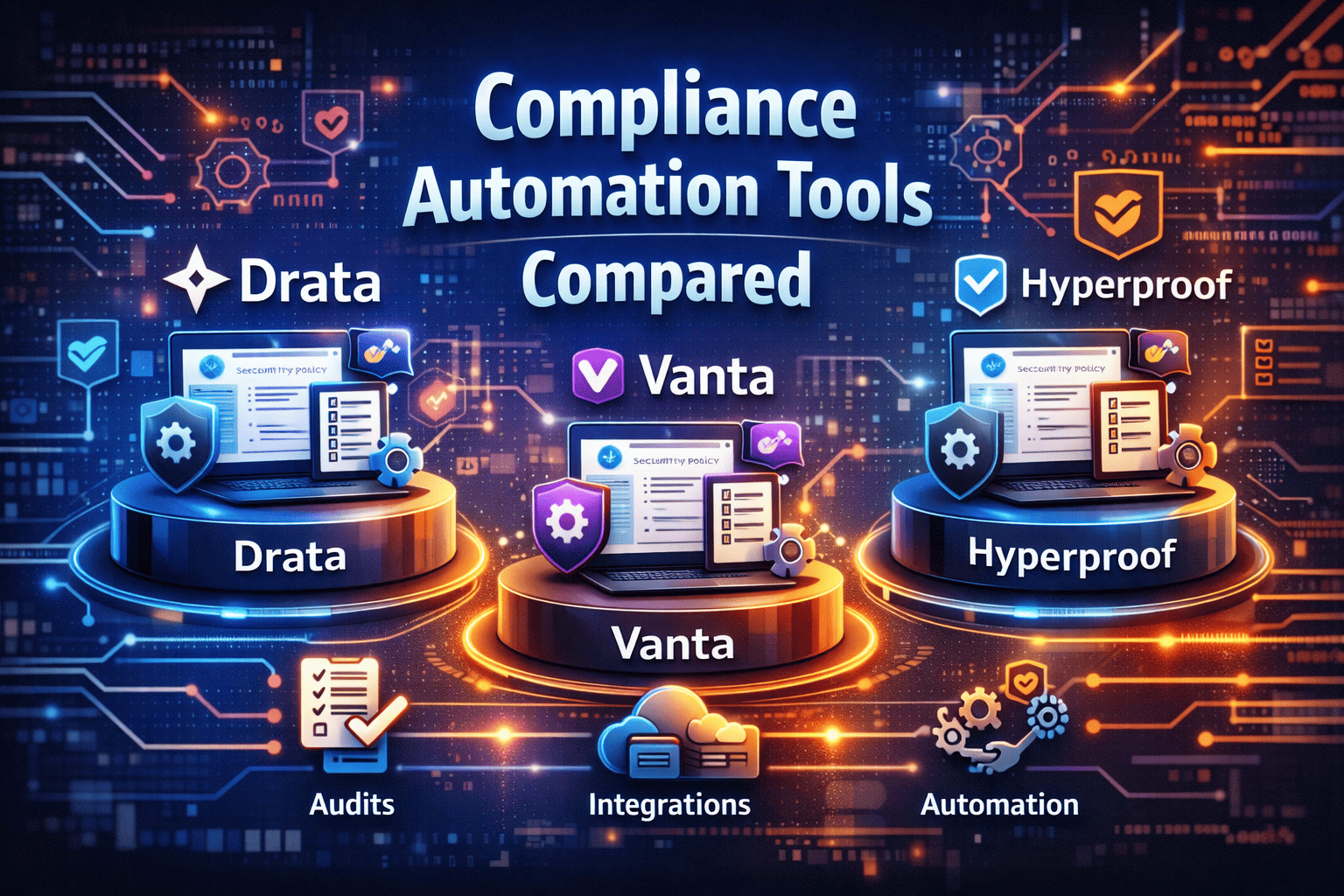
Compliance Automation Tools Compared
Here’s a simplified comparison of leading compliance automation tools.
| Tool | Best For | Key Strength |
|---|---|---|
| Drata | SaaS companies | Continuous compliance monitoring |
| Vanta | Cloud-based businesses | Security control automation |
| Secureframe | Growing tech firms | Automated audit readiness |
| OneTrust | Enterprises | Privacy and governance management |
| Sprinto | Startups | Simplified compliance workflows |
Each tool offers unique capabilities depending on organizational needs.
How to Choose the Right Compliance Automation Tool
Selecting the right compliance platform requires careful evaluation.
Consider Regulatory Requirements
Start by identifying the frameworks your organization must follow.
Common standards include:
-
SOC 2
-
ISO 27001
-
HIPAA
-
GDPR
-
PCI-DSS
Choose tools that support these frameworks.
Evaluate Integration Capabilities
Compliance automation tools should integrate with your existing systems.
Examples include:
-
Cloud platforms (AWS, Azure, GCP)
-
Identity management systems
-
Security monitoring platforms
-
DevOps pipelines
Strong integrations improve automation effectiveness.
Assess Scalability
As your organization grows, compliance requirements may expand.
Choose tools that can scale with your infrastructure and regulatory obligations.
Consider Ease of Use
Compliance platforms should simplify processes rather than complicate them.
User-friendly dashboards and automation workflows improve adoption.
Benefits of Compliance Automation
Organizations adopting compliance automation experience several advantages.
Reduced Audit Preparation Time
Automated evidence collection drastically reduces time spent preparing for audits.
Improved Security Posture
Continuous monitoring helps organizations identify vulnerabilities faster.
Lower Operational Costs
Automation reduces the need for extensive manual compliance management.
Increased Regulatory Confidence
Organizations can demonstrate compliance readiness at any time.
Challenges of Compliance Automation
Despite its benefits, compliance automation also presents challenges.
Integration Complexity
Integrating tools with legacy systems may require additional effort.
Initial Implementation Costs
Organizations must invest time and resources to configure automation platforms.
Regulatory Changes
Compliance frameworks evolve regularly, requiring ongoing updates.
However, most organizations find that the long-term benefits outweigh these challenges.
The Future of Compliance Automation
Compliance automation is evolving rapidly as organizations adopt cloud infrastructure and digital transformation strategies.
Emerging trends include:
-
AI-powered compliance monitoring
-
Automated risk assessments
-
Integrated security and compliance platforms
-
Real-time regulatory intelligence
These advancements will help organizations manage compliance more efficiently.
Best Practices for Implementing Compliance Automation
Organizations can maximize the benefits of compliance automation by following several best practices.
Align Compliance with Security
Compliance should not be treated as a separate activity. Integrate it with your broader cybersecurity strategy.
Automate Evidence Collection
Use integrations to gather audit evidence automatically.
Conduct Regular Risk Assessments
Continuous risk monitoring ensures compliance controls remain effective.
Train Security and Compliance Teams
Automation tools are most effective when teams understand how to use them properly.
Frequently Asked Questions (FAQ)
1. What are compliance automation tools?
Compliance automation tools help organizations automate regulatory compliance processes, monitor security controls, and prepare for audits.
2. Why are compliance automation tools important?
They reduce manual work, improve accuracy, and help organizations maintain continuous compliance with regulatory frameworks.
3. Which industries benefit most from compliance automation?
Industries such as finance, healthcare, technology, and government sectors benefit significantly due to strict regulatory requirements.
4. Can compliance automation replace manual audits?
No. Automation simplifies audit preparation, but external audits are still required for certification.
5. How do compliance automation tools improve security?
By continuously monitoring systems and detecting compliance gaps that could expose security vulnerabilities.
Final Thoughts: Choosing the Right Compliance Automation Strategy
Compliance is no longer just about passing audits—it’s about maintaining strong security practices and protecting sensitive data. As regulatory requirements continue to evolve, manual compliance processes simply cannot keep up.
Compliance automation tools help organizations streamline operations, improve security visibility, and maintain continuous regulatory readiness.
By selecting the right platform and integrating it with existing security systems, organizations can transform compliance from a burden into a strategic advantage.
👉 Request a demo today:
https://www.xcitium.com/request-demo/
Discover how advanced cybersecurity solutions can help your organization strengthen compliance management and protect critical digital assets.