What Does 5G Mean? A Complete Guide for Business & Technology Leaders
Updated on December 12, 2025, by Xcitium
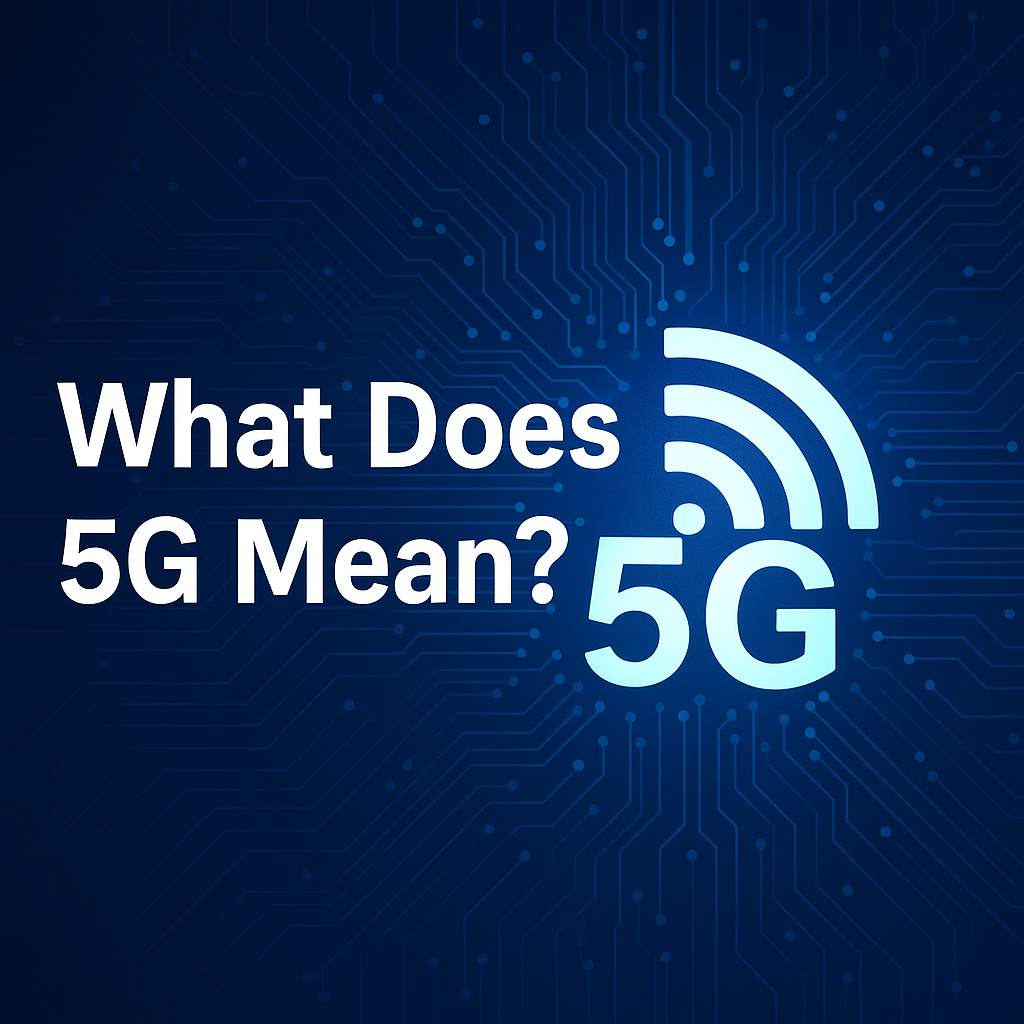
You’ve likely seen the “5G” symbol on your phone, heard telecom companies advertise it, or watched headlines claim it will change everything from smartphones to smart cities. But what does 5G mean, really—and why does it matter so much to businesses, cybersecurity teams, and IT leaders?
5G is more than just “faster internet.” It represents a fundamental shift in how devices connect, how data moves, and how digital systems interact at scale. For organizations operating in cloud computing, cybersecurity, IoT, healthcare, manufacturing, and finance, understanding 5G is no longer optional—it’s strategic.
In this guide, we’ll explain what does 5G mean, how it works, how it compares to previous generations, its benefits and risks, and what leaders should do to prepare for a 5G-powered future.
What Does 5G Mean? (Simple Definition)
5G means fifth-generation wireless technology, designed to deliver significantly faster speeds, lower latency, higher reliability, and the ability to connect massive numbers of devices compared to previous mobile networks like 4G LTE.
In practical terms, 5G enables near-real-time communication between devices, systems, and applications—unlocking new capabilities across industries.
Why 5G Was Created
To truly understand what does 5G mean, we must look at why it exists in the first place.
1. Explosion of Connected Devices
Smartphones, laptops, IoT sensors, wearables, and industrial systems overwhelmed 4G networks.
2. Demand for Real-Time Data
Applications like autonomous vehicles, remote surgery, and cloud gaming require ultra-low latency.
3. Cloud & Edge Computing Growth
Modern apps need faster, more reliable connections between users, cloud platforms, and edge devices.
4. Industry Digital Transformation
Manufacturing, healthcare, energy, and finance need secure, high-performance wireless connectivity.
How 5G Works (In Plain Language)
5G improves wireless communication by using new technologies and network architectures.
1. Higher Frequency Spectrum
5G uses:
-
Low-band
-
Mid-band
-
High-band (mmWave) frequencies
Higher frequencies allow faster data transmission.
2. Massive MIMO (Multiple Input, Multiple Output)
5G uses many antennas simultaneously to:
-
Increase capacity
-
Improve reliability
-
Reduce interference
3. Beamforming
Instead of broadcasting signals everywhere, 5G directs signals toward specific devices.
4. Network Slicing
Operators can create virtual networks tailored for:
-
Healthcare
-
Smart factories
-
Autonomous vehicles
-
Enterprise workloads
Each slice has different performance and security characteristics.
5. Edge Computing Integration
Processing happens closer to users, reducing latency and improving responsiveness.
5G vs 4G LTE: What’s the Difference?
Understanding what does 5G mean also requires comparing it to previous generations.
| Feature | 4G LTE | 5G |
|---|---|---|
| Speed | Up to ~100 Mbps | Up to 10+ Gbps |
| Latency | ~30–50 ms | As low as 1 ms |
| Device Density | ~100k/km² | 1M+ devices/km² |
| Reliability | Moderate | Ultra-high |
| Use Cases | Mobile browsing | IoT, AI, automation |
5G isn’t just faster—it’s fundamentally more capable.
Key Benefits of 5G Technology
1. Ultra-Fast Speeds
Download large files, stream 4K/8K video, and sync cloud data instantly.
2. Near-Zero Latency
Critical for:
-
Autonomous vehicles
-
Robotics
-
Remote medical procedures
-
Financial trading
3. Massive Device Connectivity
Supports smart cities, factories, and campuses with millions of connected devices.
4. Greater Network Reliability
Designed for mission-critical systems.
5. Enhanced Mobile Experiences
AR, VR, cloud gaming, and immersive collaboration become practical.
Industries Transformed by 5G
5G impacts nearly every sector.
1. Healthcare
-
Remote surgery
-
Telemedicine
-
Wearable monitoring
-
Real-time diagnostics
2. Manufacturing
-
Smart factories
-
Predictive maintenance
-
Robotics and automation
3. Transportation
-
Autonomous vehicles
-
Smart traffic systems
-
Fleet management
4. Energy & Utilities
-
Smart grids
-
Remote monitoring
-
Real-time fault detection
5. Finance
-
Faster transactions
-
Real-time fraud detection
-
Secure mobile banking
6. Cybersecurity & IT
-
Faster incident response
-
Edge-based threat detection
-
Real-time endpoint visibility
What Does 5G Mean for Cybersecurity?
While 5G brings speed and innovation, it also introduces new risks.
1. Expanded Attack Surface
More devices = more entry points.
2. IoT Vulnerabilities
Many connected devices lack strong security controls.
3. Edge Computing Risks
Distributed processing increases complexity and monitoring challenges.
4. Supply Chain Security
5G infrastructure depends on hardware and software from multiple vendors.
5. Faster Attacks
Threats spread more quickly on high-speed networks.
5G Security Challenges Organizations Must Address
1. Endpoint Security
Every connected device must be monitored and protected.
2. Network Visibility
Traditional perimeter security is no longer enough.
3. Zero Trust Architecture
Identity-based access is critical in 5G environments.
4. Real-Time Threat Detection
Delayed response is no longer acceptable.
5. Data Privacy & Compliance
Regulations still apply—regardless of network speed.
Best Practices for Securing 5G Environments
To safely adopt 5G, organizations should follow these steps.
1. Adopt Zero Trust Security
Never trust devices or networks by default.
2. Strengthen Endpoint Protection
Use advanced EDR and containment solutions like Xcitium OpenEDR® to isolate threats instantly.
3. Segment Networks
Use network slicing and microsegmentation to limit attack spread.
4. Monitor IoT Devices
Ensure firmware updates, authentication, and visibility.
5. Encrypt All Data
Protect data in transit and at rest.
6. Train Employees
Faster networks don’t eliminate human error.
What 5G Means for Businesses
For leaders asking what does 5G mean strategically, the answer is transformation.
Business Advantages Include:
-
Faster digital transformation
-
Better customer experiences
-
Real-time analytics
-
Increased automation
-
Competitive differentiation
Risks of Ignoring 5G:
-
Falling behind competitors
-
Increased security exposure
-
Inflexible infrastructure
Common Myths About 5G
Myth 1: 5G Is Only About Speed
Reality: Latency, capacity, and reliability matter more.
Myth 2: 5G Is Only for Smartphones
Reality: Enterprise, IoT, and industrial use cases dominate.
Myth 3: 5G Is Inherently Secure
Reality: Security depends on implementation, not speed.
Myth 4: 5G Replaces Wi-Fi
Reality: They complement each other.
How to Prepare Your Organization for 5G
1. Assess Infrastructure
Ensure systems can handle higher data volumes.
2. Upgrade Security Tools
Traditional security may not scale fast enough.
3. Review Vendor Dependencies
Understand your 5G supply chain.
4. Update Policies
Address mobile, IoT, and edge device usage.
5. Pilot 5G Use Cases
Start small before full deployment.
The Future of 5G and Beyond
Looking ahead, 5G lays the foundation for:
-
AI-driven automation
-
Smart cities
-
Digital twins
-
Industry 4.0
-
6G research and innovation
Organizations that prepare early gain long-term advantages.
Frequently Asked Questions (FAQ)
1. What does 5G mean exactly?
5G means fifth-generation wireless technology designed for faster speeds, lower latency, and massive device connectivity.
2. Is 5G faster than 4G?
Yes—5G can be up to 100 times faster in ideal conditions.
3. Is 5G safe and secure?
It can be secure, but only with proper cybersecurity controls and monitoring.
4. Do businesses need to prepare for 5G?
Absolutely. 5G affects IT infrastructure, security, and digital strategy.
5. Does 5G increase cyber risk?
Yes, due to more devices and complexity—but risks are manageable with the right tools.
Final Thoughts
So, what does 5G mean in the real world? It means faster innovation, smarter systems, and new business opportunities—but also greater responsibility for cybersecurity and risk management.
5G isn’t just a network upgrade. It’s a shift in how digital ecosystems operate. Organizations that embrace it thoughtfully—while strengthening endpoint and network security—will be best positioned to thrive in the next decade.
👉 Ready to secure your endpoints and networks in a high-speed 5G world?
Request a demo of Xcitium OpenEDR® today:
https://www.xcitium.com/request-demo/





![what is wireless lan]](https://www.xcitium.com/blog/wp-content/uploads/2025/07/what-is-wireless-lan.png)