Organizations today operate in a cloud-first, remote-work world where employees access applications from anywhere. Traditional network security models—built around on-premises data centers—simply cannot keep up with this new environment.
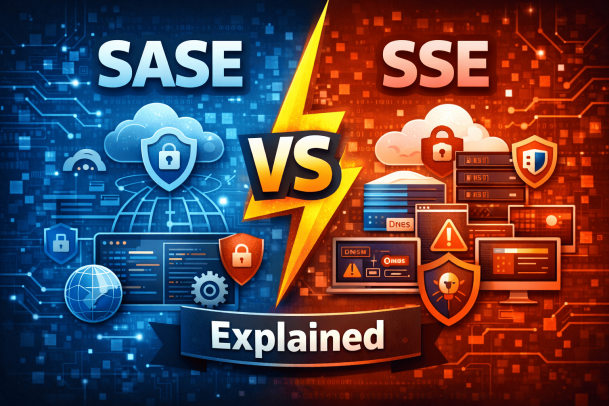
SASE vs SSE Explained
According to industry reports, over 70% of enterprise workloads now run in the cloud, making secure remote access and data protection more critical than ever.
This shift has introduced new cybersecurity frameworks such as Secure Access Service Edge (SASE) and Security Service Edge (SSE).
But many IT leaders still ask:
What’s the difference between SASE and SSE, and which one should your organization adopt?
In this guide, we’ll break down the SASE vs SSE comparison, explain how each model works, and help you determine which approach fits your cybersecurity strategy.
What Is SASE?
Secure Access Service Edge (SASE) is a cloud-based security architecture that combines networking and security services into a unified platform.
The concept was introduced by Gartner to address the challenges of securing distributed users, devices, and applications.
Instead of relying on traditional network appliances, SASE delivers security services directly from the cloud, closer to users and devices.
Key Components of SASE
SASE integrates both networking and security technologies into a single framework.
Networking Capabilities
These features help route and optimize traffic.
SD-WAN (Software-Defined Wide Area Network)
SD-WAN provides intelligent routing and connectivity across branch offices, data centers, and cloud applications.
Traffic Optimization
SASE platforms optimize traffic paths to ensure faster application performance.
Security Capabilities
SASE includes several security services that protect users and data.
Secure Web Gateway (SWG)
A secure web gateway protects users from malicious websites, phishing attacks, and harmful downloads.
Cloud Access Security Broker (CASB)
CASB monitors and secures interactions between users and cloud applications.
Zero Trust Network Access (ZTNA)
ZTNA ensures that users only access applications they are authorized to use.
Firewall as a Service (FWaaS)
FWaaS provides cloud-delivered firewall protection without physical hardware.
Benefits of SASE Architecture
Organizations adopt SASE because it offers several advantages.
Unified Security and Networking
SASE integrates networking and security functions into one platform, simplifying infrastructure.
Improved Performance
Traffic is routed through optimized cloud points of presence, reducing latency.
Simplified Management
Security teams can manage policies and monitoring through a centralized dashboard.
Better Support for Remote Work
SASE protects users regardless of location or device.
What Is SSE?
Security Service Edge (SSE) focuses specifically on security services delivered through the cloud, without including networking components like SD-WAN.
In simple terms:
SSE is the security subset of the SASE architecture.
SSE provides cloud-delivered security services designed to protect access to web, SaaS, and cloud applications.
Core Components of SSE
SSE includes several critical security technologies.
Secure Web Gateway (SWG)
SWG filters web traffic and blocks malicious websites or harmful downloads.
Cloud Access Security Broker (CASB)
CASB enforces security policies for cloud applications and protects sensitive data.
Zero Trust Network Access (ZTNA)
ZTNA replaces traditional VPNs by providing secure access based on identity and device verification.
Benefits of SSE
SSE is particularly valuable for organizations that need strong security without overhauling their entire networking architecture.
Faster Security Deployment
Organizations can adopt SSE without replacing existing networking infrastructure.
Enhanced Cloud Security
SSE protects SaaS applications and cloud environments.
Zero Trust Security
SSE solutions enforce strict access controls based on identity and context.
Reduced Complexity
Security services are delivered from the cloud, eliminating the need for multiple security appliances.
SASE vs SSE: Key Differences
While SASE and SSE are closely related, they serve different purposes in modern cybersecurity architectures.
Scope of Architecture
SASE
SASE combines networking and security services in a unified cloud platform.
SSE
SSE focuses only on security services, without including networking components.
Network Integration
SASE
Includes networking technologies such as SD-WAN to optimize traffic routing.
SSE
Does not include networking functions.
Deployment Approach
SASE
Often requires a full network architecture transformation.
SSE
Can be implemented more easily because it integrates with existing networks.
Security Coverage
SASE
Provides both connectivity and security.
SSE
Provides security services only.
SASE vs SSE Comparison Table
| Feature | SASE | SSE |
|---|---|---|
| Architecture Scope | Networking + Security | Security only |
| Networking Capabilities | Includes SD-WAN | Not included |
| Deployment Complexity | Higher | Lower |
| Cloud Security | Yes | Yes |
| Zero Trust Support | Yes | Yes |
| Ideal For | Full network modernization | Security-focused upgrades |
When Should Organizations Use SASE?
SASE is ideal for organizations undergoing complete network transformation.
Large Enterprises with Distributed Networks
Organizations with multiple offices benefit from SASE’s unified networking and security capabilities.
Cloud-First Infrastructure
Companies heavily relying on cloud applications can optimize connectivity with SASE.
Remote Workforce Environments
SASE supports secure access for remote users across multiple locations.
When Should Organizations Use SSE?
SSE is best suited for organizations that want modern security without changing their network infrastructure.
Security Modernization
Companies can deploy SSE to improve security while maintaining existing network architecture.
Cloud Application Security
SSE provides protection for SaaS platforms and cloud workloads.
Zero Trust Implementation
Organizations implementing Zero Trust security models often start with SSE.
How Zero Trust Fits into SASE and SSE
Both architectures support Zero Trust security, which assumes that no user or device should be trusted automatically.
Key Zero Trust Principles
Identity-Based Access Control
Access is granted based on verified user identity.
Continuous Verification
Security systems continuously evaluate user behavior and device status.
Least Privilege Access
Users only receive access to the resources they absolutely need.
Zero Trust significantly reduces the risk of data breaches and insider threats.
Challenges Organizations Face Without SASE or SSE
Without modern cloud security frameworks, organizations often struggle with:
-
Limited visibility into user activity
-
Slow security response times
-
VPN scalability issues
-
Increased attack surfaces
-
Difficulty protecting remote workers
These challenges highlight the growing need for cloud-delivered security architectures.
Tips for Choosing Between SASE and SSE
Selecting the right approach depends on your organization’s goals and infrastructure.
Evaluate Your Network Architecture
If you need both networking and security modernization, SASE may be the better option.
Assess Your Security Needs
If your primary goal is improving security while keeping existing networks, SSE may be sufficient.
Consider Scalability
Organizations with global workforces often benefit from SASE’s integrated connectivity.
Focus on Zero Trust
Both architectures support Zero Trust strategies, but SSE is often used as the starting point.
FAQ: SASE vs SSE Explained
What is the difference between SASE and SSE?
SASE combines networking and security services, while SSE focuses only on cloud-delivered security services like SWG, CASB, and ZTNA.
Is SSE part of SASE?
Yes. SSE is considered the security component within the broader SASE architecture.
Which is better: SASE or SSE?
Neither is universally better. SASE is ideal for full network transformation, while SSE works well for organizations focused primarily on security improvements.
Does SASE support Zero Trust security?
Yes. SASE architectures typically include Zero Trust Network Access (ZTNA) to enforce identity-based access control.
Can organizations use both SASE and SSE?
Yes. Many organizations start with SSE for security improvements and later expand to a full SASE architecture.
Final Thoughts: SASE vs SSE
As businesses continue to adopt cloud technologies and remote work models, traditional security architectures are no longer sufficient.
Both SASE and SSE provide modern, cloud-delivered security frameworks designed to protect users, devices, and applications regardless of location.
While SASE integrates networking and security into one architecture, SSE focuses on delivering advanced security services that support Zero Trust access and cloud protection.
Choosing the right approach depends on your organization’s network infrastructure, security needs, and long-term IT strategy.
If you’re looking to strengthen your cybersecurity posture with advanced cloud security and Zero Trust solutions, it’s time to explore modern security platforms.
👉 Request a demo today to see how Xcitium can help protect your organization:
https://www.xcitium.com/request-demo/