Securing Serverless Applications: A Complete Security Guide for Modern Cloud Environments
Updated on February 16, 2026, by Xcitium
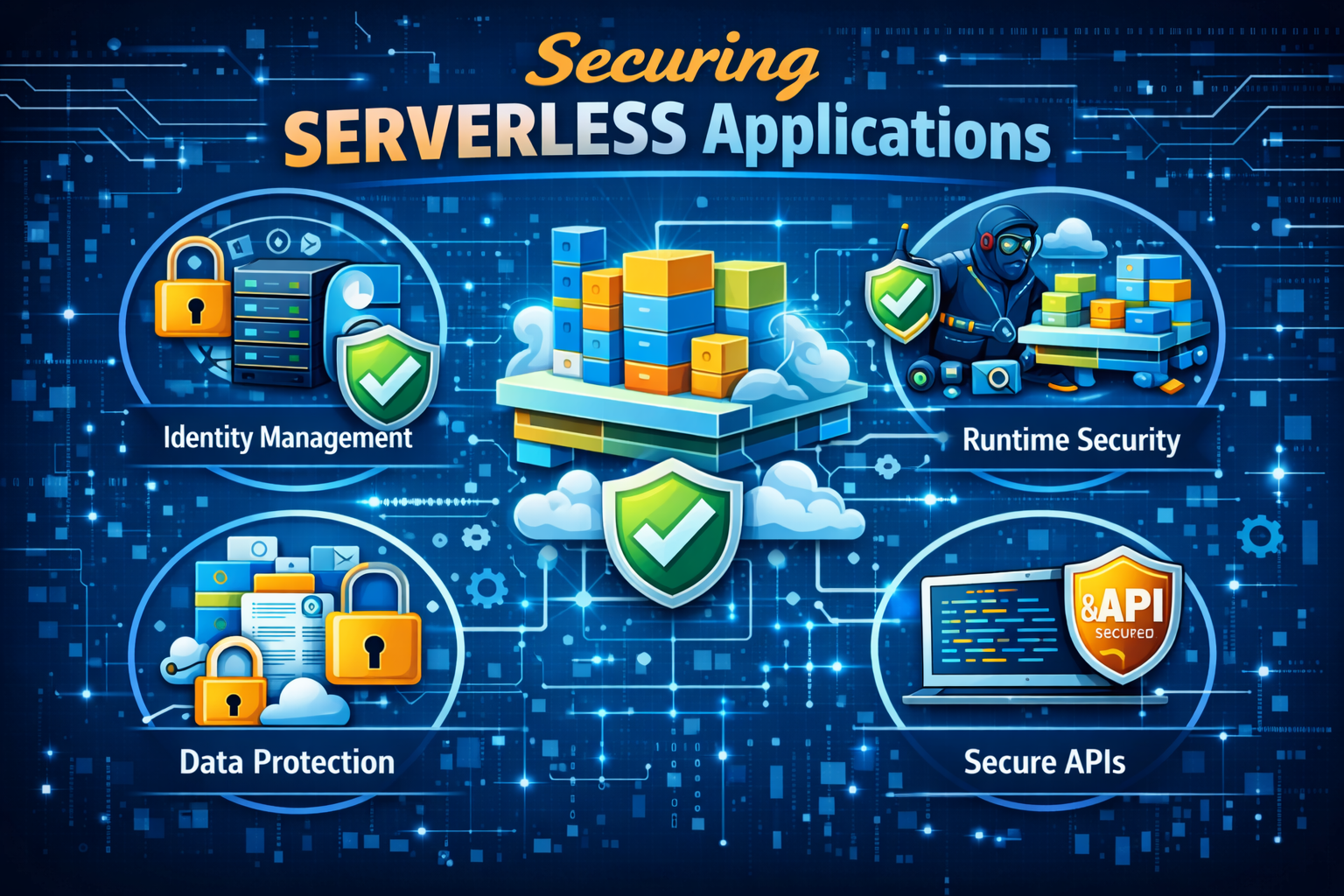
Securing serverless applications has become a top priority for organizations embracing cloud-native development. Serverless computing promises agility, scalability, and lower infrastructure overhead—but it also introduces new security challenges. The real question is this: Are your serverless workloads protected against modern cyber threats?
According to recent cloud security reports, misconfigurations and insecure APIs remain leading causes of serverless data breaches. While cloud providers manage infrastructure, organizations are still responsible for securing serverless applications at the code, identity, and data levels.
This guide explores how to strengthen serverless security, reduce risk, and implement practical controls that protect your cloud-native architecture.
What Is Serverless Architecture?
Before diving into securing serverless applications, it’s important to understand serverless computing.
Serverless architecture allows developers to run applications without provisioning or managing servers. Instead, cloud providers such as:
-
AWS Lambda
-
Microsoft Azure Functions
-
Google Cloud Functions
automatically handle infrastructure scaling and maintenance.
Serverless applications are:
-
Event-driven
-
Stateless
-
Highly scalable
-
Cost-efficient
However, the shared responsibility model still applies. While providers secure infrastructure, organizations must secure their applications and configurations.
Why Securing Serverless Applications Is Different
Traditional security models focused heavily on perimeter defenses and server hardening. In serverless environments, the attack surface shifts.
Key Differences Include:
-
No persistent servers to monitor
-
Short-lived functions
-
Increased API exposure
-
Heavy reliance on cloud identity systems
-
Distributed microservices architecture
This means securing serverless applications requires visibility into code, permissions, APIs, and runtime behavior.
Common Security Risks in Serverless Environments
Understanding the risks is the first step toward securing serverless applications effectively.
1. Insecure APIs
Serverless applications often rely on APIs for communication. Poor authentication or lack of rate limiting exposes endpoints to abuse.
2. Excessive Permissions
Over-permissioned roles increase the risk of privilege escalation.
3. Misconfigured Cloud Storage
Improperly configured storage buckets can expose sensitive data.
4. Vulnerable Dependencies
Serverless functions often rely on third-party libraries that may contain vulnerabilities.
5. Lack of Monitoring
Short-lived workloads make traditional logging insufficient.
Cybersecurity teams must address these vulnerabilities proactively.
Best Practices for Securing Serverless Applications
To build a strong security posture, organizations should follow proven cloud security best practices.
Implement Least Privilege Access Controls
Identity plays a central role in securing serverless applications.
Actions to Take:
-
Assign minimal permissions to each function
-
Use role-based access control (RBAC)
-
Avoid wildcard permissions
-
Regularly audit IAM policies
Strong identity governance prevents lateral movement.
Secure APIs and Event Triggers
APIs are a major attack vector in serverless environments.
Strengthen API Security By:
-
Enforcing strong authentication (OAuth, JWT)
-
Implementing API gateways
-
Applying rate limiting
-
Validating inputs
-
Encrypting data in transit
API protection reduces exposure to automated attacks.
Monitor Serverless Runtime Behavior
Because serverless functions scale dynamically, runtime visibility is essential.
Monitoring Should Include:
-
Real-time logging
-
Behavioral analytics
-
Threat detection integration
-
Anomaly detection
Cloud-native monitoring tools help detect suspicious activity early.
Protect Serverless Code and Dependencies
Application security must start at the development stage.
DevSecOps Best Practices:
-
Scan code for vulnerabilities
-
Use dependency management tools
-
Enforce secure coding standards
-
Conduct regular penetration testing
Shift-left security improves resilience before deployment.
Encrypt Data at Rest and in Transit
Encryption is fundamental when securing serverless applications.
Ensure:
-
TLS encryption for all API traffic
-
Encrypted cloud storage
-
Secure key management systems
-
Regular key rotation
Encryption limits damage if unauthorized access occurs.
Apply Zero Trust Principles
Zero Trust aligns perfectly with securing serverless applications.
Zero Trust Strategies:
-
Continuous authentication
-
Device and user verification
-
Context-based access controls
-
Network segmentation
Never assume trust—even inside the cloud.
Serverless Security Tools and Technologies
Several security technologies enhance protection in serverless environments.
Cloud Security Posture Management (CSPM)
CSPM tools detect misconfigurations and compliance gaps across cloud environments.
Serverless Application Security Platforms (SASP)
These tools specifically monitor and secure serverless functions.
Identity Threat Detection and Response (ITDR)
ITDR solutions detect identity-based attacks targeting cloud roles and permissions.
Extended Detection and Response (XDR)
XDR platforms provide unified visibility across endpoints, networks, and cloud workloads.
Integrating these tools strengthens overall cloud-native security.
Securing Serverless Applications in Multi-Cloud Environments
Many enterprises operate across AWS, Azure, and Google Cloud.
Multi-Cloud Security Considerations:
-
Standardize security policies
-
Centralize logging and monitoring
-
Enforce consistent identity management
-
Conduct cross-cloud risk assessments
Unified governance reduces complexity and blind spots.
Compliance and Regulatory Considerations
Securing serverless applications also supports compliance frameworks such as:
-
GDPR
-
HIPAA
-
PCI-DSS
-
SOC 2
-
ISO 27001
Audit readiness requires:
-
Access logs
-
Configuration tracking
-
Encryption enforcement
-
Data protection controls
Regulatory compliance strengthens business credibility.
Securing Serverless Applications: A Step-by-Step Framework
Here’s a structured approach IT leaders can implement:
Step 1: Conduct a Cloud Security Risk Assessment
Identify assets, vulnerabilities, and exposure points.
Step 2: Harden Identity and Access Controls
Enforce least privilege and MFA.
Step 3: Secure Code and APIs
Scan for vulnerabilities and implement input validation.
Step 4: Enable Continuous Monitoring
Integrate cloud logging with security analytics tools.
Step 5: Test Incident Response Plans
Simulate breaches and refine containment strategies.
Security is an ongoing process—not a one-time setup.
Future Trends in Serverless Security
The evolution of cloud-native computing is shaping new security trends:
-
AI-driven anomaly detection
-
Automated policy enforcement
-
Confidential computing
-
Secure service meshes
-
Runtime application self-protection (RASP)
Organizations that invest early in proactive serverless security gain long-term resilience.
Frequently Asked Questions (FAQ)
1. What does securing serverless applications involve?
It involves protecting functions, APIs, identities, and cloud configurations to prevent unauthorized access and data breaches.
2. Is serverless computing secure by default?
No. Cloud providers secure infrastructure, but organizations must secure application code, permissions, and configurations.
3. What are common risks in serverless environments?
Common risks include insecure APIs, excessive permissions, misconfigured storage, vulnerable dependencies, and insufficient monitoring.
4. How can Zero Trust improve serverless security?
Zero Trust enforces continuous verification and least privilege access, reducing unauthorized lateral movement.
5. Do serverless applications require monitoring?
Yes. Continuous monitoring detects suspicious behavior and prevents escalation of threats.
Strengthen Your Serverless Security Today
Securing serverless applications is not optional—it’s essential. As organizations accelerate cloud adoption, attackers are targeting cloud-native workloads with increasing sophistication.
A proactive approach that combines identity security, runtime monitoring, API protection, and Zero Trust principles ensures your serverless environment remains resilient.
If you’re ready to enhance your cloud security posture and protect your serverless workloads with advanced threat detection—
👉 Request a personalized demo today:
https://www.xcitium.com/request-demo/
Build a secure serverless architecture that protects your innovation without slowing it down.