Measuring Security ROI: How to Prove the Value of Cybersecurity Investments
Updated on March 23, 2026, by Xcitium
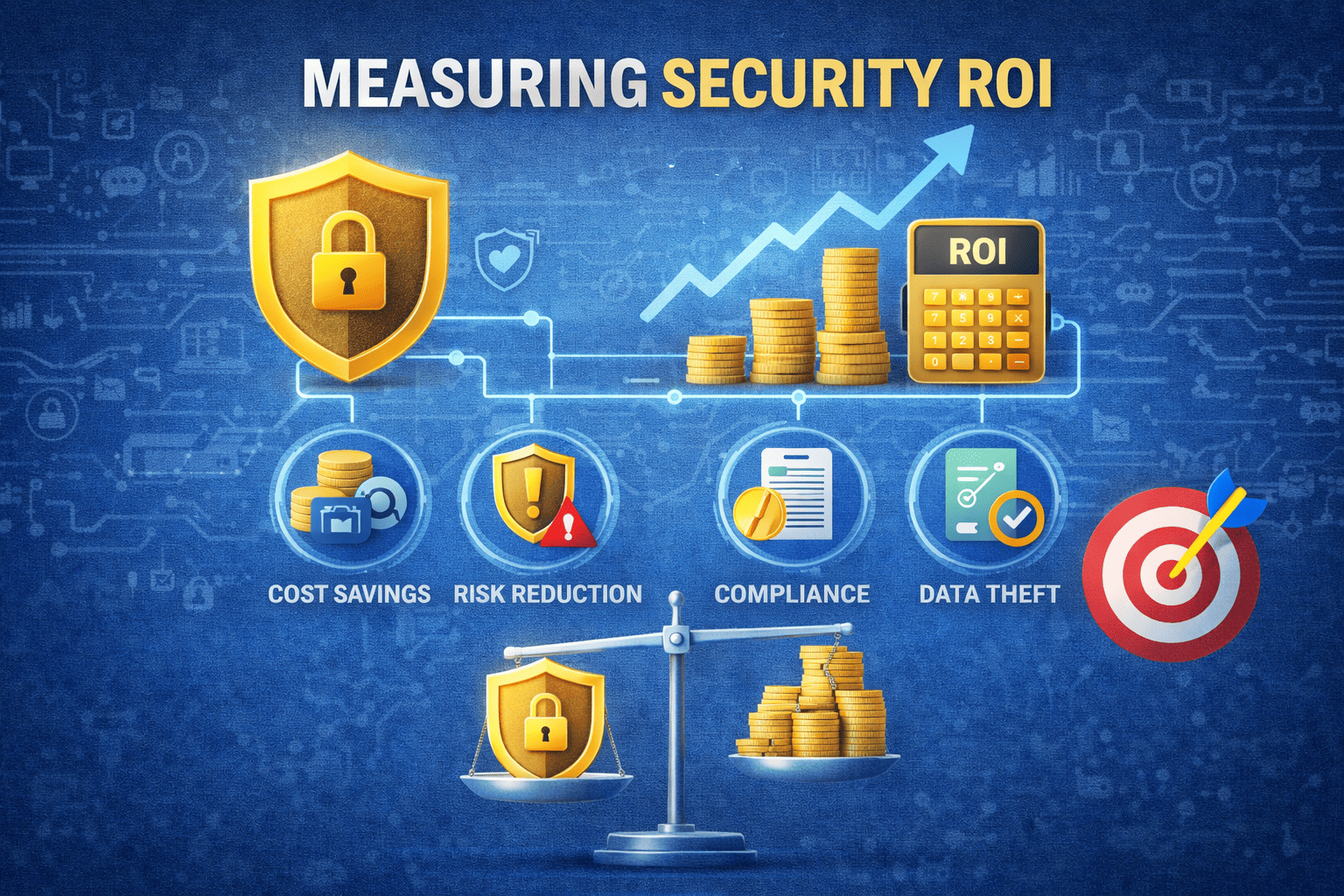
How do you justify cybersecurity spending when the goal is to prevent something that hasn’t happened yet? That’s the challenge many organizations face today. Measuring Security ROI is no longer optional—it’s essential for aligning security investments with business outcomes.
Cybersecurity budgets are growing, but executives demand clear proof of value. Without measurable results, security is often seen as a cost center rather than a business enabler. This is where measuring security ROI becomes critical.
In this guide, we’ll explore how to calculate security ROI, key metrics to track, common challenges, and practical strategies to demonstrate the real value of cybersecurity.
What is Measuring Security ROI?
Measuring Security ROI refers to evaluating the financial and operational value gained from cybersecurity investments compared to their cost.
Unlike traditional ROI, security ROI focuses on:
- Risk reduction
- Cost avoidance
- Operational efficiency
- Business continuity
Because cybersecurity prevents losses rather than generates revenue, measuring its ROI requires a different approach.
Why Measuring Security ROI is Important
Organizations need to justify security investments to stakeholders.
Key Benefits
- Demonstrates business value
- Supports budget decisions
- Aligns security with business goals
- Improves risk management
- Enhances executive confidence
Without measuring security ROI, security teams struggle to communicate their impact.
The Challenge of Measuring Security ROI
Cybersecurity ROI is not always straightforward.
Why It’s Difficult
- Benefits are often invisible
- Hard to quantify prevented attacks
- Rapidly evolving threat landscape
- Lack of standardized metrics
Despite these challenges, organizations can still effectively measure ROI with the right approach.
Key Metrics for Measuring Security ROI
Tracking the right metrics is essential.
1. Cost of a Data Breach
Estimate potential financial loss from a breach.
Includes:
- Legal costs
- Regulatory fines
- Recovery expenses
- Reputation damage
2. Risk Reduction Percentage
Measure how much risk decreases after implementing security controls.
3. Mean Time to Detect (MTTD)
How quickly threats are identified.
4. Mean Time to Respond (MTTR)
How fast incidents are resolved.
5. Incident Frequency
Track the number of security incidents over time.
6. Security Tool Effectiveness
Evaluate how well tools prevent or detect threats.
These cybersecurity ROI metrics help quantify security performance.
How to Calculate Security ROI
Although complex, a basic formula can help.
Security ROI Formula
ROI = (Risk Reduction Value – Security Investment Cost) ÷ Security Investment Cost
Example
- Potential breach cost: $1,000,000
- Risk reduction: 50%
- Security investment: $200,000
ROI = (500,000 – 200,000) ÷ 200,000 = 150%
This demonstrates how measuring security ROI can translate risk into financial terms.
Key Factors That Influence Security ROI
Several factors impact ROI calculations.
Threat Landscape
Higher risk environments yield greater ROI.
Industry Requirements
Regulated industries benefit more from compliance-driven security.
Security Maturity
Organizations with mature security programs achieve better ROI.
Technology Integration
Integrated tools improve efficiency and effectiveness.
Cost of Cyber Risk vs Security Investment
Understanding the cost of cyber risk is essential.
Cost of Cyber Risk Includes
- Data breaches
- Downtime
- Lost revenue
- Legal penalties
- Customer churn
Security Investment Includes
- Tools and software
- Personnel costs
- Training programs
- Infrastructure
Comparing these helps justify investments.
Strategies for Measuring Security ROI Effectively
Organizations should adopt structured approaches.
1. Align Security with Business Goals
Security should support:
- Revenue protection
- Operational continuity
- Customer trust
2. Use Quantitative and Qualitative Metrics
Combine numbers with real-world impact.
3. Track Trends Over Time
Measure improvements in:
- Incident reduction
- Response times
- System uptime
4. Leverage Automation
Automated tools provide better data for analysis.
5. Communicate Results Clearly
Use dashboards and reports for executives.
Real-World Examples of Security ROI
Understanding practical scenarios helps.
Example 1: Ransomware Prevention
Investment in endpoint security prevents ransomware attack.
- Avoided downtime: 3 days
- Savings: $300,000
Example 2: Faster Incident Response
Improved detection reduces breach impact.
- Reduced response time by 50%
- Lower recovery costs
These examples show how measuring security ROI translates into real value.
Common Mistakes in Measuring Security ROI
Organizations often make errors.
Focusing Only on Costs
Ignoring benefits leads to incomplete analysis.
Using Limited Metrics
Relying on a single metric reduces accuracy.
Not Updating Data
Outdated data leads to incorrect conclusions.
Ignoring Business Impact
Security should be tied to business outcomes.
Avoiding these mistakes improves ROI measurement.
Tools for Measuring Security ROI
Several tools can help track ROI.
SIEM Platforms
Provide data for incident tracking and analysis.
Risk Assessment Tools
Estimate potential losses and risk levels.
Security Analytics Platforms
Analyze trends and performance metrics.
Dashboard and Reporting Tools
Visualize data for decision-makers.
Measuring Security ROI in Different Industries
Different industries require tailored approaches.
Healthcare
Focus on patient data protection and compliance.
Finance
Emphasize fraud prevention and transaction security.
Retail
Protect customer data and payment systems.
Technology
Secure cloud environments and intellectual property.
Each sector benefits from customized ROI strategies.
Future Trends in Measuring Security ROI
Security ROI measurement is evolving.
Emerging Trends
- AI-driven analytics
- Real-time risk scoring
- Automated reporting
- Integration with business KPIs
These advancements will make measuring security ROI more accurate and actionable.
Frequently Asked Questions (FAQ)
What is security ROI?
Security ROI measures the value gained from cybersecurity investments compared to their cost.
Why is measuring security ROI difficult?
Because it focuses on preventing losses rather than generating revenue.
What metrics are used to measure security ROI?
Common metrics include risk reduction, incident frequency, MTTD, MTTR, and cost of breaches.
How can organizations improve security ROI?
By aligning security with business goals, using automation, and tracking performance metrics.
Is security ROI only financial?
No. It also includes operational efficiency, risk reduction, and business continuity.
Prove the Value of Your Cybersecurity Investments
Cybersecurity is no longer just an IT concern—it’s a business priority. Measuring Security ROI helps organizations justify investments, optimize resources, and demonstrate real value to stakeholders.
By adopting the right metrics and strategies, businesses can turn cybersecurity into a competitive advantage.
👉 Request a demo today:
https://www.xcitium.com/request-demo/
Discover how advanced cybersecurity solutions can help you measure ROI, reduce risk, and strengthen your overall security strategy.