Cybersecurity for Financial Institutions
Updated on March 20, 2026, by Xcitium
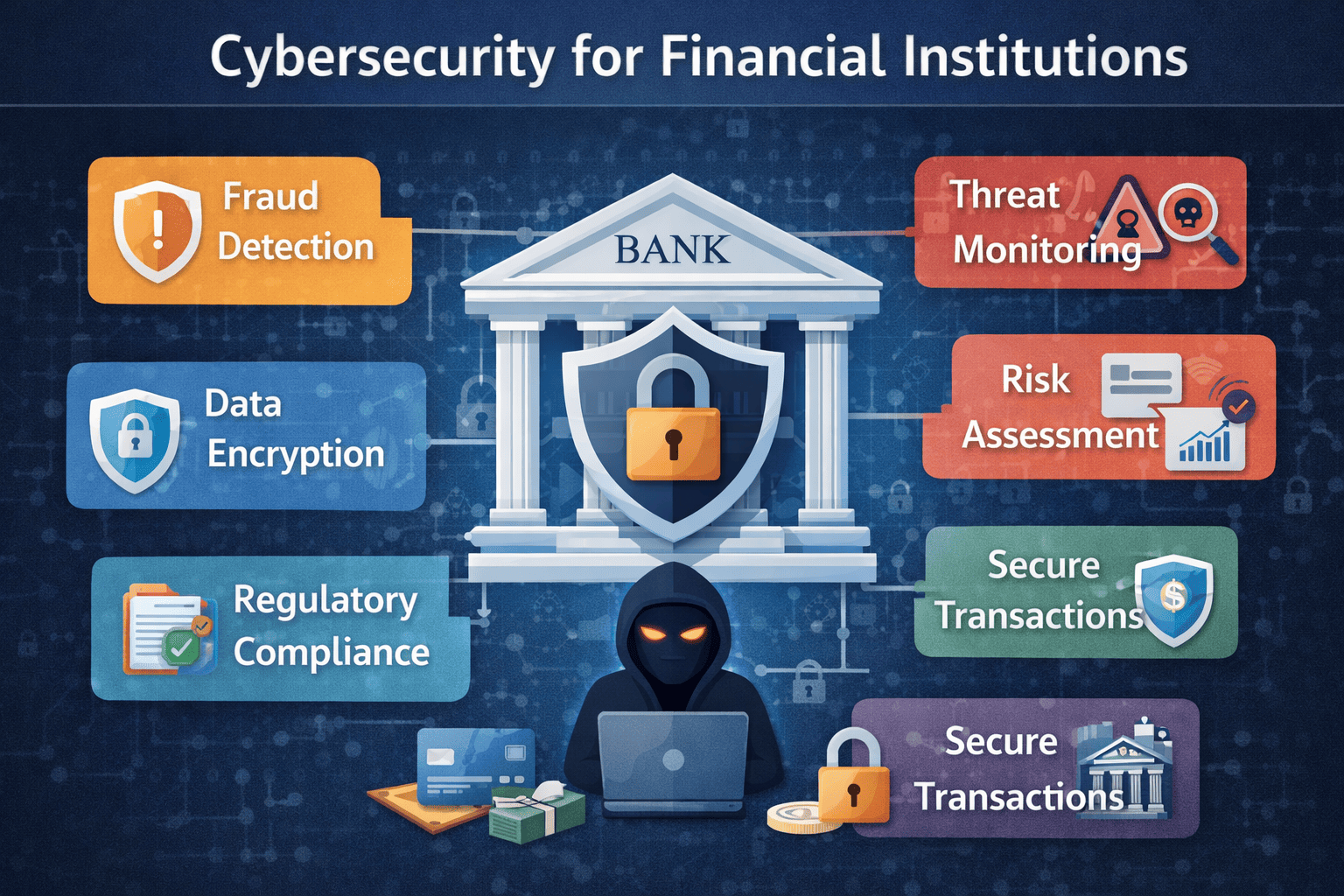
What would happen if a cyberattack disrupted your bank’s operations for just one hour? For financial institutions, even a brief outage can result in millions in losses, regulatory penalties, and damaged customer trust. That’s why cybersecurity for financial institutions is no longer optional—it’s mission-critical.
Banks, insurance companies, and fintech firms are prime targets for cybercriminals because they handle sensitive financial data, high-value transactions, and critical infrastructure. As cyber threats become more sophisticated, organizations must adopt advanced cybersecurity for financial institutions strategies to stay protected.
In this guide, we’ll explore the importance of cybersecurity in the financial sector, common threats, regulatory requirements, and actionable best practices to strengthen your defenses.
What is Cybersecurity for Financial Institutions?
Cybersecurity for financial institutions refers to the technologies, policies, and processes used to protect financial systems, data, and transactions from cyber threats.
It includes securing:
-
Banking systems and payment platforms
-
Customer data and financial records
-
Online and mobile banking applications
-
Internal IT infrastructure
-
Third-party integrations
The goal is to ensure confidentiality, integrity, and availability of financial data.
Why Cybersecurity is Critical for Financial Institutions
Financial institutions operate in a high-risk environment.
Key Reasons for Increased Risk
-
High-value financial transactions
-
Large volumes of sensitive customer data
-
Strict regulatory requirements
-
Continuous online access
These factors make cybersecurity for financial institutions a top priority.
Impact of Cyberattacks
A cyberattack can have severe consequences.
Common Impacts
-
Financial losses
-
Data breaches
-
Regulatory fines
-
Reputational damage
-
Loss of customer trust
Strong cybersecurity helps mitigate these risks.
Common Cyber Threats in the Financial Sector
Financial institutions face a wide range of cyber threats.
Phishing and Social Engineering
Attackers trick employees or customers into revealing sensitive information.
Ransomware Attacks
Ransomware can lock critical systems and demand payment.
Insider Threats
Employees or contractors may misuse access.
Distributed Denial of Service (DDoS) Attacks
DDoS attacks overwhelm systems, causing service disruptions.
Advanced Persistent Threats (APTs)
Sophisticated attackers target financial systems over long periods.
Key Components of Cybersecurity for Financial Institutions
A strong cybersecurity for financial institutions strategy includes multiple layers.
1. Network Security
Protecting the network is essential.
Best Practices
-
Use firewalls and intrusion detection systems
-
Segment networks
-
Monitor traffic continuously
2. Endpoint Security
Endpoints are common entry points for attackers.
2.Endpoint Protection Measures
-
Deploy antivirus and EDR solutions
-
Encrypt devices
-
Apply regular updates
3. Data Protection and Encryption
Financial data must be secured at all times.
Data Security Practices
-
Encrypt data at rest and in transit
-
Use tokenization
-
Implement data loss prevention (DLP)
4. Identity and Access Management (IAM)
Controlling access reduces risk.
IAM Best Practices
-
Enable multi-factor authentication (MFA)
-
Use role-based access control (RBAC)
-
Monitor user activity
5. Security Monitoring and Incident Response
Early detection is critical.
Monitoring Strategies
-
Use SIEM tools
-
Monitor logs and alerts
-
Develop incident response plans
Regulatory Compliance in Financial Cybersecurity
Financial institutions must comply with strict regulations.
Key Regulations
-
PCI DSS (Payment Card Industry Data Security Standard)
-
GDPR (General Data Protection Regulation)
-
SOX (Sarbanes-Oxley Act)
-
GLBA (Gramm-Leach-Bliley Act)
Compliance is a core part of cybersecurity for financial institutions.
Best Practices for Financial Cybersecurity
Organizations should follow proven strategies.
1. Implement Zero Trust Security
Verify every user and device before granting access.
2. Conduct Regular Risk Assessments
Identify vulnerabilities and address them proactively.
3. Train Employees
Employees should understand cybersecurity risks.
Training Topics
-
Phishing awareness
-
Password security
-
Safe data handling
4. Secure Third-Party Vendors
Third-party integrations can introduce risks.
Vendor Security Measures
-
Conduct security assessments
-
Monitor vendor activity
-
Enforce security standards
5. Use Advanced Threat Detection
Deploy AI-driven tools to detect threats early.
Challenges in Financial Cybersecurity
Financial institutions face unique challenges.
Evolving Threat Landscape
Cybercriminals continuously develop new attack methods.
Legacy Systems
Older systems may lack modern security features.
Compliance Complexity
Meeting regulatory requirements can be challenging.
High Operational Demand
Systems must remain available 24/7.
Emerging Trends in Financial Cybersecurity
The future of cybersecurity for financial institutions is evolving.
Artificial Intelligence (AI)
AI improves threat detection and response.
Zero Trust Architecture
Ensures continuous verification of users and devices.
Cloud Security
Protects cloud-based financial services.
Automation
Automated systems improve efficiency and response times.
Cybersecurity for Fintech and Digital Banking
Fintech companies face additional challenges.
Key Risks
-
API vulnerabilities
-
Mobile banking threats
-
Rapid technology adoption
Security Strategies
-
Secure APIs
-
Monitor mobile applications
-
Implement strong authentication
Frequently Asked Questions (FAQ)
What is cybersecurity for financial institutions?
It involves protecting financial systems, data, and transactions from cyber threats.
Why are financial institutions targeted by cyberattacks?
They handle sensitive data and high-value transactions, making them attractive targets.
What are the biggest cybersecurity threats in finance?
Common threats include phishing, ransomware, insider threats, and DDoS attacks.
How can financial institutions improve cybersecurity?
They can implement strong access controls, encryption, monitoring, and employee training.
What regulations apply to financial cybersecurity?
Key regulations include PCI DSS, GDPR, SOX, and GLBA.
Strengthen Your Financial Cybersecurity Strategy Today
Cyber threats in the financial sector are growing in complexity and scale. Without a strong cybersecurity strategy, organizations risk financial loss, regulatory penalties, and loss of customer trust.
Implementing effective cybersecurity for financial institutions ensures secure operations, protects sensitive data, and builds long-term resilience.
👉 Request a demo today:
https://www.xcitium.com/request-demo/
Discover how advanced cybersecurity solutions can help your financial organization stay protected against modern cyber threats.