What Does DSL Stand For? A Complete Guide to Digital Subscriber Line Technology
Updated on January 28, 2026, by Xcitium
If you’ve ever shopped for internet service or managed office connectivity, you may have asked yourself: what does DSL stand for, and how does it compare to modern broadband options? Despite the rise of fiber and cable internet, DSL still plays a role in many business and rural environments worldwide.
DSL Meaning
For IT managers, cybersecurity teams, CEOs, and founders, understanding what does DSL stand for goes beyond simple definitions. It affects network reliability, security posture, performance expectations, and business continuity—especially in locations where newer technologies are limited.
In this guide, we’ll explain what does DSL stand for, how DSL works, its types, benefits, limitations, security considerations, and whether it still makes sense in today’s digital landscape.
What Does DSL Stand For?
To start with the basics, what does DSL stand for?
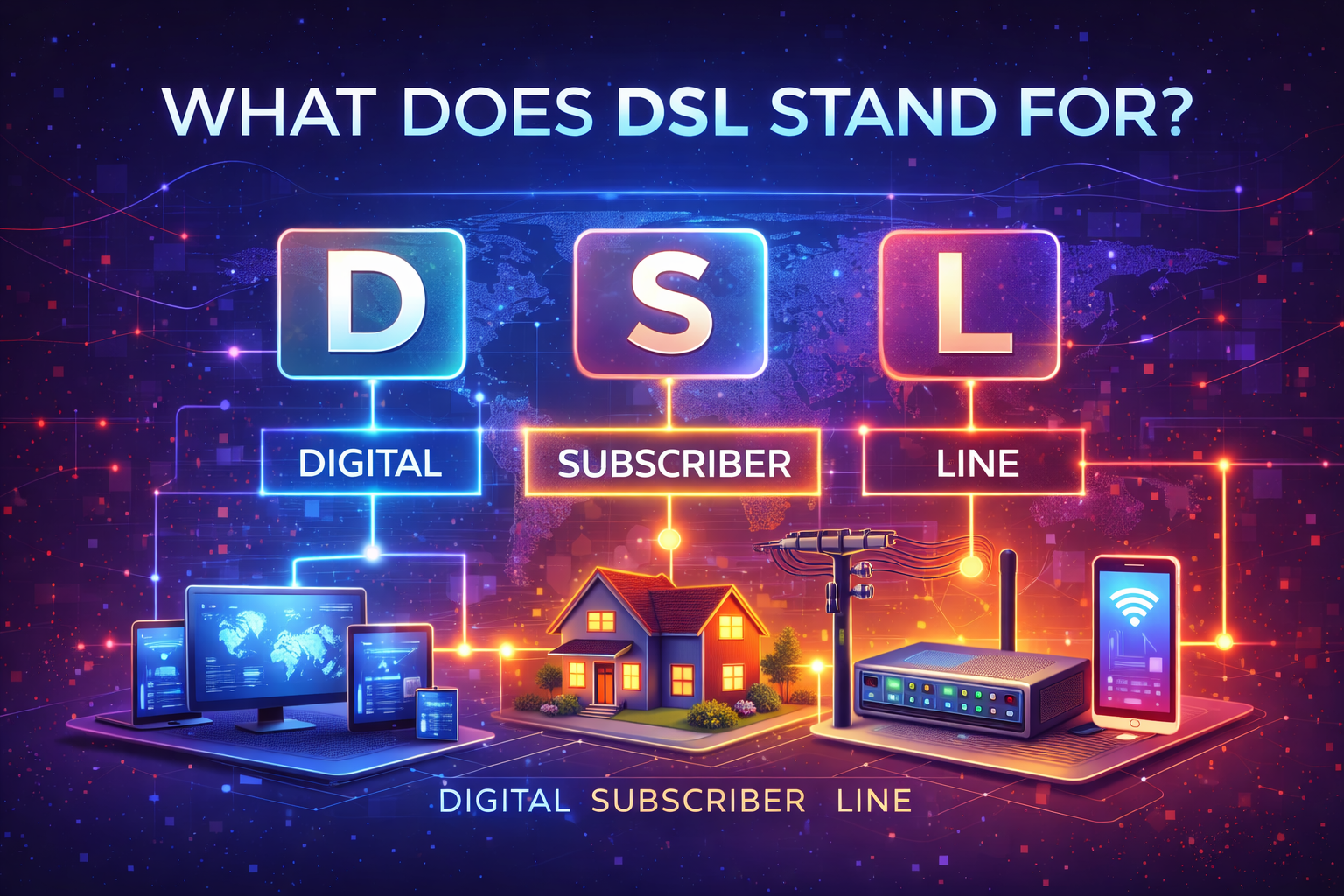
What does DSL Mean: DSL stands for Digital Subscriber Line. It is a technology that delivers high-speed internet access over traditional copper telephone lines without interfering with voice calls.
Unlike older dial-up connections, DSL allows users to:
-
Access the internet continuously
-
Make phone calls at the same time
-
Achieve faster and more stable speeds
DSL was one of the first widely adopted broadband technologies and helped transition homes and businesses away from dial-up internet.
Why DSL Was a Breakthrough Technology
Understanding what does DSL stand for also means understanding why it was revolutionary.
Before DSL, internet access required:
-
Dial-up connections
-
Tied-up phone lines
-
Extremely slow speeds
DSL introduced always-on connectivity, enabling businesses to adopt email, web applications, and early cloud services more effectively.
How DSL Works
To fully understand what does DSL stand for, it helps to know how DSL technology functions.
How DSL Internet Works
-
DSL uses existing copper telephone lines
-
Voice and data signals are separated using frequency bands
-
Data travels from your modem to a DSL access multiplexer (DSLAM)
-
The DSLAM connects to the broader internet
This design allows DSL to coexist with traditional phone services.
Key Components of a DSL Connection
A typical DSL setup includes:
-
Copper telephone lines
-
DSL modem
-
DSLAM at the service provider
-
Internet service provider (ISP) network
Each component plays a role in performance and reliability.
Types of DSL Connections
When asking what does DSL stand for, it’s also important to understand the different DSL types.
1. ADSL (Asymmetric Digital Subscriber Line)
ADSL is the most common DSL type.
Key Characteristics
-
Faster download speeds than upload speeds
-
Designed for browsing, streaming, and email
-
Common in residential and small office environments
ADSL reflects how most users consume internet data.
2. SDSL (Symmetric Digital Subscriber Line)
SDSL provides equal upload and download speeds.
Best For
-
Small businesses
-
File sharing
-
Hosting services
However, SDSL is less widely available and often more expensive.
3. VDSL (Very-high-bit-rate Digital Subscriber Line)
VDSL offers significantly higher speeds than ADSL.
Advantages
-
Faster performance
-
Better support for streaming and VoIP
-
Short-distance optimization
VDSL works best when users are close to the provider’s infrastructure.
4. IDSL (ISDN Digital Subscriber Line)
IDSL is a legacy DSL type.
Characteristics
-
Always-on connection
-
Slower speeds
-
Mostly obsolete
It has largely been replaced by newer DSL variants.
DSL vs Cable vs Fiber Internet
A common follow-up to what does DSL stand for is how it compares to other broadband technologies.
| Feature | DSL | Cable | Fiber |
|---|---|---|---|
| Medium | Copper phone lines | Coaxial cable | Fiber optic |
| Speed | Moderate | Fast | Very fast |
| Availability | Widespread | Urban/suburban | Limited |
| Reliability | Stable | Shared bandwidth | Highly reliable |
| Cost | Lower | Moderate | Higher |
DSL remains relevant where cable and fiber are unavailable.
Advantages of DSL Internet
Despite newer technologies, DSL still offers benefits.
Key Advantages
-
Wide availability
-
Uses existing infrastructure
-
Always-on connectivity
-
Lower cost than fiber
-
Stable performance
These advantages make DSL suitable for specific scenarios.
Limitations of DSL
Understanding what does DSL stand for also requires recognizing its limitations.
Common DSL Limitations
-
Speed decreases with distance
-
Slower than fiber and cable
-
Limited scalability
-
Aging infrastructure
DSL may not meet the demands of bandwidth-heavy applications.
Is DSL Still Used Today?
Yes—DSL is still widely used, especially in:
-
Rural areas
-
Small towns
-
Developing regions
-
Backup internet connections
For many organizations, DSL remains the only viable broadband option.
DSL in Business Environments
Businesses often use DSL as:
-
Primary connectivity in remote locations
-
Backup internet for redundancy
-
Cost-effective access for branch offices
Understanding what does DSL stand for helps IT leaders make informed decisions about connectivity strategies.
DSL and Cybersecurity Considerations
From a cybersecurity perspective, DSL connections require the same attention as any other network.
Common Security Risks
-
Unsecured modems
-
Weak router configurations
-
Lack of encryption
-
Outdated firmware
DSL itself is not inherently insecure—but poor configuration can create vulnerabilities.
Best Practices for Securing DSL Connections
To protect DSL-based networks:
-
Use strong router passwords
-
Enable firewall features
-
Segment networks
-
Monitor traffic continuously
-
Keep firmware updated
Security must be layered regardless of connection type.
DSL and Remote Work
DSL played a major role in enabling early remote work.
Remote Work Benefits
-
Always-on access
-
Reliable email and VPN connectivity
-
Affordable home office internet
While newer technologies perform better, DSL remains functional for many remote workers.
DSL and Cloud Applications
Cloud adoption has increased bandwidth demands.
DSL Limitations for Cloud Use
-
Slower upload speeds
-
Latency for real-time apps
-
Limited support for heavy workloads
Organizations using DSL must optimize usage carefully.
When DSL Makes Sense Today
DSL may still be a good choice if:
-
Fiber or cable is unavailable
-
Bandwidth needs are moderate
-
Cost is a major factor
-
It’s used as a backup connection
Understanding what does DSL stand for helps set realistic expectations.
When to Upgrade from DSL
Consider upgrading when:
-
Applications require high bandwidth
-
Users experience performance issues
-
Cloud workloads increase
-
Security monitoring demands grow
Technology should support business growth—not limit it.
The Future of DSL Technology
DSL is gradually being phased out in favor of fiber, but it won’t disappear overnight.
Future Outlook
-
Continued use in underserved areas
-
Gradual migration to fiber
-
Reduced investment in DSL infrastructure
DSL will remain relevant where alternatives are limited.
Actionable Tips for IT Managers and Executives
If your organization uses DSL:
-
Audit current bandwidth usage
-
Secure all network devices
-
Plan for future upgrades
-
Implement redundancy where possible
-
Monitor performance and security
Proactive planning avoids connectivity surprises.
Frequently Asked Questions – DSL Meaning
1. What does DSL stand for?
DSL stands for Digital Subscriber Line.
2. Is DSL faster than dial-up?
Yes. DSL is significantly faster and always-on.
3. Is DSL still available today?
Yes, especially in rural and underserved areas.
4. Is DSL secure?
DSL can be secure when properly configured and monitored.
5. Should businesses still use DSL?
It depends on availability, bandwidth needs, and cost considerations.
Final Thoughts: Does DSL Still Matter?
Understanding what does DSL stand for provides valuable insight into how internet connectivity has evolved—and why DSL still exists today. While it may not match the speed of fiber or cable, DSL continues to support businesses and users where alternatives are limited.
However, connectivity alone isn’t enough. Regardless of connection type, organizations must prioritize security, visibility, and resilience.
👉 See how modern cybersecurity solutions protect networks across all connection types.
Strengthen your security posture today.
🔗 Request a demo:
https://www.xcitium.com/request-demo/



 (3 votes, average: 3.67 out of 5, rated)