What Is CISSP? A Complete Guide to the Gold Standard in Cybersecurity
Updated on January 14, 2026, by Xcitium
If you’re building a career in cybersecurity or leading an organization responsible for protecting sensitive data, you’ve probably heard the term CISSP. But what is CISSP, and why is it considered one of the most respected certifications in information security?
The CISSP credential is often described as the gold standard for cybersecurity professionals. It validates not just technical knowledge, but also leadership, risk management, and strategic security thinking. Understanding what is CISSP is critical for IT managers, CISOs, cybersecurity teams, and business leaders who want to strengthen security posture and credibility.
In this guide, we’ll break down what CISSP is, how it works, who it’s for, its domains, benefits, and how it fits into modern cybersecurity strategies.
What Is CISSP?
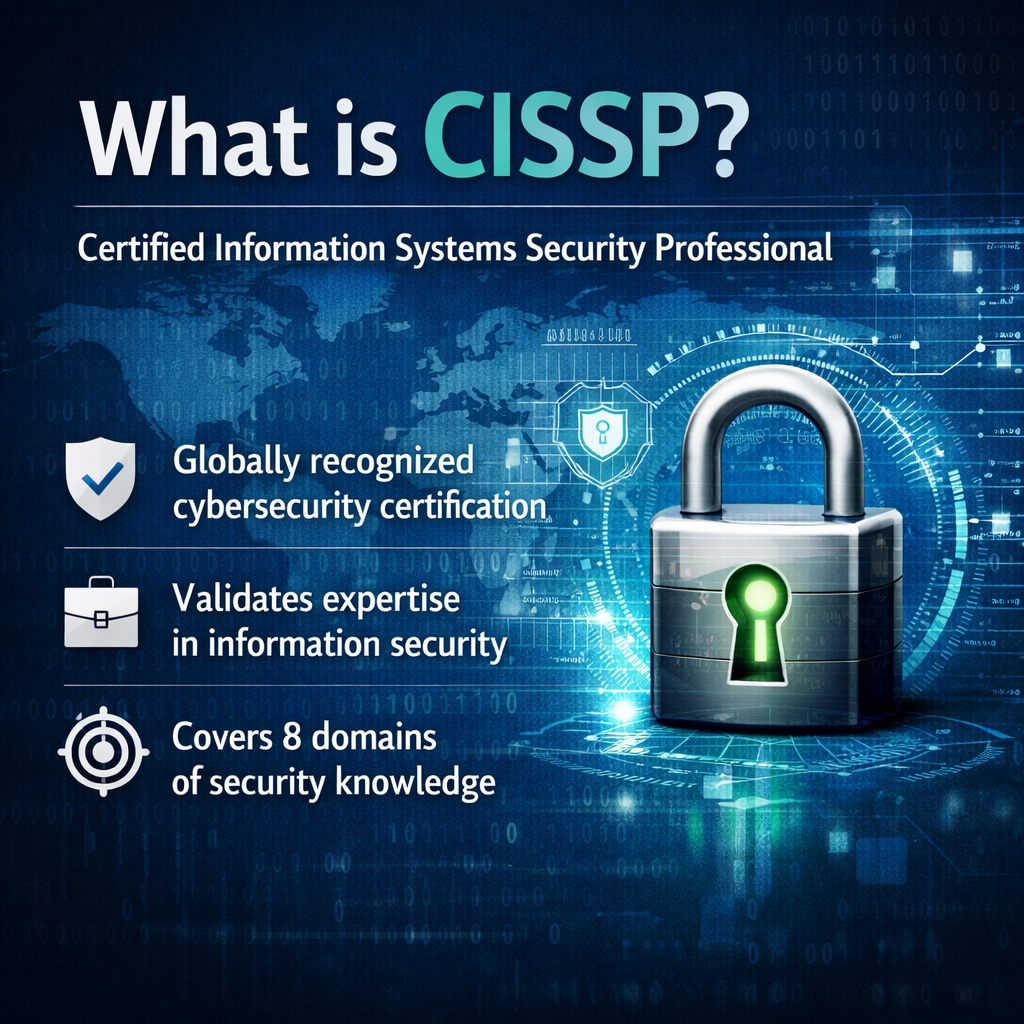
What is CISSP? CISSP stands for Certified Information Systems Security Professional. It is a globally recognized cybersecurity certification offered by (ISC)², an international nonprofit organization dedicated to advancing information security.
CISSP validates a professional’s ability to design, implement, and manage a best-in-class cybersecurity program. Unlike entry-level certifications, CISSP focuses on broad, real-world security knowledge and leadership skills rather than narrow technical tasks.
Key Facts About CISSP
-
Vendor-neutral certification
-
Globally recognized
-
Focuses on cybersecurity management and strategy
-
Designed for experienced professionals
When people ask what is CISSP, the simplest answer is: it’s proof that you understand cybersecurity at an enterprise level.
Why CISSP Matters in Today’s Cybersecurity Landscape
Cyber threats are growing more complex, frequent, and costly. Organizations need security leaders who understand both technology and business risk.
Why CISSP Is So Valuable
-
Demonstrates deep cybersecurity expertise
-
Validates real-world experience
-
Supports leadership and decision-making roles
-
Builds trust with employers and stakeholders
For organizations, hiring CISSP-certified professionals reduces security risk and improves compliance readiness.
Who Should Get CISSP Certified?
Understanding what is CISSP also means knowing who it’s designed for.
CISSP Is Ideal For:
-
Security managers and directors
-
CISOs and security leaders
-
IT managers with security responsibilities
-
Security consultants and architects
-
Experienced cybersecurity professionals
CISSP is not an entry-level certification. It’s meant for professionals who already have hands-on experience in security roles.
CISSP Experience Requirements
To earn the CISSP credential, candidates must meet experience requirements.
Experience Criteria
-
Five years of paid work experience
-
Experience must cover two or more CISSP domains
-
A four-year degree or approved certification can waive one year
Candidates who pass the exam but lack experience can become an Associate of (ISC)² until requirements are met.
The Eight CISSP Domains Explained
A major part of understanding what is CISSP is knowing what it covers. CISSP is built around eight security domains, collectively known as the CISSP Common Body of Knowledge (CBK).
1. Security and Risk Management
Covers governance, compliance, ethics, and risk management.
2. Asset Security
Focuses on protecting data, systems, and assets throughout their lifecycle.
3. Security Architecture and Engineering
Includes secure design principles, cryptography, and system architecture.
4. Communication and Network Security
Covers network protocols, secure communication, and network defense.
5. Identity and Access Management (IAM)
Focuses on authentication, authorization, and access control.
6. Security Assessment and Testing
Covers vulnerability assessments, audits, and testing strategies.
7. Security Operations
Includes incident response, monitoring, and operational security.
8. Software Development Security
Focuses on secure coding, SDLC, and application security.
These domains ensure CISSP professionals have a well-rounded view of cybersecurity.
What Is CISSP Compared to Other Cybersecurity Certifications?
Many professionals wonder how CISSP compares to other certifications.
| Certification | Focus | Level |
|---|---|---|
| CISSP | Management & strategy | Advanced |
| CEH | Ethical hacking | Intermediate |
| CISM | Security management | Advanced |
| Security+ | Fundamentals | Entry-level |
CISSP stands out because it combines technical, managerial, and strategic security knowledge.
Benefits of CISSP Certification
Understanding what is CISSP becomes clearer when you look at its benefits.
Career Benefits
-
Higher earning potential
-
Access to senior leadership roles
-
Global job recognition
-
Increased professional credibility
Business Benefits
-
Stronger security leadership
-
Improved risk management
-
Better compliance alignment
-
Enhanced incident response readiness
Organizations often prefer CISSP-certified professionals for leadership roles.
What Is CISSP’s Role in Cybersecurity Leadership?
CISSP is not just about tools—it’s about leadership.
Leadership Skills CISSP Develops
-
Risk-based decision making
-
Security governance
-
Policy development
-
Business-aligned security strategy
For CISOs and IT managers, CISSP provides the language to communicate security risks to executives and boards.
CISSP and Compliance Requirements
Many regulations require strong security governance.
Compliance Frameworks Supported by CISSP Knowledge
-
ISO 27001
-
NIST
-
HIPAA
-
GDPR
-
PCI DSS
CISSP-certified professionals help organizations meet compliance requirements more effectively.
How Hard Is the CISSP Exam?
CISSP is challenging—but achievable.
Exam Overview
-
Computer Adaptive Testing (CAT)
-
100–150 questions
-
Up to 3 hours
-
Passing score: 700 out of 1000
The exam tests understanding, not memorization.
How to Prepare for the CISSP Exam
Preparation is critical.
Actionable Study Tips
-
Study all eight domains thoroughly
-
Focus on concepts, not tools
-
Practice scenario-based questions
-
Join study groups
-
Use official (ISC)² resources
Strong preparation reflects a solid understanding of what is CISSP at a practical level.
Is CISSP Worth It for Businesses?
For organizations, CISSP adds measurable value.
Why Businesses Value CISSP
-
Stronger security leadership
-
Reduced risk exposure
-
Better incident preparedness
-
Improved trust with customers
CISSP helps bridge the gap between technical security and business strategy.
The Future of CISSP in Cybersecurity
Cybersecurity continues to evolve—and so does CISSP.
Future Trends
-
Greater focus on cloud security
-
Increased emphasis on risk management
-
Alignment with Zero Trust models
-
Integration with modern security platforms
CISSP remains relevant as threats and technologies change.
Common Myths About CISSP
Myth 1: CISSP Is Only for Managers
Reality: It benefits both technical leaders and security managers.
Myth 2: CISSP Is Too Technical
Reality: It focuses on strategy and governance more than hands-on tools.
Myth 3: CISSP Is Outdated
Reality: (ISC)² regularly updates domains to reflect current threats.
Frequently Asked Questions (FAQ)
1. What is CISSP in simple terms?
CISSP is a globally recognized certification that proves advanced cybersecurity knowledge and leadership skills.
2. Who should pursue CISSP certification?
Experienced cybersecurity professionals, IT managers, and security leaders.
3. Is CISSP required for cybersecurity jobs?
Not required, but highly preferred for senior and leadership roles.
4. How long does CISSP certification last?
CISSP requires continuing professional education (CPE) credits to maintain.
5. Is CISSP recognized worldwide?
Yes. CISSP is respected globally across industries.
Final Thoughts: Why Understanding What Is CISSP Matters
In a world where cyber threats can disrupt entire organizations, strong security leadership is essential. Understanding what is CISSP helps professionals and businesses recognize the value of strategic cybersecurity expertise.
Whether you’re advancing your career or strengthening your organization’s defenses, CISSP represents trust, knowledge, and leadership in cybersecurity.
👉 See how advanced security platforms support CISSP-driven strategies—request a demo today:
https://www.xcitium.com/request-demo/