What Is UDP? A Complete Guide to the User Datagram Protocol
Updated on February 4, 2026, by Xcitium
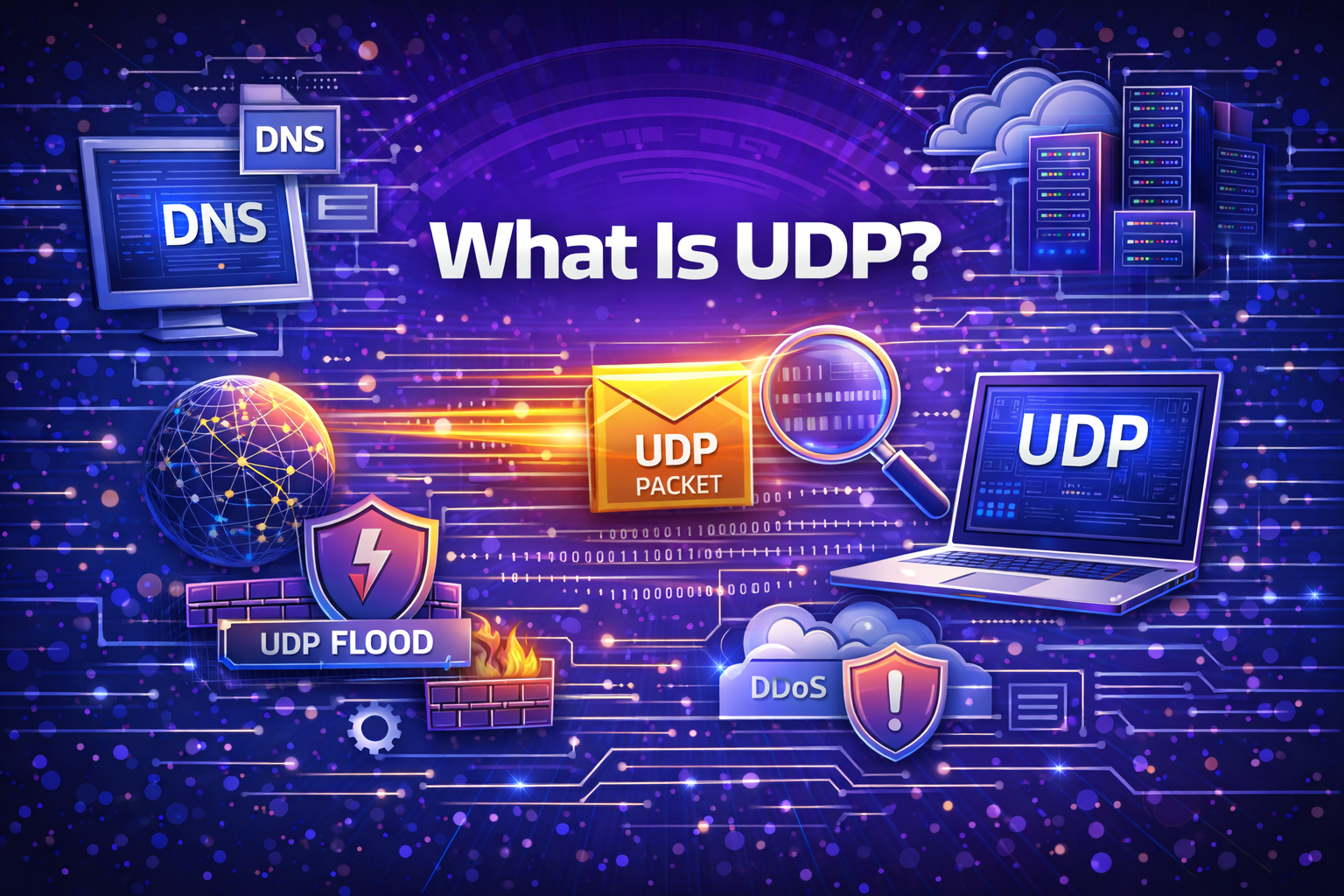
What is UDP, and why do so many modern applications rely on it despite its lack of built-in reliability? In today’s fast-moving digital world, speed often matters more than perfection. The User Datagram Protocol (UDP) was designed with this exact principle in mind. It prioritizes speed, efficiency, and low latency—making it essential for real-time communication and high-performance applications.
For cybersecurity professionals, IT managers, and business leaders, understanding what is UDP is critical. UDP plays a major role in networking, cloud services, streaming, gaming, and even cyberattacks. This guide explains what UDP is, how it works, where it’s used, and what security risks organizations must manage.
What Is UDP?
What is UDP? UDP stands for User Datagram Protocol, a core communication protocol in the Internet Protocol (IP) suite. UDP enables applications to send messages, known as datagrams, from one device to another without establishing a connection beforehand.
Unlike connection-oriented protocols, UDP does not guarantee delivery, order, or error correction. Instead, it sends data as quickly as possible with minimal overhead. This makes UDP ideal for applications where speed and responsiveness matter more than reliability.
Understanding what is UDP helps organizations choose the right protocol for performance-critical systems.
Why UDP Is Important in Modern Networks
Modern networks handle massive volumes of real-time data. From video conferencing to cloud gaming, many applications cannot afford delays caused by retransmissions and handshakes.
Key reasons UDP is widely used include:
-
Low latency communication
-
Minimal protocol overhead
-
Faster data transmission
-
Support for real-time applications
-
Scalability for high-traffic environments
For businesses, UDP enables better user experiences where timing is critical.
How UDP Works
To fully understand what is UDP, it’s important to know how it operates at a technical level.
Connectionless Communication
UDP is a connectionless protocol. This means there is no handshake process before data transmission. The sender simply sends packets to the destination address.
Datagram Transmission
Each UDP packet is sent independently. There is no tracking of packets, no retransmission of lost data, and no guarantee of order.
Minimal Error Checking
UDP includes only basic error checking using checksums. If a packet is corrupted or lost, UDP does not attempt to fix it.
This lightweight design is what makes UDP fast.
UDP Packet Structure Explained
Understanding packet structure helps clarify what is UDP at a deeper level.
A UDP packet contains:
-
Source port
-
Destination port
-
Length
-
Checksum
-
Data payload
Because the header is small, UDP packets are processed quickly, reducing latency.
UDP vs TCP: Key Differences
One of the most common questions when learning what is UDP is how it compares to TCP.
UDP Characteristics
-
Connectionless
-
No delivery guarantees
-
No retransmission
-
Faster and lightweight
TCP Characteristics
-
Connection-oriented
-
Reliable delivery
-
Error correction and retransmission
-
Higher overhead
When to Use UDP vs TCP
Use UDP when:
-
Speed matters more than accuracy
-
Real-time communication is required
-
Small data loss is acceptable
Use TCP when:
-
Data integrity is critical
-
Transactions must be complete and ordered
Common Use Cases of UDP
UDP is widely used across industries due to its performance advantages.
Real-Time Streaming
Video and audio streaming platforms use UDP to deliver smooth playback. Minor data loss is preferable to buffering delays.
Online Gaming
Games rely on UDP for fast player movement updates and real-time interactions.
Voice over IP (VoIP)
VoIP applications use UDP to maintain low latency during calls.
DNS Queries
DNS often uses UDP for quick request-response communication.
Understanding what is UDP explains why these applications prioritize speed.
Advantages of UDP
UDP offers several benefits that make it indispensable.
Speed and Performance
Without connection setup or retransmissions, UDP delivers data faster than TCP.
Low Resource Usage
UDP consumes fewer system resources, making it ideal for high-volume environments.
Scalability
UDP scales well for large networks and distributed systems.
Flexibility
Applications can implement their own reliability mechanisms if needed.
These advantages make UDP a powerful networking tool.
Limitations of UDP
While fast, UDP has trade-offs.
No Reliability
Packets may be lost, duplicated, or received out of order.
No Congestion Control
UDP does not adjust transmission rates based on network conditions.
Limited Error Handling
Error detection is minimal, placing responsibility on applications.
Organizations must weigh these limitations carefully.
UDP and Cybersecurity Considerations
Understanding what is UDP also means understanding its security implications.
Common Security Risks
-
UDP flood attacks
-
Amplification attacks (DNS, NTP)
-
Lack of session tracking
-
Difficulty in filtering malicious traffic
Because UDP does not establish connections, attackers often abuse it for denial-of-service attacks.
How Attackers Exploit UDP
UDP Flood Attacks
Attackers send massive volumes of UDP packets to overwhelm systems.
Amplification Attacks
Small requests generate large responses, amplifying attack traffic.
Reflection Attacks
Attackers spoof source IPs to redirect responses to victims.
These risks make UDP security a critical concern for IT teams.
Best Practices for Securing UDP Traffic
Organizations can reduce risk with proper controls.
Security Best Practices
-
Implement rate limiting
-
Use firewalls with UDP filtering
-
Monitor network traffic continuously
-
Disable unused UDP services
-
Deploy DDoS protection
Layered defenses are essential for UDP-based services.
UDP in Cloud and Enterprise Environments
Modern cloud platforms rely heavily on UDP.
Cloud Services
Cloud providers use UDP for load balancing, monitoring, and internal communication.
Enterprise Networks
Enterprises use UDP for DNS, VoIP, and internal applications.
Proper monitoring ensures performance without sacrificing security.
Performance Optimization Tips for UDP
To get the most from UDP:
-
Optimize packet sizes
-
Monitor latency and packet loss
-
Use application-level error handling
-
Balance performance and reliability
These practices improve user experience while maintaining control.
UDP for IT Managers and Executives
For leadership teams, UDP decisions impact business outcomes.
Business Implications
-
Improved customer experience
-
Reduced latency for critical services
-
Increased risk if not properly secured
-
Need for advanced monitoring
Understanding what is UDP helps leaders align technology with risk tolerance.
The Future of UDP Networking
UDP continues to evolve.
Emerging Trends
-
QUIC protocol (built on UDP)
-
Faster web performance
-
Improved congestion control at application level
-
Secure real-time communications
UDP remains foundational to next-generation internet protocols.
Actionable Steps Organizations Can Take Today
To manage UDP effectively:
-
Audit UDP services in your environment
-
Monitor traffic patterns continuously
-
Implement DDoS mitigation strategies
-
Combine UDP visibility with endpoint security
-
Regularly review firewall rules
Proactive management reduces risk and improves performance.
Frequently Asked Questions (FAQ)
1. What is UDP in simple terms?
UDP is a fast, connectionless protocol used to send data without guaranteeing delivery.
2. Is UDP faster than TCP?
Yes. UDP is faster because it has less overhead and no retransmission.
3. Is UDP secure?
UDP itself has no built-in security, so additional protections are required.
4. Why do attackers use UDP?
Attackers exploit UDP because it is connectionless and easy to abuse for floods and amplification attacks.
5. When should businesses use UDP?
UDP is best for real-time applications where speed is more important than perfect reliability.
Final Thoughts: Why Understanding UDP Matters
Knowing what is UDP is essential in today’s performance-driven digital environment. UDP enables fast, real-time communication that modern applications depend on—but it also introduces security challenges that must be managed carefully.
Organizations that understand UDP’s strengths and risks can leverage its speed while maintaining strong security controls.
If you want better visibility into network behavior, faster threat detection, and stronger protection against UDP-based attacks:
👉 Secure your network traffic today
Register now: https://www.xcitium.com/request-demo/