Web Application Firewall vs API Security: What’s the Difference and Why It Matters
Updated on February 16, 2026, by Xcitium
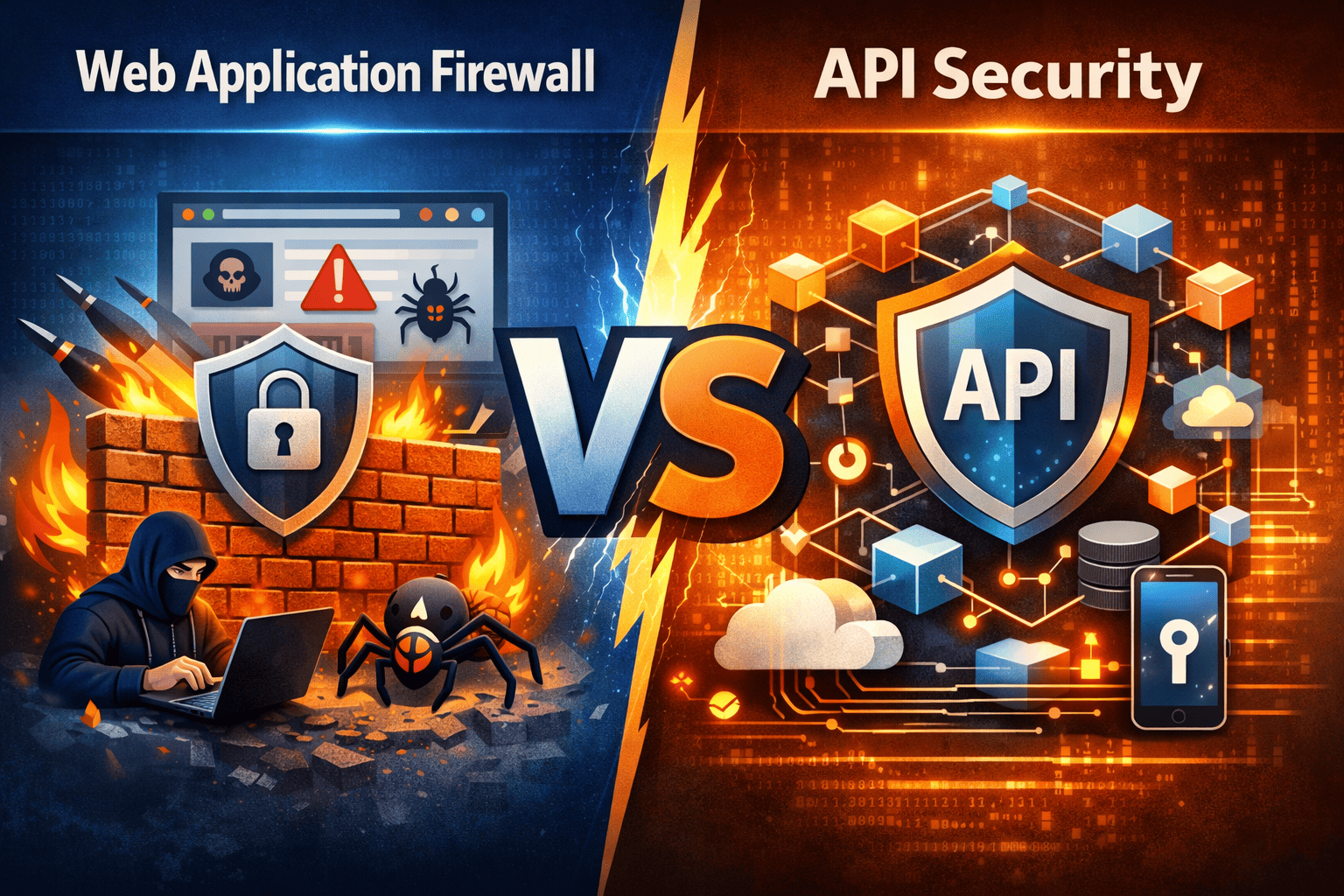
Modern businesses rely heavily on web applications and APIs to deliver services, connect systems, and support digital growth. But here’s the challenge: attackers increasingly target both layers. So when it comes to Web Application Firewall vs API security, which one does your organization truly need?
According to industry research, APIs are now responsible for a significant share of web traffic—and a growing percentage of security breaches. At the same time, traditional web application attacks such as SQL injection and cross-site scripting (XSS) remain common.
Understanding the difference between a Web Application Firewall (WAF) and API security is critical for IT managers, cybersecurity teams, CEOs, and cloud architects who want to reduce risk without overcomplicating their security stack.
This guide breaks down the key differences, strengths, limitations, and best practices for protecting both web applications and APIs.
What Is a Web Application Firewall (WAF)?
A Web Application Firewall (WAF) is a security solution designed to protect web applications from common web-based attacks. It monitors, filters, and blocks malicious HTTP/S traffic between users and web servers.
How a WAF Works
A WAF typically sits in front of a web application and analyzes incoming requests. It uses predefined rules or behavior-based detection to block suspicious activity.
Common Threats Blocked by a WAF
-
SQL injection attacks
-
Cross-site scripting (XSS)
-
Cross-site request forgery (CSRF)
-
Remote file inclusion
-
Malicious bots
-
DDoS attacks (to some extent)
A Web Application Firewall focuses primarily on protecting web-facing applications from known attack patterns.
What Is API Security?
API security refers to protecting application programming interfaces (APIs) from misuse, abuse, and malicious attacks. APIs enable communication between applications, services, and systems—especially in cloud-native and microservices environments.
Why API Security Is Different
APIs expose data and business logic directly. Unlike traditional web applications, APIs often:
-
Exchange structured data (JSON, XML)
-
Authenticate using tokens (OAuth, JWT)
-
Support machine-to-machine communication
-
Operate in distributed cloud environments
API security focuses on protecting endpoints, validating data, controlling access, and preventing unauthorized API usage.
Web Application Firewall vs API Security: Key Differences
Understanding Web Application Firewall vs API security requires looking at their scope and focus.
1. Traffic Visibility
WAF:
Primarily monitors HTTP/S web traffic.
API Security:
Analyzes API-specific calls, token usage, payload validation, and behavioral patterns.
2. Attack Coverage
WAF Protects Against:
-
Traditional web exploits
-
Injection attacks
-
Known vulnerability patterns
API Security Protects Against:
-
Broken object-level authorization (BOLA)
-
Token abuse
-
API endpoint enumeration
-
Excessive data exposure
-
Logic-level API attacks
APIs face more business-logic-based attacks that WAF rules may not detect.
3. Authentication and Authorization Focus
WAFs typically inspect traffic but do not deeply analyze identity tokens.
API security solutions validate:
-
OAuth tokens
-
API keys
-
JWT claims
-
Session behavior
This identity-centric approach is critical in modern cloud architectures.
4. Application Architecture Compatibility
WAFs are ideal for monolithic web applications.
API security solutions are better suited for:
-
Microservices
-
Cloud-native environments
-
Serverless applications
-
Mobile app backends
Why Traditional WAFs Are Not Enough for APIs
Many organizations assume their Web Application Firewall protects APIs automatically. While WAFs can filter HTTP traffic, they often lack deep API awareness.
Limitations of WAF in API Security
-
Limited understanding of API schemas
-
Inability to detect business logic abuse
-
Minimal behavioral analytics
-
Weak visibility into API-to-API communication
Modern APIs require runtime monitoring and context-aware validation.
The Rise of API Attacks
APIs now account for a large portion of web traffic. Attackers target them because:
-
APIs expose sensitive data
-
They often lack rate limiting
-
Authentication mechanisms may be weak
-
Rapid development increases misconfigurations
Common API threats include:
-
Broken authentication
-
Injection attacks
-
Excessive data exposure
-
Improper asset management
API security has become essential in cloud-first environments.
When to Use a Web Application Firewall
A WAF remains critical for:
-
Protecting public-facing web applications
-
Blocking known web attack patterns
-
Reducing bot traffic
-
Supporting compliance frameworks
For traditional websites and web portals, WAF solutions provide foundational protection.
When to Prioritize API Security
API security should be prioritized if your organization:
-
Operates mobile apps
-
Uses microservices architecture
-
Runs cloud-native workloads
-
Integrates third-party APIs
-
Supports machine-to-machine communication
APIs require specialized monitoring beyond traditional WAF filtering.
Best Practice: Combining WAF and API Security
The debate between Web Application Firewall vs API security should not be about choosing one over the other. Modern enterprises need both.
Layered Security Strategy
A comprehensive approach includes:
-
Web Application Firewall for HTTP traffic filtering
-
API security solutions for endpoint and token validation
-
Identity and access management (IAM)
-
Runtime threat detection
-
Continuous monitoring
Defense-in-depth reduces exposure across multiple attack vectors.
Web Application Firewall vs API Security in Cloud Environments
Cloud environments introduce additional complexity.
Cloud-Specific Considerations
-
Dynamic scaling
-
Ephemeral workloads
-
Distributed endpoints
-
DevOps automation
Security teams must integrate WAF and API security tools into cloud-native architectures, including Kubernetes and serverless environments.
Compliance and Regulatory Considerations
Both WAF and API security support compliance frameworks such as:
-
PCI-DSS
-
GDPR
-
HIPAA
-
SOC 2
However, API security plays a growing role in protecting personal data transmitted between services.
Regulators increasingly expect organizations to secure APIs proactively.
How to Strengthen Both Web and API Security
1. Conduct a Risk Assessment
Identify all web applications and API endpoints.
2. Implement Strong Authentication
Use OAuth 2.0, JWT validation, and MFA where applicable.
3. Enforce Rate Limiting
Prevent abuse through traffic throttling.
4. Monitor Behavior Continuously
Use AI-driven anomaly detection.
5. Validate Input and Output Data
Protect against injection and data leakage.
6. Integrate with SIEM and XDR
Centralized monitoring improves incident response.
Future Trends in Web and API Protection
Security solutions are evolving toward:
-
AI-powered threat detection
-
Automated schema validation
-
Zero Trust API frameworks
-
API discovery and inventory tools
-
Unified cloud workload protection
Forward-thinking organizations treat APIs as first-class security assets.
Frequently Asked Questions (FAQ)
1. Is a Web Application Firewall enough to protect APIs?
No. While a WAF can filter HTTP traffic, it does not provide deep API-specific protection such as schema validation or token inspection.
2. What is the main difference between WAF and API security?
A WAF protects web applications from traditional web attacks, while API security focuses on protecting API endpoints, tokens, and business logic.
3. Do organizations need both WAF and API security?
Yes. A layered security approach combining both provides stronger protection for modern digital environments.
4. Why are APIs increasingly targeted by attackers?
APIs expose sensitive data and business logic. Rapid development and misconfigurations make them attractive targets.
5. How does API security support Zero Trust?
API security enforces strict identity validation and least privilege access, aligning with Zero Trust principles.
Protect Your Web and API Infrastructure Today
The debate around Web Application Firewall vs API security should not end in choosing one over the other. Modern digital environments demand layered protection across both web applications and APIs.
As cyber threats grow more sophisticated, organizations must secure every entry point—from traditional web forms to machine-driven API calls.
If you’re ready to strengthen your web application and API protection with advanced threat detection and unified visibility—
👉 Request a personalized demo today:
https://www.xcitium.com/request-demo/
Protect your applications. Secure your APIs. Stay ahead of evolving cyber threats.