EDR Meaning: Everything You Need to Know About Endpoint Detection and Response
Updated on August 12, 2025, by Xcitium
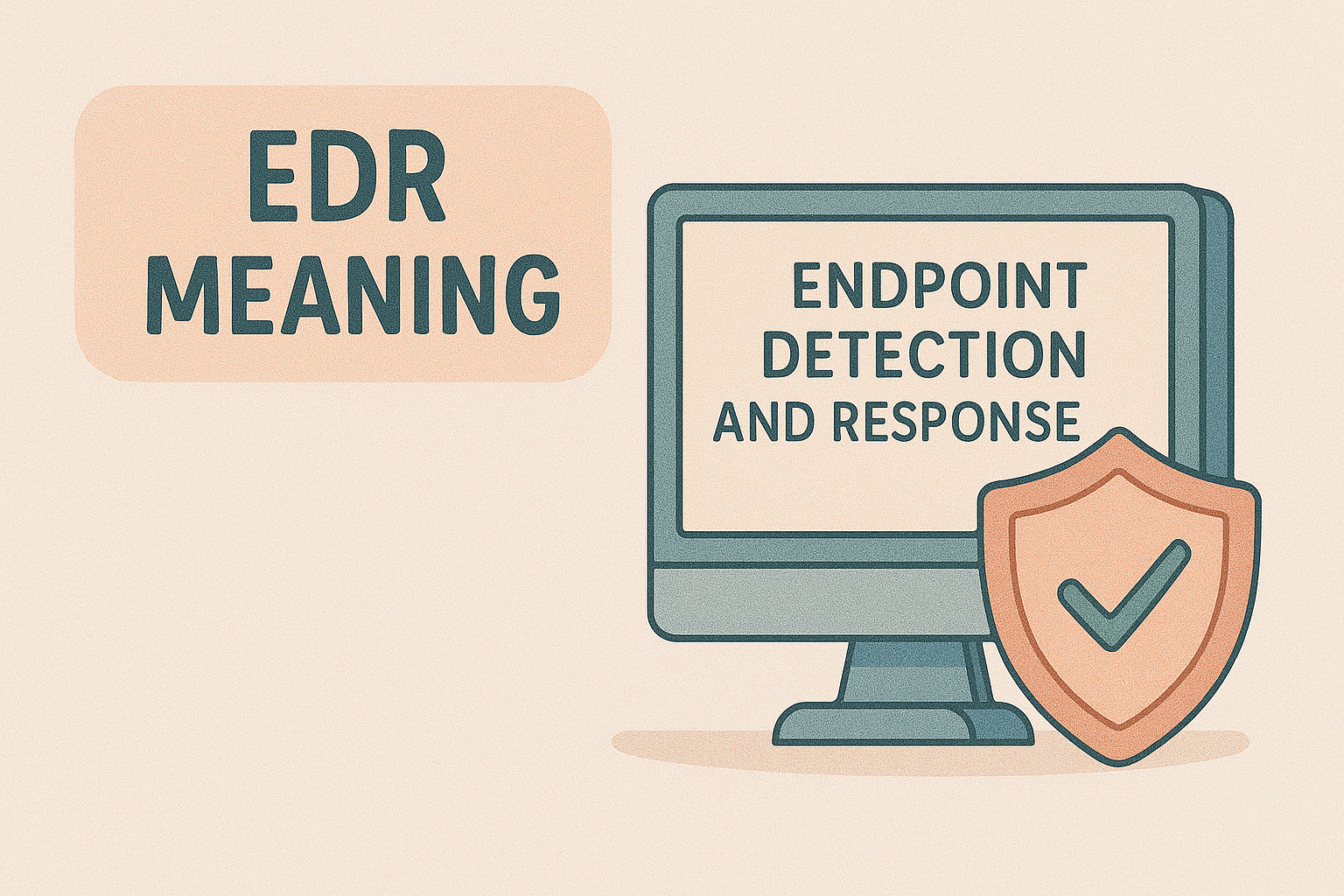
Ever had nagging doubts about how well your organization protects endpoints like laptops, servers, and mobile devices? If you’re asking “EDR meaning”, you’re not alone. EDR—short for Endpoint Detection and Response—has become a cornerstone of modern cybersecurity, enabling real-time monitoring, detection, and response to threats at each endpoint. In today’s threat landscape, understanding EDR is essential for IT managers, cybersecurity teams, and executives striving to strengthen defenses while minimizing risk.
What Is EDR?
EDR meaning refers to tools and processes that provide continuous monitoring and response capabilities across endpoints. These systems collect telemetry—like process execution, file changes, and network activity—to detect suspicious behaviors and enable automated or manual incident response.
Key components of EDR include:
- Real-time endpoint telemetry
- Threat detection analytics
- Investigation and forensics
- Automated or manual response actions
- Centralized management dashboard
Why EDR Matters in Cybersecurity
In an era where traditional antivirus struggles, EDR offers:
- Enhanced visibility: Tracks behaviors across devices, not just static signatures.
- Faster detection: Identifies threats like malware, ransomware, fileless attacks.
- Streamlined investigation: Correlates endpoint events for efficient root cause analysis.
- Immediate response: Quarantine, kill processes, isolate networks, or rollback.
- Integration with SIEM or XDR: Amplifies broader security visibility.
EDR vs. Antivirus vs. XDR
| Solution Type | Function | Best For |
| Antivirus (AV) | Signature-based detection | Known malware only |
| EDR | Behavioral detection & response at endpoints | Endpoint visibility & containment |
| XDR (Extended Detection & Response) | Unified threat detection across endpoints, network, cloud | Comprehensive, centralized security |
How EDR Works: A Closer Look
- Data Collection: Agents on endpoints collect system events.
- Data Aggregation: Telemetry is sent to centralized storage or sandbox.
- Analysis: Behavioral engines analyze patterns and flag anomalies.
- Alerting: Security teams receive actionable alerts.
- Response: Automated or manual remediation actions are executed.
- Forensics: Incident data aids in post-attack analysis and compliance reporting.
Benefits of EDR for Enterprises
- Proactive threat hunting and prevention
- Reduced dwell time of threats
- Improved compliance with audit-ready logs
- Better resource allocation, reducing manual incident handling
- Support for remote workforce monitoring
Real-World Use Case: Ransomware Mitigation
Imagine ransomware encrypting files across your network. EDR can detect unusual file access patterns or encryption attempts, isolate the impacted machine, block outbound communication, and preserve forensic evidence—all within moments. Instead of sweeping breaches, you’re mitigating in near real-time.
Selecting an EDR Solution
When choosing EDR, consider:
- Deployment model: cloud-managed vs on-premises
- Scalability: agents for dozens to thousands of endpoints
- Response capabilities: automated vs manual
- Integration: with SIEM, SOAR, threat intelligence
- Usability: intuitive dashboards and alerting workflow
- Vendor reputation and support
Implementing EDR: Best Practices
- Start with a pilot phase (select critical systems)
- Tune detection rules to reduce false positives
- Define response playbooks for common threats
- Train IT/security teams on investigation workflows
- Regularly review logs and refine rule sets
Challenges & Mitigation
- Alert fatigue: Tackle with tuning and context enrichment
- Performance impact: Ensure lightweight agents and phased rollout
- Resource gaps: Use automation and or managed detection services
- Data overload: Architect for scalable storage and retention policies
Final Thoughts
Understanding EDR meaning empowers you to upgrade your security posture from reactive to proactive. It bridges the gap between endpoint monitoring, investigation, and rapid response. For IT leaders and CISOs, adopting EDR is a critical step toward comprehensive cybersecurity resilience.
Call to Action
Ready to enhance your endpoint protection with advanced detection and response?
👉 Request a Free Demo from Xcitium to explore real-time EDR capabilities, threat analytics, and integrated automation that scales with your business.
FAQ Section
Q1: What does EDR stand for?
EDR stands for Endpoint Detection and Response, enabling real-time monitoring and remediation at endpoints.
Q2: How is EDR different from antivirus?
EDR analyzes behaviors and patterns, not just known malware signatures, enabling detection of sophisticated threats.
Q3: What are the core EDR capabilities?
Telemetry collection, threat detection, investigation tools, response automation, and forensics logging.
Q4: Do small businesses need EDR?
Yes—especially with hybrid or remote work patterns. Threats affect businesses of all sizes.
Q5: Can EDR prevent ransomware?
It may not prevent initiation, but it greatly reduces damage through fast detection and response.